

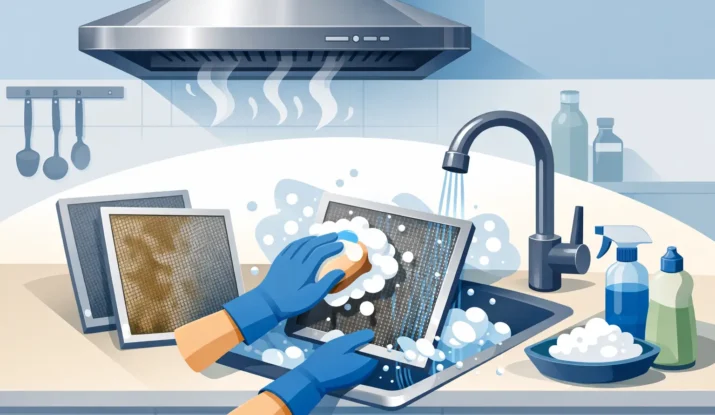
If your hood filters are dripping grease, smoking during service, or leaving a sticky film around the line, the problem is already bigger than appearance. For commercial kitchens, how to clean kitchen exhaust hood filters is a safety issue first. Grease-loaded filters restrict airflow, increase fire risk, and put more strain on the entire exhaust system.
For restaurant owners, kitchen managers, and facility teams, the goal is not just to make filters look better. The goal is to keep the hood system working the way it should, support code compliance, and avoid preventable shutdowns. Cleaning filters the right way helps, but it also matters to know where routine staff cleaning ends and full professional hood cleaning begins.
How to clean kitchen exhaust hood filters the right way
Most commercial hood filters can be cleaned with a straightforward process, provided the buildup is still at a manageable level. If the filters are heavily caked, warped, damaged, or part of a larger grease problem in the hood and ductwork, a deeper service plan is usually the safer move.
Start by shutting off the cooking equipment under the hood and allowing the area to cool. Hot filters covered in grease are harder to handle and more likely to cause burns or splash chemical solution during cleaning. Staff should wear gloves and eye protection, especially if using degreasers.
Next, remove the filters carefully. Most commercial baffle filters slide up and out, but they can be slippery. Set them in a prep-safe utility area, not near food contact surfaces. If your kitchen is still in operation, keep this process separated from active production to avoid contamination and accidents.
Once the filters are out, scrape off any heavy grease deposits into an appropriate waste container. This step matters because it keeps soak tanks and sinks from getting overloaded with thick grease. Pouring large amounts of grease into plumbing is a fast way to create another maintenance issue.
Fill a deep sink or soak tank with hot water and a commercial degreasing solution rated for kitchen grease. The hotter the water, the better the grease will release, but follow the chemical manufacturer’s instructions. Some filters clean up well with a standard degreaser and soak time, while others need agitation with a non-abrasive brush.
Let the filters soak long enough to break down the grease. In lighter-duty kitchens, 15 to 30 minutes may be enough. In high-volume operations with charbroilers, fryers, or wok lines, buildup can be much heavier and require repeated soaking. After soaking, scrub both sides thoroughly, paying close attention to the internal channels of the baffle design where grease tends to collect.
Rinse with hot water until the filter runs clean and there is no degreaser residue left behind. This is not the place to cut corners. Residual chemical left on filters can create odors, smoke, or unwanted residue once the line heats back up.
Before reinstalling, let the filters dry fully. Putting wet filters back into place can lead to drips and can trap residue in areas that should stay clean. Once dry, reinstall them securely and make sure they are seated correctly so grease is directed into the collection trough as designed.
What not to do when cleaning hood filters
A lot of filter problems start with rushed cleaning methods. Running filters through a dishwasher may sound efficient, but in many commercial settings it is not strong enough for heavy grease and can leave residue behind. It can also interfere with warewashing operations and create sanitation concerns if not handled properly.
Harsh scraping with metal tools can damage the filter surfaces or bend the baffles. Once filters are warped, airflow and grease capture can suffer. Using the wrong chemicals can also cause problems, particularly if the product is not intended for kitchen exhaust grease or if it reacts poorly with the metal.
The biggest mistake, though, is assuming clean-looking filters mean the system is clean. Filters are only one part of the exhaust path. Grease that has already moved into the hood plenum, ductwork, and exhaust fan remains a serious fire hazard even if the visible filters have been washed.
How often should kitchen exhaust hood filters be cleaned?
It depends on your cooking volume, menu, and equipment mix. A small operation with limited grease production may be able to clean filters on a weekly schedule. A busy restaurant running fryers, open-flame cooking, or high-fat proteins may need much more frequent attention, sometimes daily.
The practical benchmark is performance. If filters are visibly loaded, airflow feels weaker, smoke is lingering, or grease is collecting around the hood, your schedule is not frequent enough. Waiting until there is an obvious problem usually means grease has already spread beyond the filters.
For kitchen managers, this is worth putting into a written routine. Assign responsibility, document frequency, and make sure staff know the correct process. Consistency matters more than good intentions, especially in busy back-of-house environments where small maintenance tasks are easy to postpone.
Signs routine filter cleaning is no longer enough
Knowing how to clean kitchen exhaust hood filters helps with day-to-day maintenance, but it does not replace full exhaust system cleaning. There is a clear line between routine filter care and code-driven professional service.
If grease is visible inside the hood beyond the filters, if there is buildup in the duct access areas, or if the exhaust fan shows heavy residue, you are no longer dealing with a filter-only issue. The same is true if grease is dripping onto cooking equipment or pooling on the roof near the fan. Those conditions point to system-wide accumulation that requires specialized cleaning.
Another warning sign is repeated inspection concern. If your kitchen has been flagged for hood cleanliness, fire risk, or poor exhaust performance, cleaning only the filters will not solve the full problem. Commercial hood systems need complete attention to the hood, ducts, access panels, and fan assembly.
Why clean filters matter for safety and compliance
Dirty filters restrict airflow. That means more smoke and heat staying in the kitchen, more grease moving where it should not, and more strain on the exhaust system overall. In practical terms, your line gets less comfortable, your equipment area gets dirtier faster, and your fire exposure increases.
From a compliance standpoint, filters are also one of the easiest visible indicators of maintenance standards. Inspectors, managers, and ownership teams notice them right away. Clean filters do not guarantee the system is compliant, but neglected filters often signal bigger maintenance gaps behind the scenes.
For hospitality groups and franchise operators, this is also about consistency across locations. A documented filter cleaning routine supports safer operations and helps reduce avoidable variation from one kitchen to another.
When to call a professional hood cleaning company
If your filters have not been cleaned on schedule for a long time, if grease buildup is substantial, or if the contamination extends into the hood and duct system, it is time to bring in a commercial specialist. This is especially true for high-volume kitchens, 24-hour operations, and facilities that cannot afford inspection issues or fire exposure.
Professional service is not just about stronger chemicals or hotter water. It is about cleaning the full system to the proper standard, reaching the areas staff cannot safely access, and documenting the work in a way that supports compliance. That matters in restaurants, casinos, hotels, commissaries, and other foodservice environments where risk is higher and expectations are stricter.
A company such as Vegas Pressure Clean is built for that kind of work – focused on exhaust systems, grease hazards, and the practical realities of keeping a commercial kitchen running safely with minimal disruption.
A workable standard for busy kitchens
The best approach is simple. Clean filters often enough that grease never gets ahead of you, inspect the surrounding hood area regularly, and do not confuse routine maintenance with full exhaust system cleaning. If the filters are the only dirty part, staff may be able to handle it safely. If the grease extends beyond that point, the job has changed.
A clean filter supports airflow. A properly cleaned exhaust system supports safety, compliance, and uninterrupted service. In a commercial kitchen, that is the standard worth protecting.
Comments (5)
How to Keep Kitchen Exhaust Fan Clean – Vegas Pressure Clean
[…] attention also matters, but only within limits. Kitchen teams can help reduce buildup by keeping hood filters in working order, wiping accessible surrounding surfaces, and reporting visible grease leaks, […]
8 Ways to Reduce Grease Fire Risk – Vegas Pressure Clean
[…] should be checked regularly, cleaned thoroughly, and put back in place correctly. This sounds basic, but it matters. A kitchen can spend money on […]
9 Top Signs Hood Cleaning Needed Now – Vegas Pressure Clean
[…] is one of the clearest signs that service is overdue. Hood filters are meant to capture grease before it moves farther into the exhaust system. When they become […]
Best Hood Cleaning Methods for Commercial Kitchens – Vegas Pressure Clean
[…] setup, technicians typically remove and clean the filters, apply commercial-grade degreasers to grease-laden surfaces, and use hot-water pressure washing or […]
Hood Cleaning vs Kitchen Staff: Who Should Do It? – Vegas Pressure Clean
[…] spills, mopping grease-prone floors, cleaning accessible backsplash areas, and changing or washing removable baffle filters according to the manufacturer’s instructions and the kitchen’s operating […]