

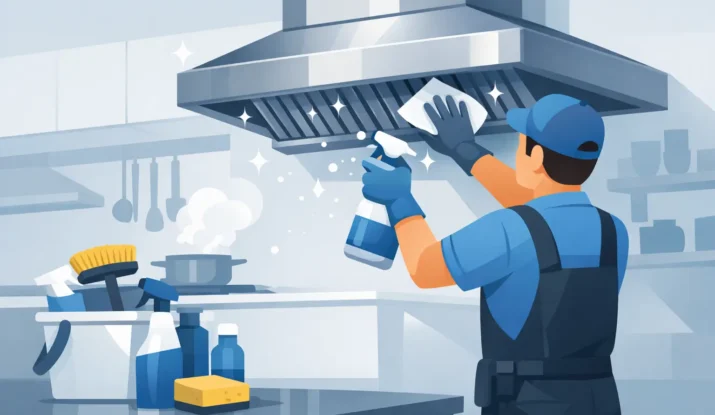
Grease does not stay where you can see it. In a busy commercial kitchen, it moves past the hood line, collects inside ductwork, and builds up around the exhaust fan where heat, airflow, and cooking volume keep feeding the problem. That is why a professional kitchen exhaust hood cleaning service is not just another maintenance item. It is a fire-safety requirement, a compliance issue, and a practical way to keep your operation running without avoidable interruptions.
For restaurant owners, kitchen managers, hotel operators, and facility teams in Las Vegas, the real question is not whether the system needs cleaning. It is whether the cleaning is being done thoroughly, on schedule, and by a contractor who understands what inspectors, fire officials, and commercial kitchens actually expect.
What a kitchen exhaust hood cleaning service should cover
A proper service goes well beyond wiping down visible stainless steel. The work should address the full grease-bearing path of the system, including the hood, accessible duct runs, filters, and exhaust fan. If grease remains in the duct or on the fan assembly, the fire hazard remains in place even if the hood looks clean from the cook line.
This matters because the exhaust system is designed to move heat, smoke, vapor, and grease-laden air out of the kitchen. Over time, that same airflow deposits flammable residue throughout the system. Surface cleaning alone may improve appearance, but it does not solve the underlying risk.
In most commercial kitchens, a qualified provider will first inspect the condition of the hood and exhaust components, identify heavy buildup areas, protect nearby equipment and surfaces, then remove grease using methods appropriate for the system. The goal is simple: return the grease-bearing surfaces to a clean, code-ready condition without creating a mess in the kitchen below.
Why this service matters for fire safety and compliance
Kitchen exhaust cleaning is closely tied to fire prevention. Grease buildup in hoods and ducts can ignite when exposed to high temperatures or flare-ups from cooking equipment. Once a fire reaches the exhaust system, it can spread fast through ductwork and into other parts of the building.
That is why inspections focus on more than appearances. Authorities want to see that the system is being maintained in a way that reduces combustible buildup. If your hood has visible grease, if the fan is coated, or if cleaning records are inconsistent, you are creating unnecessary risk for staff, customers, and the business itself.
There is also the operational side. Failed inspections can trigger re-cleaning, added scrutiny, and pressure on your team to fix avoidable issues fast. For high-volume kitchens, that kind of disruption can be more expensive than routine service done correctly the first time.
Signs your kitchen exhaust system needs attention
Some kitchens are obviously overdue. Others look fine on the surface while grease is accumulating deeper in the system. A few warning signs tend to show up before the problem becomes urgent.
If you notice grease dripping from filters, strong lingering cooking odors, smoke that hangs in the kitchen longer than usual, or visible buildup around the hood seam and fan area, your system likely needs professional cleaning. Reduced airflow is another common issue. When the exhaust path is restricted by grease, the system cannot pull heat and vapor as efficiently, which can make the kitchen hotter and less comfortable during service.
It also depends on your operation. A 24-hour kitchen, a steakhouse, a fried food concept, or a high-output casino foodservice line will usually need more frequent service than a lower-volume operation with lighter cooking loads. Cooking style, menu mix, and hours of operation all affect how quickly grease accumulates.
What to expect from a professional kitchen exhaust hood cleaning service
Commercial operators need vendors who work cleanly, communicate clearly, and understand that back-of-house time is tightly managed. A professional service should be organized from the first quote to the final cleanup.
You should expect a straightforward assessment of the system, honest recommendations on service frequency, and a clear explanation of what is included. During the job, the crew should protect cooking equipment and surrounding areas, manage runoff properly, and clean the exhaust components without leaving the kitchen in worse shape than they found it.
This is also where specialization matters. A contractor focused on kitchen exhaust systems knows where grease collects, what inspectors look for, and how to clean hoods, ducts, and fans without treating the work like general janitorial service. That difference shows up in the results.
How service frequency really works
One of the most common questions from operators is how often to schedule cleaning. The honest answer is that it depends on cooking volume and grease production, but there are no shortcuts around regular maintenance.
Heavier-use kitchens usually require more frequent service because grease loads build quickly. Lower-volume operations may be able to go longer between cleanings, but stretching intervals too far often leads to bigger cleanups, more downtime, and greater fire exposure. Waiting until visible grease becomes a problem is rarely a sound maintenance plan.
The better approach is to set a routine based on actual kitchen use and adjust as needed. If your business changes menu, extends hours, or increases output, your cleaning schedule may need to change with it. A reliable service provider should tell you that directly rather than pushing a one-size-fits-all recommendation.
The business impact goes beyond the hood
Operators usually call for hood cleaning because of fire code, but the benefits reach into daily operations. A cleaner exhaust system can help ventilation perform the way it should, which supports a safer and more manageable kitchen environment. When airflow improves, heat, smoke, and grease vapor are removed more effectively, and that can make a noticeable difference during peak production.
There is also a cleanliness factor that affects the rest of the kitchen. Grease that escapes or accumulates around the system can migrate onto equipment, floors, and nearby surfaces. That creates more cleaning work, more slip risk, and more wear on the back-of-house environment.
For multi-unit operators and facility managers, consistency matters just as much as cleanliness. You need a vendor who shows up, documents the work, and helps keep locations on a repeatable maintenance schedule. That is especially important when inspections, insurance concerns, and internal standards all need to line up.
Choosing the right kitchen exhaust hood cleaning service
Not every cleaning company is built for this work. Commercial kitchens should look for a provider that understands exhaust systems as a specialized fire-risk service, not just a pressure washing task. Experience, licensing, and quality control all matter.
A serious contractor should be able to explain their process, identify what parts of the system are included, and speak confidently about code-related expectations. They should also respect your hours of operation and work in a way that minimizes disruption. For restaurants and hospitality venues, overnight or off-hours scheduling can make a major difference.
Local accountability matters too. In Las Vegas, operators need service partners who understand the demands of high-volume kitchens and the pace of the local hospitality market. Vegas Pressure Clean has built its reputation around that need, with specialized exhaust hood cleaning work, owner-led oversight, and a strong focus on fire safety and compliance.
Why waiting usually costs more
Delaying service can look like a savings on paper, but it often leads to larger problems. Heavy grease buildup takes more labor to remove, increases risk between cleanings, and can put you in a difficult position if an inspection happens before the system is corrected. In the worst cases, it can contribute to fire events that create damage well beyond the exhaust system itself.
Routine maintenance is easier to schedule, easier to budget, and easier on your staff than emergency cleanup. It also gives you a cleaner record of care, which matters when you are responsible for protecting employees, guests, and the facility.
If your hood system has not been evaluated recently, now is the right time to get a clear picture of its condition and service needs. A dependable kitchen exhaust hood cleaning service should give you more than a clean-looking hood. It should give you confidence that your kitchen is safer, more compliant, and better prepared for the next inspection and the next rush.
Comments (3)
Kitchen Exhaust Hood Cleaning Checklist – Vegas Pressure Clean
[…] is not just a list of tasks. It is a way to separate daily upkeep from signs that professional hood cleaning is […]
Commercial Kitchen Equipment Cleaning Done Right – Vegas Pressure Clean
[…] kitchen equipment cleaning should be treated as part of a broader grease-management plan. Hood interiors, ducts, fans, cook equipment, floors, and adjacent surfaces all work together from a safety standpoint. Cleaning […]
How to Pass Fire Inspection in a Commercial Kitchen – Vegas Pressure Clean
[…] from the cooking line can still contain combustible grease farther inside the duct. That is why professional exhaust cleaning matters. Qualified technicians remove grease from the full accessible system, including the hood, […]