

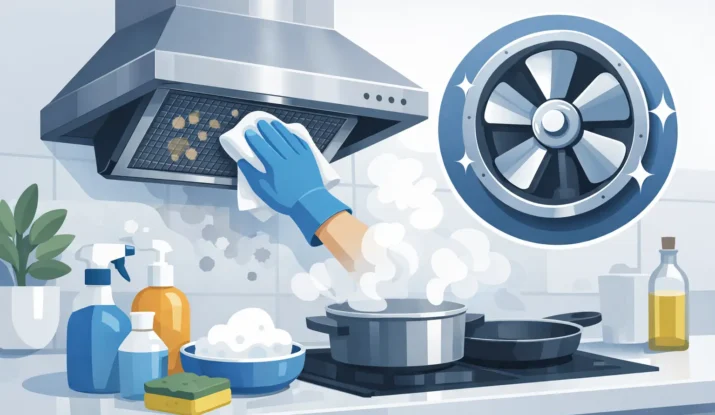
A kitchen exhaust fan usually gets attention only after there is a problem – slow airflow, dripping grease, smoke hanging in the line, or an inspector pointing at buildup above the roof. If you are asking how to keep kitchen exhaust fan clean, the real goal is bigger than appearance. In a commercial kitchen, a clean fan helps control fire risk, protect airflow, reduce grease spread, and support code compliance.
For restaurants, hotels, commissaries, and other high-volume foodservice operations, exhaust fan cleanliness is not a simple janitorial task. The fan is part of a full exhaust system that includes the hood, filters, ductwork, and rooftop components. When one part is neglected, the whole system suffers. That is why the smartest approach is preventive, scheduled, and based on the kitchen’s actual grease load.
Why exhaust fan cleanliness matters
Grease does not stay where the cooking happens. It travels with heat and vapor, collects in filters, coats duct interiors, and builds up on fan blades and housings. Over time, that buildup restricts airflow and forces the system to work harder. You may notice hotter kitchen conditions, more smoke at the cook line, and grease residue appearing in places that should stay clean.
The bigger concern is fire. Grease accumulation in an exhaust system creates fuel. If a flare-up reaches the hood or duct, excessive buildup can help fire spread faster through the system. That is why exhaust cleaning is tied directly to fire prevention, not just cleanliness.
There is also the issue of operations. A dirty fan can reduce performance, shorten motor life, increase wear on moving parts, and contribute to costly service calls. For busy kitchens, that means avoidable downtime and unnecessary disruption.
How to keep kitchen exhaust fan clean in a commercial kitchen
The most effective way to keep an exhaust fan clean is to stop treating it as a standalone fixture. It needs to be maintained as part of a complete hood and duct system. Spot-cleaning the visible exterior while ignoring grease deeper in the line does not solve the problem.
Start with a documented cleaning schedule based on cooking volume and menu type. A burger concept, fried chicken operation, steakhouse, and 24-hour hotel kitchen will load grease much faster than a light-duty prep kitchen. The schedule should match real usage, not guesswork.
Daily staff attention also matters, but only within limits. Kitchen teams can help reduce buildup by keeping hood filters in working order, wiping accessible surrounding surfaces, and reporting visible grease leaks, vibration, or poor airflow early. That routine support helps, but it does not replace professional exhaust system cleaning.
Where grease builds up first
In most commercial kitchens, grease starts collecting at the filters and then continues through the duct and into the fan assembly. The fan blades, hinge kit area, housing, and surrounding rooftop surface are all common problem spots. If the fan is not cleaned correctly, grease can pool, harden, and eventually spill onto the roof.
That creates two separate risks. First, the exhaust system loses efficiency. Second, grease on the roof becomes a slip hazard and can damage surrounding surfaces over time. In some properties, that secondary contamination becomes a facility maintenance issue beyond the kitchen itself.
Because buildup patterns vary, visual checks should focus on more than what staff can see from the cook line. If grease is visible at the fan, conditions inside the duct may be worse than they appear.
What kitchen staff can do between professional cleanings
Staff should handle light maintenance, not deep exhaust cleaning. That distinction matters for both safety and results. Daily or weekly tasks can support the system, but untrained cleaning around motors, rooftop fans, or inaccessible duct sections can create liability and leave critical grease untouched.
A good in-house routine includes keeping filters cleaned on the proper schedule, checking for unusual smoke or odor, and watching for grease dripping from hood seams or fan areas. Managers should also pay attention to signs like louder fan operation, reduced capture at the hood, and heat lingering longer than usual during service.
When those signs appear, the system may be overdue for service even if the calendar says otherwise. High-volume periods, seasonal menu changes, and staffing shifts can all affect grease output.
What professional exhaust fan cleaning should include
A proper service should address the entire path of grease, not just the easiest-to-reach surfaces. In a commercial setting, that means cleaning the hood plenum, filters, accessible duct runs, and fan components to bare metal where required by the level of buildup and applicable standards.
For the fan itself, the work should include degreasing the blades, housing, and accessible mechanical areas, along with cleaning up grease contamination around the rooftop footprint. The fan should be handled carefully so components are not damaged and the unit can be returned to correct operating position after service.
This is also where experience matters. An exhaust system can look acceptable from the outside while still holding heavy accumulation inside the duct or around the fan base. A contractor focused on kitchen exhaust work will know where problems hide and how to clean them without creating a mess across the property.
Cleaning frequency depends on your operation
There is no one-size-fits-all answer to frequency. Some kitchens need monthly service. Others may fall on quarterly, semiannual, or annual intervals depending on cooking methods and volume. Solid-fuel cooking, heavy frying, and long operating hours all push cleaning frequency upward.
The mistake many operators make is waiting for visible grease or an inspection issue before scheduling service. By that point, the system is usually dirtier than expected, and cleaning may take longer or require more intensive work. Preventive scheduling is usually less disruptive and easier to budget.
For multi-unit operators and facility managers, standardizing service intervals across locations can help with oversight, but local kitchen conditions still matter. A high-sales location and a low-volume location should not always be treated the same.
Common mistakes that lead to dirty exhaust fans
The first mistake is relying only on filter cleaning. Clean filters are important, but they do not stop all grease from moving into the duct and fan. The second is assuming rooftop fan grease is only a roof issue. In reality, it often points to a deeper exhaust system cleaning need.
Another common problem is using general cleaning vendors for specialized exhaust work. Commercial kitchen exhaust systems are tied to fire safety and should be handled by providers who understand hood, duct, and fan cleaning standards. A surface-level wash may improve appearance without reducing actual fire risk.
Finally, many operators wait too long because the fan is out of sight. Rooftop equipment tends to be ignored until there is a performance problem, a leak, or a failed inspection. That delay often turns routine maintenance into a larger service issue.
How to choose the right maintenance approach
If your kitchen produces steady grease output, the best approach is a recurring service plan backed by clear documentation and consistent follow-through. You want a provider that understands commercial foodservice environments, works around operating hours, and treats compliance as part of the job, not an extra.
Ask practical questions. What areas are cleaned during each visit? How is access handled? Is the fan cleaned as part of the full exhaust system? Will rooftop grease contamination be addressed? Can service be scheduled to reduce disruption to prep and service hours?
For Las Vegas operators, conditions can add another layer. Long hours, high production, and demanding hospitality schedules can push systems hard. That makes consistency even more important. Companies like Vegas Pressure Clean build service around that reality, with a focus on exhaust safety, grease management, and dependable scheduling for commercial kitchens.
The real standard is prevention
If you want to know how to keep kitchen exhaust fan clean, the short answer is this: keep the whole exhaust system on a professional schedule, have staff watch for early warning signs, and do not confuse visible cleanup with true grease removal. A clean fan is really the result of a disciplined maintenance program.
That program protects more than equipment. It supports airflow, lowers fire exposure, helps with inspections, and keeps your kitchen running with fewer surprises. When the exhaust system stays under control, the rest of the operation has a much better chance of staying that way too.
The best time to deal with grease is before it turns into a shutdown, a roof problem, or a fire code issue.
Comments (3)
Best Kitchen Exhaust Fan Cleaning Solution – Vegas Pressure Clean
[…] helps to think about frequency. A strong cleaning solution used too rarely is still a problem if grease is allowed to build between services. The best setup is a cleaning schedule that matches your cooking volume and […]
What Does Hood Cleaning Include? – Vegas Pressure Clean
[…] and exterior of the hood, removable filters, accessible duct runs, and the rooftop or inline exhaust fan. The work is typically performed to remove grease buildup that accumulates from cooking vapors, […]
How to Prepare Kitchen for Hood Cleaning – Vegas Pressure Clean
[…] A proper service addresses grease buildup in the hood interior, accessible duct runs, filters, and fan components. That work often involves pressure washing, scraping heavy deposits, and protecting surrounding […]