

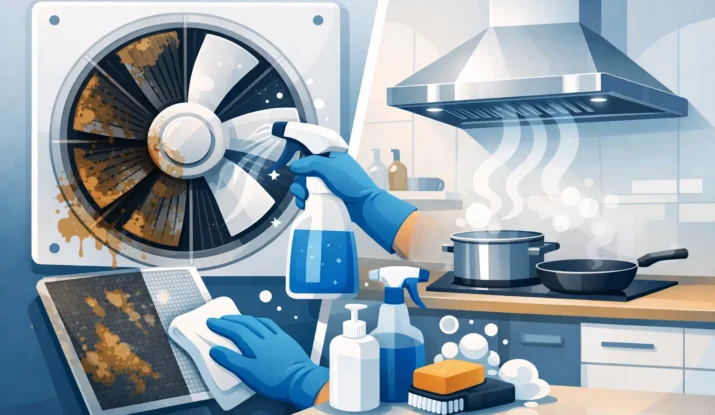
Grease on an exhaust fan is not just a cleaning problem. In a commercial kitchen, it is a fire load, an airflow problem, and a fast way to end up on the wrong side of an inspection. If you are searching for the best kitchen exhaust fan cleaning solution, the real answer is not one product in a bottle. It is the right combination of chemical strength, application method, dwell time, hot water, and full-system cleaning based on how your kitchen actually operates.
For restaurant owners, kitchen managers, and facility teams, that distinction matters. A fan can look better on the outside and still be carrying heavy grease buildup on the blades, housing, hinge kit, and duct connection points. When that buildup hardens, weak degreasers and quick wipe-downs stop being effective.
What the best kitchen exhaust fan cleaning solution really means
In commercial foodservice, the best solution has to do three things well. It has to break down animal fats and cooking oils, cling long enough to work on vertical and overhead surfaces, and rinse clean without leaving residue that attracts more grease. If it fails on any one of those points, the fan is not actually getting clean.
That is why there is no single universal cleaner that works for every kitchen. A high-volume grill line producing heavy grease vapor needs a stronger approach than a prep kitchen or light-duty operation. The age of the buildup matters too. Fresh grease is easier to remove. Old, polymerized grease is much tougher and often needs heat, agitation, and a professional-grade caustic degreaser to release from metal surfaces.
The phrase best kitchen exhaust fan cleaning solution usually leads people toward a product comparison. In practice, commercial kitchens should think in terms of a cleaning system. The chemistry matters, but so do the tools and the technician’s process.
The best kitchen exhaust fan cleaning solution for commercial kitchens
For most commercial exhaust systems, the most effective cleaning solution is a professional-strength alkaline or caustic degreaser used with hot water pressure washing and proper containment. Alkaline cleaners are designed to cut through grease efficiently, especially when they are applied to warm surfaces and given enough dwell time before rinsing.
This is where many do-it-yourself attempts fall short. Consumer degreasers sold for home kitchens may help on light residue, but they usually are not strong enough for restaurant exhaust fans that handle daily cooking volume. They can also create a false sense of completion. The visible face of the fan may improve while grease remains packed inside the assembly or deeper in the system.
There are trade-offs. Stronger chemicals can damage finishes, electrical components, roofing materials, or surrounding surfaces if they are used incorrectly. That is why professional fan cleaning is not just about using a harsher product. It requires the right dilution, correct application, protection of nearby areas, and a rinse process that removes grease without creating a bigger problem.
Why caustic degreasers often work best
Caustic degreasers are commonly the top choice for heavy grease because they saponify fats and break apart stubborn buildup faster than mild cleaners. In a busy kitchen, that means less scraping, better removal from fan blades and housings, and more reliable restoration of airflow.
That said, stronger is not always better in every situation. Some fans, coatings, or surrounding rooftop materials require a more controlled product choice. On neglected systems, aggressive chemistry may need to be paired with manual scraping before pressure washing can finish the job. The right solution depends on grease load, system condition, and access.
Why hot water matters as much as the cleaner
Heat changes the job. Hot water helps soften grease and improves how well a degreaser performs. Cold-water cleaning can work on light residue, but it is slower and less effective on thick accumulation. For commercial exhaust fans, hot water pressure washing is often the difference between partial cleaning and complete grease removal.
This is especially true in Las Vegas kitchens that run hard and often. Systems serving charbroilers, fryers, and high-volume lines build up fast. Once grease has baked onto fan components, chemistry alone is rarely enough.
What does not qualify as the best option
Dish soap, all-purpose cleaners, and retail spray degreasers are not the best kitchen exhaust fan cleaning solution for a commercial operation. They may be acceptable for small touch-ups on accessible exterior surfaces, but they are not designed to handle a code-sensitive exhaust system with heavy grease buildup.
Steam alone is also not a full answer for most restaurant fans. It can help loosen residue, but without the right degreasing chemistry and rinse process, it often moves grease around instead of fully removing it. Solvent-based products have limited use as well. They can cut certain residues, but many kitchens are better served by water-based alkaline products that are built for foodservice grease and easier rinse-down.
Why fan cleaning should never be treated as fan-only cleaning
A rooftop or upblast fan is part of a larger exhaust system. If the fan is cleaned but the hood, ductwork, and accessible grease channels are not, the system remains at risk. Grease migrates. Airflow carries residue through the full path, and the dirtiest point is not always the most visible point.
That is one of the biggest mistakes operators make when they search for the best kitchen exhaust fan cleaning solution. They focus on the fan because it is the obvious component, especially if it is dripping or visibly coated. But fire risk and compliance do not stop at the fan housing. The entire system has to be evaluated and cleaned to a proper standard.
For that reason, many commercial kitchens do better with scheduled hood, duct, and fan cleaning rather than one-off fan treatment. A complete service protects airflow, reduces grease-related fire hazards, and supports a smoother inspection process.
How to judge whether a cleaning method is actually working
A good result is not measured by smell or surface shine alone. The fan blades, motor housing area, hinge assembly, and surrounding accessible duct connections should be free of grease buildup, not just dampened or smeared clean. There should also be attention to containment, runoff control, and protection of adjacent surfaces.
In commercial settings, the method should support three outcomes: safer operation, better system performance, and easier compliance documentation. If the cleaning approach does not improve those outcomes, it is not the best option for your kitchen.
It also helps to think about frequency. A strong cleaning solution used too rarely is still a problem if grease is allowed to build between services. The best setup is a cleaning schedule that matches your cooking volume and appliance mix. A burger concept, late-night kitchen, or casino foodservice operation will not have the same needs as a light-duty cafe.
Choosing the right provider matters more than choosing a bottle
For commercial kitchens, the best kitchen exhaust fan cleaning solution is usually delivered as part of a specialized service, not purchased off a shelf. The provider should understand fire code expectations, grease containment, rooftop fan access, and the difference between cosmetic cleaning and true exhaust system cleaning.
Look for a company that works specifically in kitchen exhaust and grease-management environments, not a general cleaner trying to add the service. Ask how they handle the fan, whether they clean to bare metal where applicable, what parts of the system are included, and how they minimize disruption to operations. Clear estimates, straightforward scheduling, and accountability on site matter just as much as the chemistry.
That is why many operators in Southern Nevada rely on specialists like Vegas Pressure Clean for exhaust system service. In a commercial kitchen, safety and compliance depend on the quality of the work, not just the label on the degreaser.
When to stop spot-cleaning and schedule full service
If you see grease dripping from the fan, residue collecting on the roof, reduced exhaust performance, stronger kitchen smoke, or repeated buildup shortly after cleaning, it is time to stop treating the symptom. Those signs usually point to a deeper system issue or a cleaning interval that no longer matches your kitchen’s demand.
A professional assessment can determine whether the fan needs standard maintenance, heavy grease removal, or a full hood-and-duct cleaning. That saves time, avoids wasted labor, and helps prevent the bigger costs that come with fire risk, failed inspections, or emergency shutdowns.
The right cleaning solution should make your kitchen safer, not just cleaner. If your exhaust fan is carrying grease, the best next step is the one that restores the whole system to a condition you can trust during service, during inspection, and during the next busy shift.
1 Comment
Hood Cleaning Inspection Requirements Explained – Vegas Pressure Clean
[…] exhaust fan is often where grease gets missed by companies that rush the job. Inspectors may look at hinge […]