

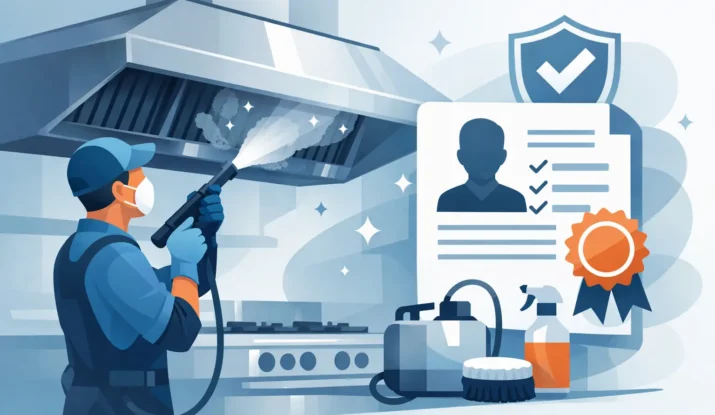
When an inspector asks for proof that your hood system was properly serviced, kitchen exhaust hood cleaning certification stops being a vague industry term and becomes a real business issue. For restaurant owners, kitchen managers, and facility teams, the question is not just whether the system looks clean. It is whether the cleaning was done to an accepted standard, documented correctly, and completed by a provider who understands fire risk and code compliance.
That distinction matters in busy commercial kitchens. Grease does not build up evenly, and it does not stay visible. It collects inside duct runs, around fan components, and in areas your staff cannot safely reach during routine cleaning. If the work is incomplete, you may still have a fire hazard even when the hood canopy appears spotless.
What kitchen exhaust hood cleaning certification actually means
The phrase kitchen exhaust hood cleaning certification can mean different things depending on who is using it. Some people use it to describe a technician’s training or qualifications. Others mean the documentation or service report showing the system was cleaned to a recognized standard. In practice, operators usually need both.
A qualified hood cleaning contractor should understand how to clean the full exhaust system, not just the visible hood. That includes the hood interior, filters, ductwork, fan, and accessible grease collection points. Just as important, the provider should document the service clearly, note any access limitations, and identify conditions that affect safety or compliance.
Certification is not a magic word that guarantees quality. What matters is whether the company follows accepted industry standards, works in line with applicable fire code requirements, and leaves behind accurate records. If a vendor talks about certification but cannot explain scope, process, or documentation, that is a problem.
Why certification matters for compliance and fire safety
Commercial kitchen exhaust systems are there to move heat, smoke, grease-laden vapors, and combustion byproducts out of the kitchen. When grease accumulates inside the system, fire risk rises fast. A flare-up on the line can travel into the hood and ductwork if buildup is heavy enough.
That is why kitchen exhaust cleaning is tied closely to fire prevention, not just appearance. A certified or properly qualified service provider should know where grease hides, how to access difficult areas, and how to clean without damaging components. They should also know when a system needs more frequent service because of cooking volume or menu type.
For operators in Las Vegas, this is especially relevant in high-output kitchens. A steakhouse, casino kitchen, fast-casual concept, and hotel banquet operation do not produce the same grease load. A one-size-fits-all cleaning schedule often falls short. Certification matters because it should come with professional judgment, not just a date on a sticker.
What to look for in kitchen exhaust hood cleaning certification
If you are evaluating vendors, start with the basics. Ask what standards they clean to, what parts of the system are included, and how they document completion. A serious contractor should be able to answer directly.
Training and technical knowledge
A provider handling kitchen exhaust systems should understand grease behavior, fan access, duct configurations, and containment methods. They should also know how to protect surrounding equipment and work around active commercial kitchens with minimal disruption. Training matters because poor technique can leave hidden buildup behind or create a mess that shifts the problem instead of solving it.
Service documentation
Good documentation is part of the job. After cleaning, you should receive a clear record of what was serviced, what was found, and whether any issues need follow-up. If parts of the system were inaccessible, that should be stated plainly. If grease buildup was excessive, that should be noted too.
This is often where kitchen exhaust hood cleaning certification becomes most useful to operators. In an inspection, records matter. They show that you are maintaining the system, not waiting for a problem to force action.
Licensing and regulatory credibility
Certification should not be viewed in isolation. Depending on your market, licensing and fire-authority requirements may matter just as much. A contractor can claim experience, but if they are not operating with the proper credentials for your area, that puts you in a weak position.
For example, working with a Nevada State Fire Marshal licensed provider adds a level of accountability that restaurant operators should take seriously. It shows the company is operating in a compliance-driven environment, not treating hood cleaning like a general janitorial add-on.
Certification does not replace a thorough cleaning
This is where operators need to be careful. A certificate, report, or sticker does not make the system safe on its own. The work behind it does. Some vendors move quickly, clean what is visible, and leave the harder sections for another day that never comes.
A proper service should address the full system as access allows. If access panels are missing, if rooftop fans are difficult to reach, or if the duct layout creates cleaning limitations, those conditions should be discussed openly. There are times when the issue is not contractor effort but system design or deferred maintenance. That is why honest reporting matters.
The best kitchen exhaust hood cleaning certification process supports transparency. It should tell you what was cleaned, what could not be cleaned, and what needs correction before the next service. That level of detail helps you manage risk instead of assuming everything is fine.
How often certified hood cleaning should happen
The right schedule depends on your operation. High-grease cooking operations usually need more frequent service than lighter-use kitchens. A 24-hour kitchen or high-volume restaurant may require much tighter intervals than a prep kitchen with limited cooking.
What matters is consistency and fit. If your provider is recommending the same schedule for every concept, they may not be evaluating your actual risk. Certified service should include some judgment about volume, fuel type, cooking style, and inspection history.
A cheaper schedule can become expensive if it leads to failed inspections, emergency cleanings, equipment strain, or fire exposure. On the other hand, overservicing a low-grease system may not be necessary either. A good contractor will give you a recommendation that reflects your kitchen, not a generic sales pitch.
Questions to ask before hiring a hood cleaning company
Before you commit, ask how the company defines kitchen exhaust hood cleaning certification and what you will receive after the job. Ask whether they clean the hood, ducts, filters, and fan, and how they verify that grease was removed from the full accessible system. Ask what time they can work, how they protect your kitchen, and whether the owner or supervisor checks quality on site.
You should also ask what happens when they find a problem. A dependable provider will explain whether the issue is a cleaning matter, a repair matter, or an access issue that needs to be corrected for proper service in the future. That kind of clarity saves time and reduces finger-pointing later.
For many operators, the best vendor is not the one with the lowest quoted price. It is the one that shows up consistently, documents the work properly, understands code expectations, and does not cut corners when the kitchen is under pressure.
Kitchen exhaust hood cleaning certification and operational reliability
There is a practical side to this beyond inspections. Clean exhaust systems support better airflow, reduce grease fallout, and help kitchens run with fewer avoidable problems. They can also reduce the chance of greasy residue spreading to other surfaces, equipment, and floors.
That makes hood cleaning part of a larger maintenance picture. Fire safety is the first priority, but reliability matters too. If your kitchen is constantly dealing with buildup, odors, smoke issues, or grease around the hood area, the exhaust system may not be getting the level of service it needs.
Experienced commercial providers like Vegas Pressure Clean understand that restaurant operators do not have time to babysit vendors. They need service that is thorough, documented, and scheduled around business realities. That is the real value behind certification when it is backed by actual expertise.
If you are reviewing your current hood cleaning setup, do not just ask whether your vendor is certified. Ask whether the work, paperwork, and follow-through would stand up to inspection and real-world fire risk. That answer will tell you much more than a label ever could.
1 Comment
What Is Range Hood Cleaning? – Vegas Pressure Clean
[…] way that minimizes disruption, especially for kitchens that operate late or early. Clear estimates, documented service, and straightforward communication matter because operators are juggling staffing, vendors, […]