

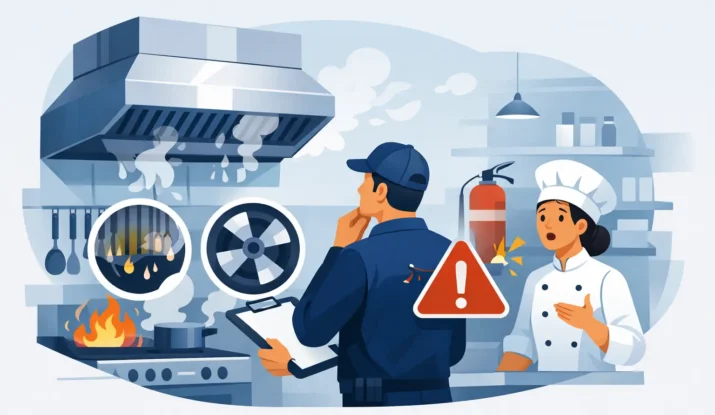
A failed hood inspection can put a Las Vegas kitchen in a difficult position fast. A manager may be asked to correct deficiencies while protecting service hours, employee safety, and the business’s ability to stay open. Understanding what causes hood inspection failures gives operators time to address issues before an inspector, fire official, insurer, or property manager finds them.
Most failures do not come from one dramatic problem. They develop when grease-management work is delayed, hard-to-reach components are overlooked, equipment is altered without proper review, or required records are missing. A clean-looking hood canopy alone is not proof that the exhaust system is safe or compliant.
What Causes Hood Inspection Failures Most Often?
Grease accumulation is the most common underlying issue. Cooking vapor travels through the hood filters, plenum, ductwork, exhaust fan, and rooftop discharge area. As it cools, grease deposits on those surfaces. High-volume kitchens, solid-fuel cooking, charbroiling, wok stations, and operations that fry heavily can build grease faster than operators expect.
When grease is visible on filters, hood interiors, duct access panels, fan blades, or the roof around the fan, an inspector may view it as evidence that the system has not been maintained at the required frequency. The concern is not cosmetic. Grease is fuel. A cooking fire can enter the exhaust system and travel through grease-laden ductwork, creating a much larger fire hazard.
Cleaning frequency depends on the cooking operation and the level of grease-producing equipment. A low-volume kitchen may need less frequent service than a 24-hour casino restaurant or busy strip-mall concept running fryers and grills all day. The correct schedule should be based on actual conditions, applicable fire requirements, and the authority having jurisdiction, not simply the cheapest interval on a service contract.
A frequent problem is partial cleaning. The visible lower hood may be polished, while the plenum behind filters, horizontal duct runs, fan housing, grease containment, and rooftop areas remain dirty. Inspection standards focus on the complete system, including components that are easy to miss during an incomplete or rushed service.
Deficiencies Beyond Grease Buildup
Grease is central, but it is not the only reason an exhaust hood system may fail inspection. Several mechanical, access, and housekeeping conditions can lead to a correction notice.
Missing, damaged, or improperly installed filters
Baffle filters are designed to remove grease from the air stream before it enters the duct system. Missing filters, bent filters, filters installed backward, or filters with large gaps allow more grease into areas that are harder and more expensive to clean. Filters also need to fit securely. If they are loose or improperly seated, they may not perform as intended and can create a hazard for kitchen staff.
Filters should be cleaned regularly by the kitchen team and inspected for damage. Regular filter cleaning does not replace professional exhaust cleaning, but it reduces grease loading between scheduled services.
Inaccessible ductwork and fan components
An inspector or qualified cleaning contractor must be able to access the duct system. Access panels that are painted shut, blocked by walls or ceilings, too small for proper cleaning, missing entirely, or covered by equipment can become a serious compliance concern.
The same applies to the rooftop exhaust fan. If a fan cannot be safely opened, serviced, and cleaned, grease can accumulate inside the housing and on the blades. Poor access often occurs after tenant improvements, ceiling work, equipment moves, or roof modifications. A restaurant may have had an acceptable system when it opened, then lost practical access during a later renovation.
Fan, duct, and grease-containment problems
The exhaust fan must operate correctly and discharge safely. Excess grease on fan blades can affect performance and balance. A damaged hinge kit, failed fan belt, loose electrical connection, or malfunctioning fan can reduce airflow and leave more heat and smoke in the kitchen.
On the roof, grease runoff is another concern. Grease that leaks from the fan onto the roof can damage roofing materials, create a slip hazard, and signal a neglected exhaust system. Grease-containment components must be maintained, changed when saturated, and sized appropriately for the fan and cooking load. Simply placing an old absorbent pad under a leaking fan is not a lasting correction.
Fire suppression system issues
The hood exhaust system and the fire suppression system work together, but they are separate systems with separate service requirements. A hood cleaning company is not a substitute for a licensed fire suppression contractor. However, exhaust cleaning often reveals conditions that need attention, such as obstructed nozzles, missing nozzle caps, damaged detection lines, or appliances that have been moved outside suppression coverage.
If cooking equipment is added, relocated, or replaced, the suppression system may need to be reviewed and adjusted. A kitchen layout change that seems minor operationally can create a significant inspection problem if the protected area no longer matches the equipment under the hood.
Records, Labels, and Proof of Service Matter
A properly cleaned system still may raise questions if there is no documentation showing when it was serviced and who performed the work. Inspectors and facility managers commonly look for a current service sticker and a cleaning report that identifies the work performed, the service date, and the contractor.
Records provide a maintenance history. They show that the operator has a consistent program rather than responding only after grease becomes visible. Keep reports in a location that managers can access during an inspection, especially when multiple locations or rotating management teams are involved.
The service label should be visible, current, and accurate. Do not rely on an old sticker as proof that the work is current. If cleaning frequency needs to increase because menu volume or cooking methods have changed, the documentation should reflect the new schedule.
How to Avoid Hood Inspection Failures Before They Happen
The most reliable approach is a scheduled maintenance program paired with regular kitchen-level checks. Waiting until grease drips, smoke lingers, or an inspection is scheduled usually costs more and creates more disruption than routine service.
Start by matching the exhaust cleaning interval to the operation. A busy kitchen should not use the same schedule as a light-use facility just because the systems look similar. Cooking volume, hours of operation, appliance type, and the amount of grease-laden vapor all affect buildup.
Between professional cleanings, kitchen managers should make sure filters are present and correctly installed, the hood canopy and accessible surfaces are wiped down, and no one blocks duct access doors or fire suppression equipment with stored supplies. Managers should also watch for unusual fan noise, reduced capture of smoke, grease leaking onto the roof, or grease appearing around the exterior of the duct or fan.
Before a planned inspection, walk the system with a practical eye. Check that service labels and reports are available, filters are intact, access panels can open, the fan area is not leaking grease, and equipment remains positioned under proper hood and suppression coverage. If the kitchen has been remodeled or new appliances have been added, arrange a review before the inspection date rather than assuming the existing setup remains acceptable.
A qualified hood cleaning provider should clean to bare metal where accessible and identify conditions that cannot be corrected through cleaning alone. That distinction matters. Cleaning can remove grease, but it cannot correct a damaged fan, redesign inaccessible ductwork, or recertify a suppression system. Honest reporting gives the operator a clear path to the right repair or specialist.
Keep Compliance From Becoming an Emergency
Hood inspection failures are usually preventable when the exhaust system is treated as a fire-safety asset, not a background utility. For Las Vegas operators, a dependable cleaning schedule, complete documentation, and early attention to access or equipment changes can prevent avoidable correction notices and service interruptions.
Vegas Pressure Clean helps commercial kitchens maintain cleaner exhaust systems with owner-led service focused on grease removal, safety, and code-minded results. Addressing buildup before the next inspection gives your team more control, fewer surprises, and a safer kitchen to operate every day.