

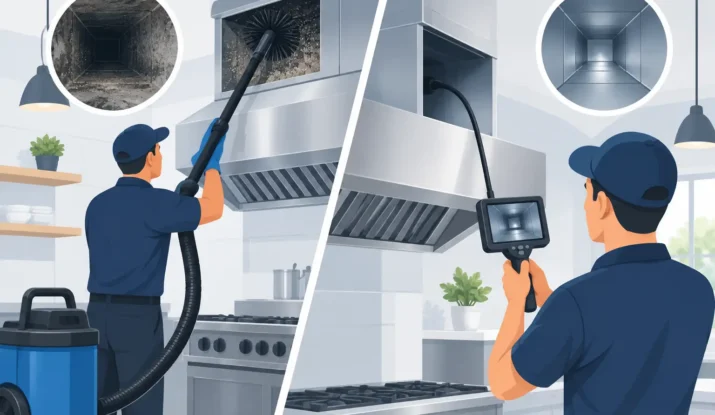
A clean-looking hood line can still hide a serious grease hazard above the filters. That is why duct cleaning versus inspection is not an either-or decision for most commercial kitchens. One service removes combustible buildup from the exhaust system. The other evaluates the condition of that system and identifies concerns that may require attention. Both protect your operation, but they do different jobs.
For Las Vegas restaurants, hotel kitchens, bars, cafeterias, and other foodservice operations, understanding the difference helps prevent missed maintenance, failed inspections, avoidable fire risk, and costly disruption during service.
What kitchen exhaust duct cleaning does
Kitchen exhaust duct cleaning is the hands-on removal of grease, oil, smoke residue, and carbon buildup from the hood, plenum, ductwork, exhaust fan, and accessible related components. The purpose is straightforward: reduce combustible grease accumulation and return the system to a clean, serviceable condition.
During a proper cleaning, technicians access the full exhaust path as practical, not just the visible hood. Filters are removed, grease is contained, and the hood interior, vertical and horizontal ducts, fan, and other reachable surfaces are cleaned using methods appropriate for the system and the site. A contractor should protect cooking equipment and nearby surfaces throughout the work, then leave the kitchen orderly for your team.
This is not cosmetic cleaning. Grease can collect far beyond the hood opening, including inside duct turns, on fan blades, and at rooftop exhaust equipment. In a high-volume kitchen, that buildup can develop quickly. If a cooking fire reaches the exhaust system, accumulated grease can become fuel and allow fire to travel beyond the cooking area.
Cleaning also supports daily operations. Heavy buildup can affect airflow, contribute to smoke or heat lingering in the kitchen, and make the back of house harder to maintain. While cleaning will not fix every ventilation issue, it removes one major source of restriction and contamination.
What an exhaust system inspection does
An inspection is an assessment of the hood and exhaust system condition. The person performing it looks for visible grease accumulation, access limitations, damaged components, signs of poor prior service, fan or duct concerns, and other conditions that may affect fire safety or compliance.
An inspection may occur as part of a fire-prevention visit, a facility audit, a maintenance review, or a cleaning contractor’s pre-service evaluation. It can identify whether cleaning is due, but inspection alone does not remove grease.
For example, an inspector may find that a duct access panel is missing, a fan hinge kit needs attention, grease has escaped around a component, or areas of the system are not being reached during routine service. Those findings are valuable because they point to work that should be scheduled. They are not a substitute for performing that work.
The distinction matters when a manager hears that the hood “passed inspection.” A system may appear acceptable at a particular moment while still needing scheduled cleaning based on the cooking volume, fuel type, equipment mix, and applicable fire-code requirements. Likewise, a freshly cleaned system may still have an access, mechanical, or installation issue that requires correction.
Duct cleaning versus inspection: the practical difference
The easiest way to separate duct cleaning versus inspection is to think of cleaning as corrective maintenance and inspection as verification. Cleaning addresses grease already in the system. Inspection checks the condition of the system and confirms whether cleaning, repair, improved access, or another action is needed.
Neither service should be treated as paperwork. A useful inspection gives an operator a clear picture of risk. A thorough cleaning provides physical risk reduction. When they are coordinated, the result is better documentation, fewer surprises, and a more reliable maintenance plan.
There are also differences in timing. Cleaning is generally scheduled on a recurring basis according to cooking operations and fire-safety requirements. Inspection may happen on a separate schedule or when a concern arises, such as visible grease, reduced capture performance, an upcoming authority review, a change in kitchen operations, or a new facility manager taking over maintenance.
When cleaning should be the priority
If grease is visible inside the hood or around the filters, cleaning should not wait for a future inspection to confirm what your staff can already see. The same is true if grease is dripping, the fan area is heavily soiled, or previous records show that the cleaning interval has been missed.
Cleaning should also be the immediate focus after a kitchen fire, a grease-related incident, or any event that may have pushed contaminants deeper into the exhaust system. The system may require a careful evaluation as well, but removing hazardous residue is a direct safety need.
High-output equipment often demands closer attention. Charbroilers, woks, solid-fuel cooking equipment, fryers, and long operating hours can produce grease at a much faster rate than a light-duty kitchen. A cleaning frequency that worked for a low-volume cafe may not be adequate for a busy resort restaurant or a late-night bar kitchen.
When an inspection adds the most value
Inspection is especially useful when the maintenance history is unclear. If you have acquired a restaurant, changed management companies, remodeled the kitchen, or inherited incomplete service records, an inspection can establish a realistic starting point.
It is also valuable when you suspect the system is not being cleaned completely. Repeated grease staining, smoke escaping from the hood, unusual fan noise, or difficult-to-reach duct sections can indicate a problem that ordinary scheduling alone will not solve. In some cases, the issue is not a lack of cleaning but inadequate access, a damaged fan component, or an exhaust design concern that needs separate attention.
An inspection before a major compliance review can give management time to address findings without rushing a contractor or disrupting service. That does not mean waiting until an inspection is announced. It means maintaining the system consistently so your kitchen is prepared at any time.
What to expect from a qualified cleaning provider
For commercial kitchens, the provider matters as much as the service label. A qualified exhaust cleaning company should understand that hood cleaning is tied to fire safety, not simply appearance. The crew should be able to explain what areas are included, how access will be handled, what condition was found, and whether there are concerns outside the scope of routine cleaning.
Ask for clear service records that document the work performed and the date of service. Keep those records available for management, insurers, and authorities having jurisdiction. If a provider identifies a condition requiring repair or additional work, request a direct explanation rather than a vague recommendation.
Scheduling is another practical concern. Cleaning work should be planned around your hours whenever possible, with proper containment and a realistic understanding of reopening requirements. The lowest quote is not always the lowest operating cost if incomplete work leaves grease in the system, creates a mess in the kitchen, or leads to repeat service sooner than expected.
Vegas Pressure Clean approaches exhaust cleaning with the same priority kitchen operators have: complete the work professionally, protect the facility, and help keep the operation ready for the next shift and the next compliance check.
Build a maintenance plan around your actual kitchen
There is no responsible one-size-fits-all answer for every exhaust system. Your cleaning and inspection needs depend on cooking volume, menu, equipment, operating hours, system layout, prior conditions, and applicable local requirements. A busy steakhouse and a small sandwich shop should not automatically follow the same maintenance plan.
Start with accurate records, use a qualified provider, and respond promptly when an inspection identifies a concern. If grease is present, cleaning is the action that removes it. If the system’s condition is uncertain, inspection provides the information needed to make the right decision.
The most dependable approach is to treat your exhaust system as a working fire-safety component, not an out-of-sight task. Schedule service before buildup becomes a problem, keep documentation organized, and ask direct questions whenever a condition does not look right.