

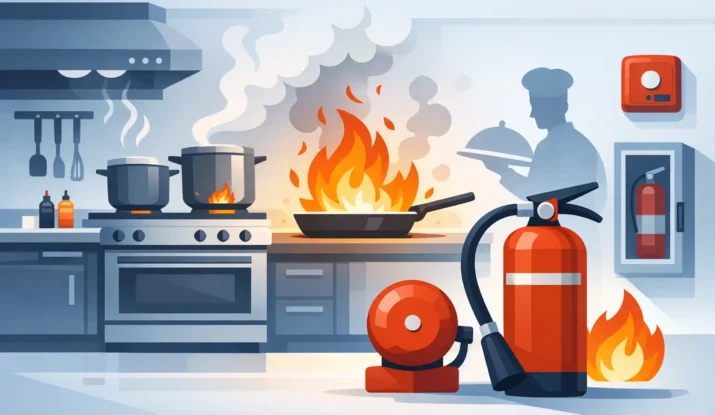
A fryer flare-up during a Friday dinner rush can shut down service in seconds. In a busy restaurant, hotel kitchen, or commissary, fire risk usually starts long before you see flames. It builds quietly in grease-laden hoods, overworked ductwork, neglected filters, hot cooking lines, and rushed closing routines. This commercial kitchen fire safety guide is built for operators who need practical control over those risks without slowing down the business.
Fire safety in a commercial kitchen is not just about having an extinguisher on the wall. It is about reducing fuel sources, keeping suppression systems ready, training staff to react correctly, and making sure the exhaust system is cleaned often enough to stay compliant and safe. When one part gets overlooked, the whole kitchen becomes more vulnerable.
Why commercial kitchen fire safety starts with grease control
Most operators understand that grease is messy. The bigger issue is that grease is fuel. As vapors rise from cooking equipment, they collect in hood filters, plenum areas, ducts, and exhaust fans. Over time, that buildup becomes a fire path. A small flame at the cook line can move upward fast if the exhaust system is loaded with grease.
That is why kitchen fire safety is closely tied to cleaning frequency, not just emergency equipment. A suppression system may help contain a fire, but it does not replace preventive maintenance. If grease accumulation is heavy, the consequences can still include equipment damage, downtime, smoke contamination, and failed inspections.
High-volume kitchens often need more frequent service than managers expect. A steakhouse, fast-casual fryer line, casino kitchen, or 24-hour operation will produce grease at a very different rate than a light-duty prep kitchen. The right cleaning schedule depends on cooking volume, menu type, hours of operation, and the design of the exhaust system.
The highest-risk areas in a commercial kitchen
The cooking line gets most of the attention, but fire risk extends well beyond the visible hood canopy. Filters are the first line of defense, and when they are clogged or missing, grease passes deeper into the system. The plenum behind the filters can hold significant buildup if cleaning is inconsistent.
Ductwork is where many operators lose visibility. Because it is out of sight, it is easy to assume it is fine. In reality, grease can accumulate throughout the duct run and create a serious hidden hazard. The exhaust fan on the roof is another trouble spot. If it is coated with grease, airflow suffers, heat and vapors linger, and the system becomes harder to clean properly.
Cooking equipment also matters. Deep fryers, charbroilers, griddles, ranges, and ovens each create different levels of grease and heat. Charbroilers and high-grease frying operations usually require closer attention because they generate heavy residue quickly. If equipment is not cleaned regularly around burners, behind units, and under the line, ignition sources and grease deposits end up too close together.
Your commercial kitchen fire safety guide for daily operations
Daily habits are where prevention either holds up or breaks down. The strongest fire safety plan is one that fits real kitchen operations, not just a binder on a shelf.
Opening crews should confirm that hood filters are installed correctly, cooking areas are free of leftover grease, and suppression pull stations are accessible. Closing crews should clean line equipment thoroughly, empty grease containers safely, and leave no buildup around high-heat appliances. It sounds basic, but many preventable fires start with small misses at the end of a long shift.
Managers should also pay attention to airflow. If the hood seems less effective, the kitchen feels smokier than usual, or grease is collecting faster on nearby surfaces, the exhaust system may need service. Poor airflow is not just a comfort issue. It can signal restricted filters, duct buildup, or fan problems that increase fire risk.
Storage practices deserve attention too. Cardboard, towels, chemicals, and disposable goods should never crowd hot equipment. Temporary storage habits often develop during busy periods, especially in tight kitchens. Those habits can turn a manageable incident into a larger fire.
Cleaning schedules: what matters more than good intentions
A written cleaning schedule is one of the most useful fire prevention tools in the building. It should separate what staff handles daily from what requires specialized service. Line wiping and surface degreasing are important, but they are not the same as exhaust hood, duct, and fan cleaning.
The trade-off is simple. Waiting longer between professional cleanings may look like a way to save money, but it often creates larger costs through fire exposure, mechanical strain, inspection issues, and emergency service needs. On the other hand, overscheduling service without considering actual cooking load may not be necessary for every facility. The right interval should match the kitchen, not a guess.
For many operators, the best approach is to review cleaning frequency after menu changes, equipment changes, or volume increases. A kitchen that adds frying, extends hours, or expands production can outgrow its old schedule quickly. Staying on the same plan just because it worked last year is where problems start.
Suppression systems, extinguishers, and inspections
A compliant fire suppression system is critical, but it only works if it is inspected and maintained properly. Nozzle caps need to be in place. Manual pull stations must stay visible and accessible. Staff should know what the system protects and what happens when it activates, including gas or power shutoff where applicable.
Portable extinguishers matter too, especially Class K units for cooking media fires. Staff should know where they are and when to use them. The bigger point is judgment. If a fire is small and staff are trained, an extinguisher may help. If the fire is spreading, the priority is evacuation and emergency response, not heroics.
Inspections should never be treated as paperwork only. They are a chance to catch blocked access, missing maintenance, damaged components, and bad habits before they lead to a shutdown. The best operators use inspection readiness as a weekly standard, not a scramble the day before someone arrives.
Staff training is part of fire prevention
Even a clean kitchen can become unsafe if the staff is not trained. New hires should learn basic fire response, grease handling, shutoff locations, and reporting procedures early. Refresher training is just as important for experienced teams, especially in kitchens with turnover, split shifts, or multiple managers.
Training should be practical. Show employees how to recognize excessive grease buildup, what to do if hood filters are missing, how to respond to a flare-up, and when to stop cooking and call for help. A short, clear procedure that gets repeated regularly is more useful than a dense manual no one reads.
Managers should also make reporting easy. If employees notice smoke rollout, unusual fan noise, visible grease drip, or poor hood capture, they should feel responsible for speaking up. Small warning signs usually show up before major failures.
Choosing the right hood cleaning partner
Not every cleaning company is built for commercial kitchen fire risk. This work requires specialized knowledge of hoods, ducts, fans, grease patterns, access points, and code-driven cleaning standards. A general cleaning vendor may handle surfaces well but still miss the areas that matter most for fire prevention.
When evaluating a provider, look for experience in commercial exhaust system cleaning, clear documentation, dependable scheduling, and an understanding of fire code expectations. Ask how they assess buildup, what parts of the system are included, and how they work around operating hours. The goal is not just to make the hood look better. The goal is to reduce risk and keep the kitchen inspection-ready.
For Las Vegas operators, that local experience matters. High-volume kitchens, long operating hours, and demanding service environments can accelerate grease buildup. A specialized provider such as Vegas Pressure Clean understands that fire safety work has to be thorough, accountable, and timed around real operations.
What operators should do next
If you want this commercial kitchen fire safety guide to turn into action, start with an honest look at your current condition. Check the hood filters, ask when the full system was last cleaned, confirm inspection records are current, and walk the line the way a fire inspector would. Most kitchens do not need dramatic changes. They need consistent ones.
The safest kitchens are not the ones that never get busy. They are the ones that keep grease under control, train their teams well, and treat fire prevention as part of daily operations. A clean exhaust system, a prepared staff, and a realistic maintenance schedule can protect far more than equipment. They help protect service, reputation, and the people working the line.
Comments (3)
What Is a Grease Duct in a Commercial Kitchen? – Vegas Pressure Clean
[…] can spread beyond the appliance and hood area. This is why exhaust cleaning is directly tied to fire prevention, not just kitchen […]
Grease Duct Access Panel Guide for Safer Kitchens – Vegas Pressure Clean
[…] able to wash part of the system but not all of it. That leaves fuel inside the exhaust path. If a cooking fire enters the hood and duct, accumulated grease can help that fire spread beyond the cooking […]
Grease Cleanup After Overflow for Commercial Kitchens – Vegas Pressure Clean
[…] floor overflow is different from accumulation inside a hood and duct system, both point to the same operational risk: grease is combustible, persistent, and capable of migrating into places where it does not […]