

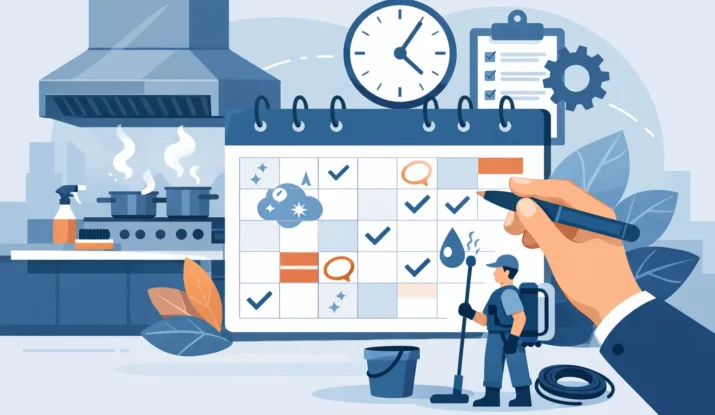
If you are figuring out how to schedule hood cleaning, the real question is not just when to book a service. It is how to set up a cleaning schedule that keeps your kitchen fire-safe, inspection-ready, and operating without unnecessary disruption.
For restaurant owners, kitchen managers, and facility teams, hood cleaning is not a cosmetic task. Grease accumulation inside the hood, ductwork, and exhaust fan can create serious fire risk, reduce airflow, affect kitchen comfort, and put you in a bad position during inspections. A good schedule protects the business. A poor one usually shows up at the worst possible time.
How to schedule hood cleaning based on kitchen use
The right schedule starts with usage, not guesswork. A high-volume restaurant pushing grease-heavy cooking all day will need service far more often than a small facility with limited cooking hours. The type of food you prepare matters too. Kitchens cooking with charbroilers, fryers, woks, or solid fuel generally produce more grease and residue than lighter-duty operations.
That is why there is no single calendar that fits every kitchen. Some operations need monthly cleaning. Others may be on a quarterly or semiannual schedule. The right interval depends on cooking volume, menu, hours of operation, equipment mix, and how quickly grease is building up in the system.
A practical way to approach scheduling is to look at your real conditions, not your ideal ones. If your team is cleaning filters regularly but you still see heavy buildup around the canopy or notice reduced exhaust performance, your current interval may be too long. If recent service reports consistently show low grease accumulation, there may be room to confirm whether your current frequency is still appropriate. The goal is to match the schedule to the hazard level.
Start with code, then adjust for reality
Fire code and industry standards should always be the baseline. Commercial kitchen exhaust systems are cleaned according to the level of use and grease production. If your operation falls into a category that requires more frequent service, that is where your planning should begin.
But code minimums are not always the same as operational best practice. In a busy Las Vegas kitchen, especially in hospitality or late-night foodservice, heavy production can put more strain on the system than a simple category label suggests. If you are dealing with long hours, high heat, and nonstop line activity, waiting until the last acceptable moment is risky.
The better approach is to build your schedule around both compliance and actual kitchen conditions. That gives you more control and reduces the chance of emergency service, failed inspections, or avoidable shutdowns.
Signs your hood cleaning frequency is too low
If you are unsure whether your current schedule is working, pay attention to what the system is telling you. Grease dripping, strong burnt odors, visible buildup on accessible areas, excess smoke, or poor ventilation are all warning signs. So is a kitchen that feels hotter than usual because airflow is being restricted.
Another common issue is relying on surface appearance. A hood may look acceptable from the outside while the duct and fan system above it has significant grease buildup. That is why professional inspection matters. The hidden parts of the system are often where the real risk develops.
Build a schedule around your operating hours
One of the biggest mistakes operators make is treating hood cleaning like a simple maintenance appointment. It is not like changing an office filter during business hours. Proper exhaust cleaning affects critical kitchen infrastructure and should be scheduled when it will cause the least disruption.
For most restaurants, that means after closing, before opening, or during a planned off-period. Overnight service is often the best fit for busy kitchens because it keeps the line available for production and reduces interference with prep, staff movement, and customer service. For properties with multiple food outlets, scheduling may need to be staggered by kitchen or coordinated with broader facility maintenance.
When planning service times, think beyond the cleaning window itself. Account for access, security, cool-down time for equipment, and any post-cleaning verification your team may need before the next shift. A dependable provider will help work through those details so service happens with minimal operational friction.
What to prepare before booking
Scheduling goes more smoothly when you have the basics ready. You should know the type of kitchen operation, your approximate cooking volume, when the system was last cleaned, and whether there are any problem areas such as hard-to-reach ducts, rooftop fan access, or recurring grease issues.
It also helps to confirm your preferred service window, site contact information, and any property access requirements. If your kitchen is inside a hotel, casino, food hall, school, or shared commercial facility, coordination may involve engineering, security, or management approval. The more complete the information, the easier it is to schedule accurately.
Work with a provider that understands compliance
If you want to know how to schedule hood cleaning properly, vendor selection is part of the answer. A general cleaning company may not be equipped for fire-code-driven kitchen exhaust work. You need a specialist who understands hoods, ducts, fans, grease hazards, and the documentation that comes with the job.
That matters because the service is not just about removing visible residue. It is about cleaning the full accessible exhaust path to the required standard, identifying issues that affect safety, and helping the operator maintain records that support inspections and ongoing maintenance.
A qualified provider should be able to explain recommended frequency based on your operation, identify whether your current schedule is realistic, and perform the work in a way that protects the kitchen and surrounding areas. They should also be clear about what is included, what access is needed, and whether additional grease-management services may make sense for your site.
In Las Vegas, many operators prefer working with specialists who know the pace and demands of local commercial kitchens. That local experience can make a difference when you need recurring service done reliably and on schedule.
Set recurring service instead of waiting for reminders
The easiest way to fall behind is to treat hood cleaning as a one-time task. A better system is to set recurring service at the interval that fits your kitchen and revisit it if conditions change.
Recurring scheduling removes the burden from your management team and helps prevent missed cleanings during busy seasons, staffing changes, or ownership transitions. It also creates a record of consistent maintenance, which is useful when inspections occur or when facilities teams need to review vendor performance.
There is a trade-off, though. A fixed recurring schedule only works if it reflects actual kitchen activity. If your operation adds equipment, extends hours, increases fryer volume, or shifts to a grease-heavier menu, the old interval may no longer be enough. Review the schedule periodically rather than assuming it can stay the same forever.
Documentation matters more than many operators think
When hood cleaning is completed, keep the service records organized and accessible. That includes invoices, service dates, cleaning reports, and any stickers or documentation tied to the exhaust system. If an inspector asks about maintenance, you do not want to scramble.
Good documentation also helps with internal planning. You can track whether grease buildup is increasing, whether service frequency needs adjustment, and whether certain locations or kitchen lines need closer attention. For multi-unit operators, this becomes even more valuable because it gives consistency across sites.
Avoid the last-minute scheduling trap
Waiting until you see a problem is usually more expensive than scheduling routine service on time. Emergency cleanings can disrupt operations, create staffing headaches, and leave you with fewer scheduling options. The same goes for waiting until just before an expected inspection. By then, the provider you want may not have the ideal time slot available.
Advance scheduling gives you better control over timing and allows the work to be done without unnecessary pressure. It also gives your provider time to plan for access issues, rooftop setup, or special cleaning requirements if your system has gone too long between services.
For many commercial kitchens, the best approach is simple. Assess your cooking volume honestly, use code and professional guidance as the baseline, schedule service during low-impact hours, and keep it recurring. If you are not sure what frequency makes sense, ask for an evaluation based on your operation rather than relying on a generic timeline.
A clean hood system does more than satisfy a maintenance checklist. It supports safer work, better airflow, and fewer surprises when your kitchen is already busy enough. If you set the schedule correctly now, the rest of the year gets easier.
Comments (2)
Choosing a Licensed Hood Cleaning Company – Vegas Pressure Clean
[…] the hood, ducts, and fan access points, explain the condition of the system, and recommend a cleaning schedule based on cooking volume and grease production. A high-output kitchen with charbroilers and fryers […]
Fire Code Compliance Trends for Las Vegas Kitchens – Vegas Pressure Clean
[…] practical trend is clear: schedules are becoming more risk-based. Rather than waiting for visible buildup or an inspection notice, responsible operators are […]