

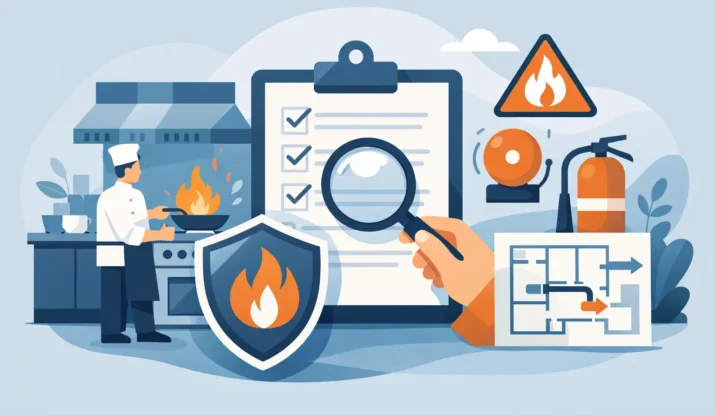
A fryer flare-up rarely starts with one big mistake. More often, it starts with grease that built up a little at a time, a fan that was not pulling properly, or a duct run that looked fine from the kitchen floor but was loaded with fuel inside. That is why a foodservice fire risk assessment matters. For restaurant owners, kitchen managers, and facility teams, it is not paperwork for its own sake. It is a practical way to find fire hazards before they turn into an emergency, a failed inspection, or lost service hours.
What a foodservice fire risk assessment actually covers
In a commercial kitchen, fire risk is tied to heat, fuel, airflow, equipment condition, and cleaning frequency. A proper assessment looks at how those factors work together in the real world, not just whether a hood is present over the cooking line.
The biggest concern in many kitchens is grease-laden vapor. As cooking equipment runs, that vapor moves into the hood, through filters, into ductwork, and toward the exhaust fan. If grease is not removed on a schedule that matches the kitchen’s volume and cooking type, it accumulates. Once buildup reaches a certain point, the exhaust system itself can help carry fire instead of containing it.
A good assessment also looks beyond the hood. Fryers, charbroilers, ranges, ovens, rooftop fans, electrical connections near heat sources, and suppression components all affect fire exposure. So do housekeeping issues like grease on walls, behind equipment, or on the floor where staff work fast during service.
Why kitchens in Las Vegas need a realistic fire risk review
Las Vegas foodservice operations often run hard. Extended hours, high turnover in staff, fast-paced production, and heavy grease output can push maintenance schedules past the point where they are still safe. A kitchen that was cleaned on the right cycle six months ago may no longer be on the right cycle today.
That is where operators can get into trouble. Many assume risk stays the same if the menu does not change much. In practice, small operational changes add up. More late-night business, a busier season, worn baffle filters, or a fan problem can increase grease accumulation and heat retention without much warning.
A foodservice fire risk assessment should reflect actual operating conditions. If a kitchen uses solid-fuel cooking, runs high-volume frying, or serves around the clock, the risk profile is different from a small daytime cafe. The answer is not always more cleaning everywhere. It is targeted attention where fire load and grease production are highest.
The areas that deserve the closest look
Most kitchen fire problems are not hidden in theory. They show up in predictable places. The hood interior should be checked for grease thickness, filter condition, and evidence that airflow is being restricted. Duct access matters too, because a system cannot be properly cleaned or inspected if key sections are hard to reach.
The exhaust fan is another common weak point. If the fan is not operating efficiently, vapors and grease can collect where they should not. A loose hinge kit, poor sealing, neglected fan blades, or rooftop grease leakage can all signal that the system is not being maintained as a fire-safe assembly.
Cooking equipment spacing and condition also matter. Open-flame appliances near combustible surfaces, damaged fryer components, and neglected pilot areas increase the chance of ignition. Fire suppression systems need equal attention. No operator wants to find out during an incident that nozzles were obstructed, pull stations were inaccessible, or inspection intervals were missed.
Then there is the part many teams underestimate – surrounding grease contamination. Grease on floors, under equipment, on wall surfaces, and around dumpsters may seem like a housekeeping issue first, but it also raises fire risk and creates dangerous working conditions. Slip hazards and fire hazards often come from the same neglected buildup.
Common gaps a foodservice fire risk assessment reveals
One of the most frequent problems is relying on a fixed hood cleaning schedule that no longer matches the kitchen. A quarterly service may have been enough when output was lower, but a busier operation can outgrow that interval quickly. The opposite can also happen. Some operators overspend in low-volume areas while missing heavier-risk equipment that needs more attention.
Another common gap is treating visible cleanliness as proof of safety. A stainless hood can look polished from the outside while the duct interior and fan housing hold significant grease. Fire inspectors and experienced service providers know the difference. The risk is in the system, not just the surfaces staff see every shift.
Access is another issue. If access panels are missing, if rooftop fan service is difficult, or if equipment placement blocks inspection and cleaning, the system may not be getting the level of maintenance it needs. These are not minor inconveniences. They directly affect whether hazards can be found and corrected.
There is also the documentation side. Records of hood cleaning, suppression inspections, and maintenance history help establish whether the operation is keeping up with fire safety responsibilities. If records are incomplete, it becomes harder to prove compliance and easier for small issues to keep repeating.
How to use the assessment to make better maintenance decisions
The value of an assessment is not simply identifying risk. It is using that information to set a maintenance plan that fits the kitchen. A serious review should help answer a few practical questions. How fast is grease accumulating in this system? Which appliances create the highest fire load? Are there warning signs that airflow, cleaning access, or suppression coverage are falling short?
From there, maintenance becomes more precise. Some kitchens need more frequent exhaust hood cleaning because of menu mix and production volume. Others need corrective work first, such as restoring access, addressing heavy fan contamination, or cleaning neglected equipment and floor areas that create secondary hazards.
This is where experienced commercial kitchen specialists bring real value. They can tell the difference between a kitchen that needs routine service and one that is developing a code or fire problem. For busy operators, that practical judgment matters more than generic advice.
Compliance matters, but operations matter too
Fire safety work has to stand up to inspection, but it also has to work in an active kitchen. That means the best solutions are the ones that reduce risk without creating unnecessary disruption. Scheduling after hours, keeping service intervals consistent, and addressing problem areas before they trigger downtime all support safer operations.
There are trade-offs. Delaying cleaning may save money this month, but it raises the chance of emergency service, equipment strain, and business interruption later. On the other hand, throwing resources at every surface without understanding actual fire exposure is not efficient either. The right approach is based on the kitchen’s real conditions.
For multi-unit operators and facility managers, consistency is often the challenge. One location may stay on schedule while another slips due to staffing or volume changes. A structured assessment process helps standardize decisions across sites so maintenance is driven by risk, not guesswork.
What operators should expect from a qualified provider
A provider handling kitchen exhaust and grease-management work should understand that the job is about more than appearance. They should be able to identify buildup patterns, access issues, fan problems, and cleaning frequency concerns that affect fire safety and compliance.
They should also communicate clearly. Operators need straightforward recommendations, honest pricing, and service that can be performed with minimal disruption. In a market like Las Vegas, where kitchens often run long hours and cannot afford downtime, that reliability is part of the safety equation.
Companies focused on hood, duct, and fan cleaning – especially those working under fire-code-driven standards – are in a better position to support a meaningful risk review. Vegas Pressure Clean works in that lane, with a local focus on helping commercial kitchens stay clean, compliant, and better protected from grease-related fire hazards.
Foodservice fire risk assessment is an ongoing process
No commercial kitchen stays static for long. Staff changes, menu changes, equipment wear, seasonal volume, and deferred maintenance all shift risk over time. That is why a foodservice fire risk assessment should be treated as an operating discipline, not a one-time event.
When operators look at fire risk this way, better decisions follow. Hood cleaning intervals make more sense. Grease problems get addressed before they spread. Managers have clearer records. Inspectors see a kitchen that is being actively maintained, not patched together at the last minute.
The best time to assess fire risk is before there is visible trouble, before the inspection notice, and before a small ignition source finds built-up fuel. In a working kitchen, prevention is always less disruptive than recovery. A clean, well-maintained exhaust system and a realistic view of fire exposure give your team a safer place to work and your business a better chance to keep service moving without avoidable setbacks.
If your kitchen has gotten busier, your cleaning schedule has not been reviewed in a while, or grease is showing up in places it should not, that is a sign to take a closer look now rather than after a problem forces the issue.