

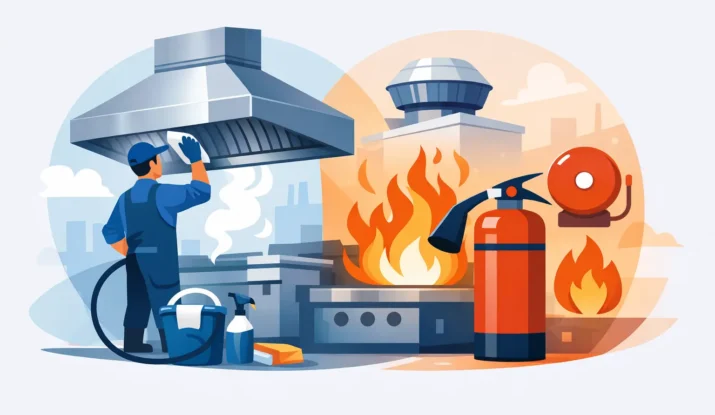
A failed kitchen fire inspection usually does not start with a broken system. It starts with grease that built up a little at a time in the hood, duct, or fan until the entire exhaust system became a fire hazard. That is why hood cleaning fire code requirements matter so much for restaurants, casinos, hotels, schools, and any commercial kitchen running hot equipment day after day.
For operators in Las Vegas, this is not just a maintenance issue. It is a life safety issue, a compliance issue, and a business continuity issue. When grease accumulates beyond acceptable levels, fire risk goes up, airflow drops, equipment works harder, and inspections become a real concern. Knowing what the code expects helps you plan service before the problem becomes expensive.
What hood cleaning fire code requirements are really about
Most commercial kitchen exhaust cleaning standards trace back to NFPA 96, which sets the baseline for ventilation control and fire protection of commercial cooking operations. Local fire authorities and inspectors often use that standard when they evaluate whether a kitchen exhaust system is being maintained properly.
In practical terms, the code is focused on one thing: preventing grease fires from spreading through the exhaust system. Grease-laden vapors move through the hood, into the ductwork, and up to the exhaust fan. If those surfaces are not cleaned often enough, they become fuel. Once a fire enters the plenum or duct, it can spread fast and reach areas the kitchen staff cannot safely access.
That is why code does not treat hood cleaning as cosmetic work. It is a fire prevention service. A proper cleaning must remove grease from the entire system, not just the visible surfaces over the line.
What inspectors look for during a hood cleaning fire code requirements review
An inspector is not judging whether the stainless steel looks shiny. They are looking for evidence that the exhaust system is being maintained to code. That includes the hood canopy, filters, duct interiors, access panels, and exhaust fan.
If grease is present in quantities that could ignite, the system may be considered noncompliant. Heavy buildup around fan hinges, duct seams, inaccessible runs, and hidden interior surfaces is a common problem, especially in busy kitchens that clean what they can see but do not address the full system.
Inspectors also look for documentation and service history. After a professional cleaning, a service sticker is typically placed on the hood showing when the work was completed and when the next service is due. That record helps demonstrate that the kitchen is following a regular maintenance schedule rather than reacting only when there is visible buildup.
Access is another point that gets overlooked. If parts of the duct system cannot be reached for proper cleaning, additional access panels may be needed. A system that cannot be fully cleaned is a problem even if the hood itself appears acceptable.
How often code requires hood cleaning
This is where many operators ask for a simple answer, but the real answer is that it depends on cooking volume, fuel type, and grease output. Fire code cleaning frequency is based on the type of operation, not a one-size-fits-all calendar.
High-volume or solid-fuel operations usually need service much more often. Kitchens serving around the clock, producing heavy grease vapors, or using charbroilers and woks can require monthly service or even more frequent attention. Moderate-volume kitchens may fall on a quarterly schedule. Lower-volume operations such as churches, seasonal kitchens, or limited-use facilities may have longer intervals.
The key point is that the schedule has to match the actual grease load. If your kitchen has changed menus, extended hours, added higher-output cooking equipment, or increased production, an old cleaning schedule may no longer be enough. That is often when operators get surprised during an inspection.
What a compliant hood cleaning should include
A code-focused cleaning goes beyond wiping the hood skirts and swapping out filters. The service should address the full exhaust path, from the hood interior to the ductwork to the rooftop fan. If one section is left with grease buildup, the system is still carrying fire risk.
The work generally includes removing grease deposits from accessible hood surfaces, cleaning filters, scraping and washing interior duct surfaces, and cleaning the fan housing and blades. The goal is to remove combustible grease, not just loosen it or push it farther into the system.
Containment matters too. A professional crew should protect the cooking line, nearby equipment, and floor areas while cleaning. In an operating restaurant, the service has to be thorough without creating another mess or interfering with reopening.
This is also why experience matters. A kitchen exhaust system has multiple components, roof access concerns, and code-related details that general janitorial services are not set up to manage. A specialist understands what inspectors care about and where grease tends to hide.
Common mistakes that lead to fire code problems
The most common issue is partial cleaning. Some operators assume that if the visible hood looks clean, the job is done. It is not. Hidden duct interiors and fans are often where the heaviest accumulation develops.
Another problem is stretching the cleaning interval too far. That might save money for a month or two, but it raises the odds of failed inspections, emergency service, and equipment strain. Grease does not wait for the budget cycle.
There is also the mistake of hiring based on price alone. Low-cost service can become expensive if the provider skips hard-to-reach areas, leaves behind grease in the duct, or fails to document the work properly. Fire code compliance depends on the quality of the cleaning, not just the fact that someone showed up.
Some kitchens also miss related issues that affect compliance, such as damaged filters, poor fan performance, inaccessible ducts, or grease on surrounding equipment and floors. These may not all be direct hood cleaning violations, but they point to a system that is not being managed closely enough.
Why hood cleaning affects more than inspections
Passing inspection is important, but the daily operational impact matters too. A grease-loaded exhaust system can reduce airflow and make the kitchen hotter, smokier, and harder on staff. Equipment performance can suffer when ventilation is not doing its job.
There is also the liability issue. If a fire occurs and maintenance records are weak or irregular, that can create serious problems for ownership and facility management. The cost of proper scheduled cleaning is minor compared to the cost of fire damage, downtime, and business interruption.
For franchise groups, hotel kitchens, and multi-unit operators, consistency is especially important. One location with poor exhaust maintenance can expose the broader operation to risk. That is why many professional operators treat hood cleaning as a fixed compliance item, not an optional service.
How to stay ahead of hood cleaning fire code requirements
The best approach is simple: match your service frequency to your real kitchen output, use a qualified exhaust cleaning provider, and keep clear maintenance records. If your kitchen is producing more grease than it did a year ago, revisit the schedule before an inspector does it for you.
It also helps to walk the system with a compliance mindset. Look beyond the front edge of the hood. Check for signs of buildup around filters, on the roof near the fan, and in areas where grease tends to drip or collect. If staff notice reduced airflow, lingering smoke, or greasy residue returning quickly, those are signs the interval may be too long.
For busy Las Vegas kitchens, after-hours service and dependable scheduling are part of compliance too. The right provider should make it easier to stay current without disrupting service. That means showing up when scheduled, cleaning to code, and being straightforward about what the system needs. Companies such as Vegas Pressure Clean build their service around that reality because restaurant operators do not have time for vague answers or missed appointments.
Fire code requirements are not there to create paperwork. They exist because commercial kitchens generate real fuel inside the exhaust system every single day. Staying ahead of that buildup protects your staff, your property, and your ability to keep the doors open tomorrow morning.
Comments (5)
Commercial Hood Cleaning Checklist – Vegas Pressure Clean
[…] for a company that understands fire-code-driven cleaning, not just surface pressure washing. Ask what parts of the hood exhaust system are included, how […]
When to Schedule Restaurant Exhaust Maintenance – Vegas Pressure Clean
[…] operators use fire code guidance and inspection expectations as the baseline, then adjust based on real kitchen conditions. That is […]
How Often Clean Exhaust Systems? – Vegas Pressure Clean
[…] common benchmark comes from NFPA 96 scheduling standards used across the industry. Systems serving solid-fuel cooking operations often require monthly […]
Duct and Fan Cleaning Guide for Kitchens – Vegas Pressure Clean
[…] is why code-driven cleaning schedules exist. This is not a matter of preference or housekeeping standards. It is about reducing the […]
How to Choose Hood Cleaners for Your Kitchen – Vegas Pressure Clean
[…] by a contractor that understands the requirements that apply to commercial cooking operations. NFPA 96 is the primary standard for ventilation control and fire protection of commercial cooking equipment, […]