

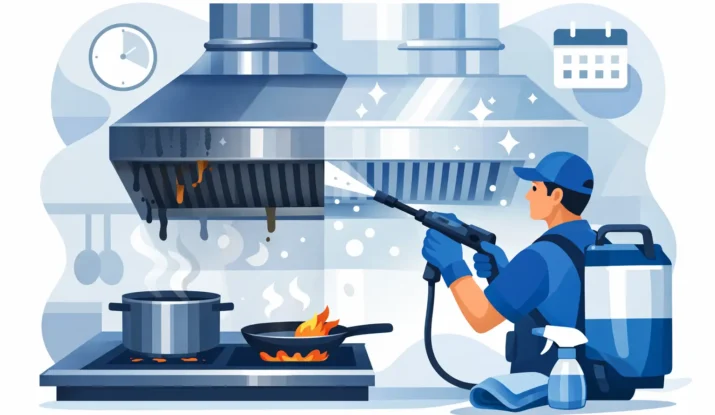
A hood system can look acceptable from the cook line and still be carrying dangerous grease inside the ductwork and fan. That is usually where operators get caught off guard. If you are asking how often clean hood systems should be scheduled, the real answer depends on cooking volume, fuel type, menu, and how fast grease is building up where staff cannot see it.
For restaurants and commercial kitchens in Las Vegas, this is not just a housekeeping question. It is a fire safety issue, an inspection issue, and a business continuity issue. When hood cleaning gets pushed too far out, the result can be failed inspections, poor airflow, excess smoke, grease dripping back into the kitchen, or worse, a system that helps a fire spread instead of helping contain it.
How often should clean hood systems be scheduled?
The baseline schedule for cleaning commercial kitchen exhaust systems is usually driven by fire code standards and actual grease production. In practical terms, many kitchens fall into one of a few broad service intervals.
High-volume operations, 24-hour kitchens, charbroiler-heavy concepts, and facilities producing large amounts of grease often need monthly service. Busy restaurants with steady fry, grill, and wok use may land on a quarterly schedule. Lower-volume kitchens, seasonal operations, churches, schools, or facilities with limited cooking may be able to go semiannually or annually, but only if grease accumulation truly stays low.
That last part matters. A schedule is not something to guess at based on square footage or how clean the hood canopy looks from below. The right schedule is based on what is happening throughout the full exhaust system – hood, filters, duct runs, access panels, and rooftop fan.
Why there is no one-size-fits-all answer
Two kitchens can have similar equipment and completely different cleaning needs. A burger concept running long hours on fryers and charbroilers will load grease much faster than a café using ovens and light sauté. A hotel kitchen with banquet production may have heavy bursts around events. A ghost kitchen may produce more grease than expected because of nonstop delivery volume.
This is why experienced hood cleaning companies do not hand out a generic answer and move on. They look at usage, cooking style, system design, and the condition of the exhaust path. If grease is building faster than the current schedule can handle, the schedule needs to change.
Shorter intervals mean more frequent service costs, but they can also prevent bigger costs tied to downtime, emergency cleanup, equipment stress, and compliance problems. Stretching a cleaning cycle too far may look cheaper on paper right up until an inspection issue or fire hazard forces immediate action.
Common cleaning intervals by kitchen type
Monthly cleaning
Monthly cleaning is common for high-grease, high-volume kitchens. This includes operations with heavy frying, charbroiling, wok cooking, solid fuel cooking, or very long operating hours. Fast casual chains, busy casino foodservice operations, and late-night restaurants often fit here.
If your system is producing visible grease around the fan hinge, on rooftop surfaces, or inside access points well before the next scheduled service, monthly cleaning may be the right call.
Quarterly cleaning
Quarterly service is often appropriate for many full-service restaurants and commercial kitchens with moderate to heavy cooking. This is a common interval for businesses with regular lunch and dinner volume, standard fryer use, and consistent line activity.
For many operators, this is the practical middle ground. It keeps grease under control without over-servicing a system that is not accumulating at an extreme rate.
Semiannual cleaning
Semiannual service may work for lower-volume kitchens, limited-menu operations, or facilities that do not produce much grease. Some institutional kitchens, smaller cafés, and community facilities fit this category.
That said, semiannual does not mean low risk by default. If the menu changes, hours expand, or production increases, the cleaning schedule should be revisited.
Annual cleaning
Annual cleaning is generally limited to very low-volume operations with minimal grease-producing cooking. This is the exception, not the norm, for most commercial kitchens.
Operators should be careful about assuming annual service is enough just because cooking feels light. It only takes one overlooked system with hidden buildup to create a serious problem.
Signs your current schedule is not frequent enough
A kitchen exhaust system usually gives warnings before it becomes a serious hazard. The problem is that busy operators often learn to work around them instead of treating them as scheduling red flags.
If your kitchen has lingering smoke, reduced airflow, strong grease odors, grease on rooftop areas near the fan, dark buildup on hood components, or drips around filters and seams, your current interval may be too long. The same is true if staff are wiping exterior grease more often or if inspectors are starting to focus on exhaust cleanliness.
Another warning sign is operational drift. Maybe the kitchen added delivery volume, extended hours, or introduced high-grease menu items, but the hood cleaning schedule never changed. The schedule that worked a year ago may not fit the current workload.
Fire code and compliance are part of the answer
When people ask how often clean hood systems should be serviced, they are often really asking how often they need to clean in order to stay compliant and safe. Those two things usually go together.
Kitchen exhaust systems are meant to remove grease-laden vapors from the cooking area. When grease accumulates inside the system, the fire risk rises. That buildup can also affect how the system performs, especially when fans, ducts, and filters are not moving air the way they should.
A proper cleaning schedule supports fire code compliance by keeping grease accumulation at acceptable levels. It also gives operators documentation and service records that matter during inspections and internal risk management reviews. In high-demand hospitality markets like Las Vegas, keeping that side of the operation squared away is part of running a dependable kitchen.
What a proper hood cleaning schedule protects
The obvious issue is fire prevention, but that is not the only reason routine service matters. A clean exhaust system supports better airflow, which can help reduce heat and smoke in the kitchen. It can also limit grease migration onto surrounding equipment and surfaces.
There is a workplace safety angle too. Grease buildup does not stay neatly contained. It finds its way onto rooftops, nearby surfaces, and sometimes back into the kitchen environment. That creates slip hazards, sanitation concerns, and extra cleaning labor for staff who already have enough to manage.
Routine service also protects equipment condition over time. Fans and related components do not benefit from running under heavy grease load. Delaying service may not cause an immediate breakdown, but it can contribute to preventable wear and costly service calls later.
How to determine the right schedule for your kitchen
The best starting point is an honest look at what your kitchen actually produces, not what the operation is assumed to produce. Menu, hours, cooking methods, and peak periods all matter. A vendor with real exhaust system experience should inspect the system, assess buildup, and recommend a frequency based on risk and code-driven standards rather than guesswork.
It also helps to think beyond the main line. Secondary cooking stations, prep surges, catering loads, and late-night production all affect grease output. If your operation has changed in the past six to twelve months, your cleaning schedule may need to change with it.
A good service partner will also help you avoid two common mistakes. The first is under-cleaning a system because the visible hood area looks decent. The second is overcomplicating the issue with a schedule that does not match real conditions. The goal is not more service than you need. The goal is the right service before buildup becomes a liability.
For operators who need a dependable local provider, Vegas Pressure Clean approaches hood cleaning the same way it should be handled – with safety, compliance, and minimal disruption in mind.
How often clean hood systems in Las Vegas kitchens?
Las Vegas kitchens often face a harder operating pace than the average market. Long hours, tourism-driven volume, hotel and entertainment demand, and high-output concepts can push grease production faster than operators expect. That means schedules that seem reasonable on paper may not hold up in practice.
For many local restaurants, a quarterly or monthly cadence is the safer path, especially where fryers, grills, or round-the-clock production are involved. The right interval should come from inspection findings and system conditions, not from waiting until grease is visibly obvious.
If you are unsure whether your current schedule is enough, that uncertainty is usually a sign to have the system reviewed now rather than after the next inspection or service issue. A hood system should not become something you think about only when there is a problem. When it is cleaned on the right schedule, it stays what it should be – one less operational risk in a kitchen that already has enough moving parts.
Comments (7)
How to Schedule Hood Cleaning Right – Vegas Pressure Clean
[…] is why there is no single calendar that fits every kitchen. Some operations need monthly cleaning. Others may be on a quarterly or semiannual schedule. The right interval depends on cooking volume, […]
7 Signs Your Exhaust System Needs Cleaning – Vegas Pressure Clean
[…] much faster than a lighter-use facility with limited grease production. That is why there is no one-size-fits-all schedule. The real question is whether your system is showing signs that it is falling […]
Free Estimate Hood Cleaning for Las Vegas Kitchens – Vegas Pressure Clean
[…] code requirements and cleaning frequency are based on the type and volume of cooking. A high-volume kitchen using solid fuel, charbroilers, […]
How to Pass Hood Inspection Without Surprises – Vegas Pressure Clean
[…] kitchen exhaust systems need cleaning intervals based on cooking volume, grease production, fuel type, and the type of equipment under the hood. A […]
Commercial Kitchen Hood Maintenance Checklist – Vegas Pressure Clean
[…] operators use the cleaning intervals commonly associated with NFPA 96 as a starting point. High-volume operations and solid-fuel cooking […]
How to Read Hood Reports and Catch Fire Risks – Vegas Pressure Clean
[…] report should also note the next recommended service date. Cleaning frequency is based on the type and volume of cooking, not a one-size-fits-all schedule. A high-volume […]
Food Truck Exhaust Cleaning for Fire Safety – Vegas Pressure Clean
[…] Cleaning frequency depends on the volume and type of cooking, as well as the requirements of the local authority having jurisdiction. A truck that runs fryers and charbroilers daily needs more frequent service than a unit used occasionally for low-grease warming. High-volume events, late-night service, and festival schedules can also increase grease accumulation faster than an operator expects. […]