

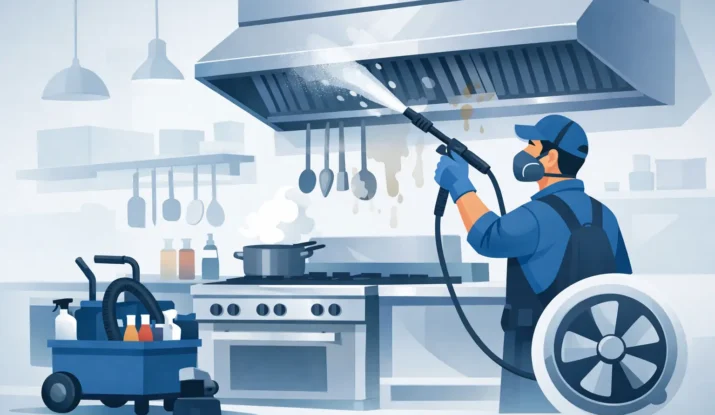
A busy kitchen can hide a serious fire hazard above the cook line. While staff may keep visible surfaces clean, grease continues to collect inside the hood, ductwork, and exhaust fan. A professional restaurant exhaust cleaning service addresses the parts of the system that matter most for fire safety, code compliance, and daily kitchen performance.
For restaurant owners and kitchen managers in Las Vegas, this is not a minor maintenance item. Grease buildup in an exhaust system increases fire risk, creates inspection problems, and puts strain on equipment that already works hard in a high-heat environment. If the system is not cleaned on the right schedule and to the proper standard, the consequences can reach far beyond a dirty hood.
What a restaurant exhaust cleaning service actually covers
Many operators use the phrase hood cleaning to describe the entire job, but a proper service goes further than wiping down the visible canopy. A true exhaust cleaning service is focused on the full path where grease-laden vapors travel – from the hood filters into the plenum, through the ductwork, and up to the exhaust fan.
That full-system approach matters because grease does not stay in one place. It accumulates throughout the system, and the hidden sections are often where the biggest hazards develop. If a contractor only cleans what can be seen from the kitchen floor, the most important work may still be left undone.
A professional service typically includes degreasing the hood interior, removing and cleaning filters, cleaning accessible duct runs, and washing the fan and fan housing. The goal is to remove combustible grease buildup, not just improve appearance. For commercial kitchens, that distinction matters.
Why restaurant exhaust cleaning service is a safety issue first
The biggest reason to schedule regular cleaning is fire prevention. Grease is fuel. When it builds up inside the exhaust system, a flare-up on the line can travel into the hood or ducts and spread fast. Once fire enters a grease-laden exhaust system, the damage can be severe.
That is why this work is tied so closely to code compliance and insurance expectations. Restaurants are expected to maintain their kitchen exhaust systems in a condition that reduces fire risk. Cleaning is not simply cosmetic maintenance. It is part of responsible facility operation.
There is also a practical side to safety. Heavy grease buildup can drip onto cooking surfaces or floors, creating sanitation concerns and slip hazards. It can restrict airflow, trap smoke, and make the kitchen hotter and less comfortable for staff. In a high-volume operation, small maintenance delays can turn into larger operational problems.
Compliance is not optional
Commercial kitchen operators already manage enough moving parts – staffing, food costs, equipment, inspections, and service standards. Exhaust system cleaning should not become another uncertain item on that list. A qualified provider should understand what inspectors look for and clean the system to the standard required for commercial operations.
In Nevada, that means working with a company that takes fire code requirements seriously and performs this work as a specialized service, not as a sideline. Licensing, experience, and clear documentation matter. If an inspector asks when the system was cleaned and by whom, you want a straight answer backed by professional service records.
The right cleaning frequency depends on your cooking volume and kitchen type. A 24-hour operation, a charbroiler-heavy concept, and a lower-volume kitchen will not build grease at the same rate. That is where experience matters. Over-cleaning can cost more than necessary, but under-cleaning creates risk quickly. The right schedule should reflect actual use, not a guess.
Signs your exhaust system may be overdue
Some kitchens are obviously overdue for service. Others look acceptable on the surface while grease is building where staff cannot see it. If you notice grease dripping from hood seams, strong lingering odors, excess smoke, or residue around the fan area, the system may need immediate attention.
A failed or flagged inspection is another clear sign. So is visible buildup on filters soon after routine line cleaning. If your kitchen feels hotter than usual or the exhaust seems less effective, grease accumulation may be restricting performance. These issues can also affect employee comfort and the pace of service during busy shifts.
For multi-unit operators and facility managers, inconsistency between locations is another warning sign. If one site has a reliable cleaning schedule and another has gaps in service, risk tends to show up in the neglected location first.
What to expect from a qualified provider
A dependable restaurant exhaust cleaning service should be built around thoroughness, accountability, and minimal disruption. In most cases, work should be scheduled around kitchen hours so operators can protect service windows and avoid unnecessary downtime.
Before the work starts, the provider should be clear about what is included. That means the hood, filters, ducts, and fan – not vague promises or surface-only cleaning. After the job, the system should be visibly cleaner, and the customer should have confidence that the hidden grease deposits were addressed as well.
Professionalism also shows up in the details. The work area should be protected, cleanup should be handled properly, and communication should be straightforward. For busy operators, a simple quote, an on-time crew, and reliable follow-through are not extras. They are part of the service.
This is where a specialist stands apart from a general cleaning company. Kitchen exhaust systems require the right equipment, process, and understanding of fire risk. Companies that focus narrowly on exhaust and grease-management work are better positioned to spot trouble areas, recommend proper intervals, and deliver cleaning that supports compliance.
The business case for staying on schedule
It is easy to think of exhaust cleaning as a compliance expense, but the cost of falling behind is usually higher. Emergency service, failed inspections, fire damage, operational disruption, and avoidable repairs all cost more than routine maintenance.
There is also the issue of equipment performance. Grease buildup can reduce airflow and make the exhaust fan work harder than it should. Over time, that can contribute to wear and reduce system efficiency. A cleaner system helps the kitchen ventilate as designed, which supports both safety and day-to-day operation.
For hospitality groups and franchise operators, there is a brand protection angle too. A kitchen fire, visible smoke issue, or sanitation complaint affects more than one shift. It can damage reputation, create reporting obligations, and draw attention from landlords, insurers, or corporate oversight.
Why local experience matters in Las Vegas
Las Vegas kitchens face unique pressure. Long operating hours, high guest volume, heat, and demanding service standards can all accelerate grease accumulation. Restaurants on the Strip, in resort corridors, and in busy neighborhood centers often run harder and later than the average foodservice operation.
That makes scheduling and responsiveness especially important. You need a service provider who understands commercial kitchen realities and can work around operations without creating friction. You also need someone who knows the local compliance environment and treats fire safety as the priority it is.
Vegas Pressure Clean has built its reputation around that kind of specialized work, with a focus on commercial exhaust cleaning, grease-related cleaning, and owner-led quality control. For operators who need straight answers and dependable service, that local specialization matters.
Choosing the right service partner
Not every vendor is a fit for a commercial kitchen. When evaluating providers, look for a company that specializes in exhaust system cleaning, understands inspection requirements, and can explain exactly what is being cleaned. Ask how they handle ducts and fans, not just the hood face.
It also helps to choose a company that is realistic about scheduling. Good providers know that restaurants cannot shut down casually for maintenance. They plan around operations, communicate clearly, and show up ready to complete the work with as little disruption as possible.
Price matters, but it should not be the only filter. A cheap surface cleaning that leaves grease in the ducts is not a bargain. The better question is whether the service reduces fire risk, supports compliance, and gives you confidence before the next inspection.
A clean exhaust system is one of those things customers rarely notice, but operators pay for neglect when it is ignored. Keeping it on a professional schedule protects your kitchen, your staff, and your business – and that is the kind of maintenance that earns its place on the calendar.
1 Comment
Can Dirty Fans Cause Fires in Commercial Kitchens? – Vegas Pressure Clean
[…] this reason, professional exhaust cleaning should address accessible areas of the complete system, including the hood, plenum, ducts, fan, and […]