

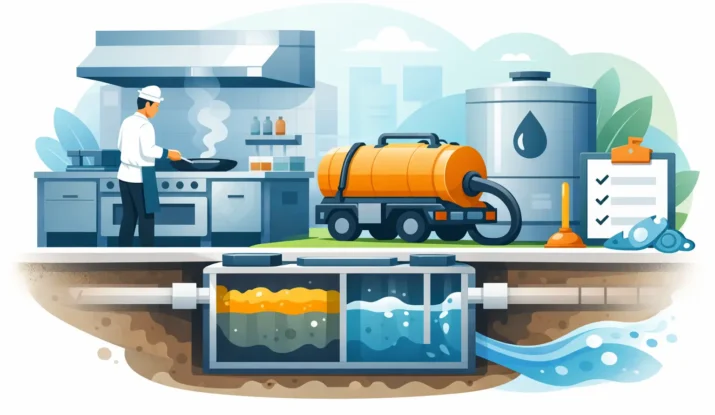
A failed inspection rarely starts with one big problem. More often, it starts with grease that built up a little at a time – on the hood filters, inside the duct, around cooking equipment, or across the floor near the line. This commercial grease management guide is built for restaurant owners, kitchen managers, and facility teams who need a practical way to control fire risk, avoid disruptions, and keep operations moving.
In a busy kitchen, grease does not stay where it starts. Vapor travels up into the exhaust system. Splash and spill collect around fryers, ranges, and prep areas. Foot traffic spreads residue onto walkways and out to trash and loading zones. If the cleaning plan only covers what is easy to see, risk keeps building in the areas that matter most.
What commercial grease management really means
Commercial grease management is not one service and it is not just about appearance. It is the ongoing control of grease throughout the kitchen environment, from exhaust hoods and ductwork to equipment surfaces, concrete pads, and spill-prone floor areas. The goal is simple – reduce fuel for fires, support health and safety standards, and prevent grease from interfering with daily operations.
For most foodservice facilities, the biggest mistake is treating grease as a housekeeping issue instead of a compliance and safety issue. Grease buildup affects fire exposure, air movement, equipment performance, slip hazards, and inspection readiness. It also tends to compound. Once buildup hardens, removal takes more labor, more downtime, and more coordination.
That is why the strongest grease management plans are preventive. They are based on kitchen volume, cooking methods, equipment mix, and the parts of the facility where grease accumulates fastest. A low-volume cafe and a 24-hour casino kitchen do not need the same schedule, and that difference matters.
The highest-risk grease areas in a commercial kitchen
The exhaust system is still the first place most operators should look. Hoods, filters, ducts, and exhaust fans are designed to capture grease-laden vapor. Over time, that vapor condenses and sticks to interior surfaces. If cleaning intervals are too wide, that material becomes a serious fire hazard. It can also reduce airflow, which affects heat, smoke, and cooking conditions on the line.
The second risk area is around the equipment itself. Fryers, flat tops, charbroilers, ovens, and ranges all create splash zones and residue trails. Grease often collects behind units, under casters, along wall lines, and around utility connections. These are easy places to miss during routine daily cleaning, especially during a rush-heavy schedule.
Floors are another problem area because they create both safety and sanitation issues. A slick floor near hot equipment raises the chance of slips and falls. If grease is tracked into storage or service corridors, the problem extends beyond the kitchen line. Exterior concrete near dumpsters and grease bins can also become hazardous and give inspectors or property managers a clear sign that maintenance is falling behind.
A commercial grease management guide for scheduling service
There is no single schedule that fits every kitchen. The right frequency depends on menu type, hours of operation, cooking volume, and whether the kitchen uses heavy-grease equipment like fryers and charbroilers. High-output operations usually need tighter intervals because grease accumulates faster and spreads farther than many teams expect.
A useful way to think about scheduling is to separate tasks by frequency. Staff should handle daily wipe-downs, spill response, and visible floor cleaning as part of normal closing procedures. More detailed cleaning around equipment may need a weekly or biweekly rhythm depending on volume and staffing. Exhaust hood, duct, and fan cleaning should be handled on a professional schedule based on fire code requirements and actual grease load.
This is also where trade-offs show up. Stretching service intervals may seem like a cost-saving move in the short term, but heavy buildup usually means longer cleanings, more difficult access, and a greater chance of emergency service after an inspection issue or grease event. A tighter schedule is often more predictable and less disruptive than waiting until the problem is obvious.
What staff can handle and what should be outsourced
Kitchen teams should absolutely own the daily basics. Filters can be checked, surfaces can be wiped, floors can be degreased, and spills should be addressed immediately. Staff are the first line of defense because they see changes in real time. If a fryer area starts getting slicker than usual or smoke is hanging longer on the line, those are signs the cleaning plan needs attention.
But there is a limit to what in-house teams can reasonably manage. Exhaust systems require specialized cleaning, safe roof access, and a clear understanding of what needs to be removed and documented. Deep cleaning behind and beneath cooking equipment can also require the right tools, labor, and safety controls to do the job thoroughly without damaging surrounding components.
For most operators, outsourcing makes sense when the work involves fire code compliance, confined or elevated access, overnight scheduling, or heavy buildup that disrupts normal maintenance. A qualified specialist should be able to explain scope clearly, work around service hours, and leave the site ready for inspection rather than just visibly cleaner.
Signs your grease management plan is falling behind
The warning signs are usually obvious once you know where to look. Sticky hood surfaces, dark residue on filters, grease on duct access panels, and drips near fan areas all point to overdue exhaust cleaning. On the line, recurring slick spots, strong old-grease odor, and buildup around fryer banks or under equipment suggest the kitchen is managing symptoms instead of sources.
Operational clues matter too. If the kitchen feels smokier, hotter, or harder to ventilate during peak periods, grease in the exhaust path may be affecting performance. If staff are spending more time fighting floor conditions or recurring residue around the same equipment, the cleaning schedule may not match actual production.
Inspection pressure is another signal. When operators start preparing for fire or health visits with last-minute cleanup instead of routine readiness, that usually means the maintenance plan is too reactive. Compliance works better when the facility is maintained to standard all the time, not only before someone walks in.
Choosing a vendor for grease control work
Not every cleaning company is built for commercial kitchen grease. For foodservice operators, the right vendor should understand exhaust systems, heavy grease hazards, and the compliance side of the work. That means clear documentation, dependable scheduling, and service that focuses on safety, not cosmetic results alone.
Ask direct questions. What parts of the system are cleaned? How is access handled? Will the job be scheduled around operating hours? What happens if buildup is heavier than expected? A serious contractor should be comfortable answering these without vague promises or inflated language.
Local accountability matters as well. In a market like Las Vegas, operators need vendors who understand the pace of hospitality, the realities of late-night kitchens, and the importance of minimizing downtime. Vegas Pressure Clean has built its work around those needs by staying focused on fire-risk cleaning, compliance-minded service, and owner-led quality control.
Building a grease management plan that holds up
The strongest plan is the one your team can actually maintain. Start with an honest look at where grease accumulates, how fast it returns, and which areas create the most risk if they are missed. Then match responsibilities to the right level – daily staff cleaning for immediate control, scheduled deep cleaning for buildup zones, and professional exhaust service for code-sensitive areas.
Document the schedule, train staff on what clean actually looks like, and review problem spots regularly. If the same spill area keeps returning or the same equipment line always looks worse than the rest, adjust the plan instead of accepting it as normal. Good grease management is not static. It should reflect the way the kitchen really operates.
A clean-looking kitchen can still hide serious grease risk. The operators who stay ahead of it are usually the ones who treat grease control as part of safety, compliance, and uptime – not just cleanup after the fact. If your kitchen is busy, high-heat, or inspection-sensitive, the smartest time to tighten your plan is before the next warning sign shows up.
Comments (2)
How to Remove Floor Grease in Commercial Kitchens – Vegas Pressure Clean
[…] buildup also creates sanitation and maintenance issues. It holds food debris, attracts pests, produces odor, and can leave dark staining in grout […]
What Causes Hood Inspection Failures in Kitchens? – Vegas Pressure Clean
[…] Grease accumulation is the most common underlying issue. Cooking vapor travels through the hood filters, plenum, ductwork, exhaust fan, and rooftop discharge area. As it cools, grease deposits on those surfaces. High-volume kitchens, solid-fuel cooking, charbroiling, wok stations, and operations that fry heavily can build grease faster than operators expect. […]