

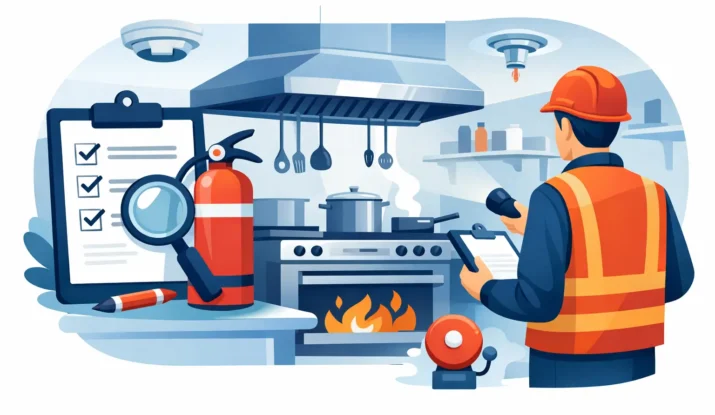
A fire inspector walking into your kitchen is not looking for a polished front-of-house. They are looking for conditions that could allow a small grease fire to become a major loss. Knowing how to pass fire inspection means treating hood cleaning, fire protection equipment, access, and documentation as routine operating responsibilities – not last-minute cleanup work.
For Las Vegas restaurants, hotel kitchens, franchises, and high-volume foodservice operations, inspections can expose problems that build up slowly during busy service: grease above the filters, blocked exits, expired extinguishers, missing service tags, or a suppression system that has not been maintained. The best preparation is consistent maintenance supported by a clear pre-inspection process.
Start With the Kitchen Exhaust System
The hood, ductwork, filters, and exhaust fan are among the first places an inspector may focus because grease accumulation is a direct fire hazard. Filters should be installed correctly, seated securely, and free of heavy buildup. The visible hood canopy should be clean, but appearance alone is not enough. The duct system and fan must also be cleaned to the required level.
A hood that looks acceptable from the cooking line can still contain combustible grease farther inside the duct. That is why professional exhaust cleaning matters. Qualified technicians remove grease from the full accessible system, including the hood, plenum, ducts, and exhaust fan, then document the service with the proper certification label or report required by your authority having jurisdiction.
Cleaning frequency depends on the volume and type of cooking. A kitchen with charbroilers, woks, fryers, or heavy grease-producing equipment generally needs service more often than a lower-volume operation. Do not rely on a calendar date alone if cooking volume has increased. If your menu, hours, or equipment changes, review whether your cleaning schedule still fits the fire risk.
Check Fire Suppression Before Inspection Day
Your kitchen hood suppression system must be operational, accessible, and properly serviced. Inspectors commonly look for the service tag, current inspection information, unobstructed nozzles, and pull stations that can be reached quickly. Nozzles should have their protective caps in place and be aimed at the correct cooking appliances.
Do not move fryers, ranges, grills, or other protected equipment without confirming that the suppression coverage still matches the layout. Even a well-intended equipment change can leave a hazard unprotected or put a nozzle out of position. If equipment has been added, removed, relocated, or replaced, arrange for a qualified fire protection contractor to evaluate the system before the inspection.
The manual pull station should be clearly visible and accessible. Staff should know where it is and understand that activating it can shut down fuel or power to protected appliances, depending on the system configuration. A pull station hidden behind boxes, carts, or stored supplies can create a serious compliance issue.
Make Portable Extinguishers Easy to Find and Use
A kitchen needs the correct portable extinguishers in the correct locations. For cooking oil and grease fires, that typically includes a Class K extinguisher positioned for quick access near the cooking area without requiring staff to reach through a fire. General-purpose extinguishers may also be required for other hazards in the facility.
Inspect each unit before the fire official arrives. Confirm that it is mounted or placed in its designated location, visible, accessible, sealed, and within its required service interval. Check the pressure indicator where applicable, and make sure nothing blocks access. An extinguisher behind stacked product is no more useful than an extinguisher that is missing.
Staff training matters here. Team members should know the difference between using a Class K extinguisher and activating the hood suppression system. They should also know when to evacuate and call emergency services rather than attempting to fight a fire. Fire safety is not about asking employees to take unnecessary risks.
Keep Exits, Electrical Panels, and Aisles Clear
Many inspection failures are simple housekeeping problems with serious consequences. Deliveries, dry storage overflow, beverage cases, racks, and cleaning supplies can gradually creep into exit paths. What feels temporary during a rush can become an obstruction during an emergency.
Walk every exit route from the kitchen and storage areas to the exterior. Exit doors should open freely, exit signs and emergency lighting should work, and paths should remain clear. Do the same for electrical panels, gas shutoffs, fire alarm equipment, and sprinkler controls. These areas need immediate access for staff, responders, and maintenance personnel.
Pay attention to storage near heat-producing equipment. Cardboard, paper goods, chemical containers, towels, and other combustible materials should not be stored where they can be exposed to heat, open flame, or grease-laden vapors. A clean, organized back-of-house is easier to inspect because hazards are easier to see and correct.
Use a Pre-Inspection Walkthrough Checklist
A formal walkthrough helps managers catch small issues before they become citations. Schedule it several days before an anticipated inspection, then perform a final quick check at the start of each shift. Assign responsibility to a manager who has the authority to correct problems immediately.
Use this practical checklist:
- Confirm hood filters are in place, clean, and properly installed.
- Verify the hood cleaning certification label and service records are current.
- Check suppression system tags, nozzle caps, manual pull access, and appliance placement.
- Confirm Class K and other required extinguishers are accessible and in service.
- Clear exits, aisles, electrical panels, gas shutoffs, and fire protection equipment.
- Test emergency lighting and make sure exit signage is visible.
- Remove grease from floors, equipment exteriors, walls, and hard-to-reach areas around the line.
- Review staff procedures for grease fires, evacuation, and reporting hazards.
This is not a substitute for the requirements of your local fire authority. Requirements can vary by jurisdiction, building type, occupancy, equipment, and the scope of your cooking operation. However, a documented walkthrough gives your team a dependable process and shows that safety is being managed proactively.
Maintain Records That Support Compliance
Records are often the difference between a quick inspection and a delayed one. Keep hood-cleaning reports, suppression system service records, extinguisher inspections, fire alarm testing documents, and any correction notices in a location managers can access immediately. A digital file is useful, but keep it organized and make sure the responsible person can retrieve it when needed.
For multi-unit operators, consistency is especially valuable. Use the same recordkeeping process at every location, but do not assume every site has identical requirements. Equipment layouts, occupancy conditions, and local enforcement practices can differ. Each kitchen should have its own current documentation and service history.
If an inspector identifies a deficiency, document what was found, who is responsible for correction, and when the work was completed. Avoid treating a correction notice as something to handle later. A missed deadline can create operational pressure, added expense, and avoidable disruption.
Do Not Wait for Visible Grease Buildup
One of the most common mistakes is waiting until grease is obvious. By that point, buildup may already exist inside the exhaust system, under equipment, around fan components, and on nearby surfaces. Grease also creates slip hazards, attracts pests, and makes routine cleaning harder for your staff.
A professional cleaning schedule should work around your operating hours and match the demands of your kitchen. Vegas Pressure Clean provides commercial hood, duct, fan, equipment, and grease-management cleaning with a focus on fire-code readiness and minimal disruption to service. The goal is not simply a cleaner kitchen. It is a kitchen that is safer to operate and easier to defend during an inspection.
How to Handle an Inspector’s Questions
Be direct, professional, and honest. Have a manager available who understands the kitchen layout, knows where safety records are stored, and can provide access to the hood system, suppression controls, and utility shutoffs. Do not guess when asked about a service date or correction. Check the documentation and give an accurate answer.
If the inspector points out an issue, listen carefully and ask what correction is expected. Some conditions can be fixed immediately, while others require licensed fire protection or exhaust-cleaning work. Taking prompt action protects your employees and guests, and it demonstrates that your operation takes compliance seriously.
The most reliable way to prepare is to make fire safety part of the normal rhythm of the kitchen. Keep the exhaust system maintained, keep access routes open, keep records current, and correct hazards when they are small. That discipline helps protect the business long before inspection day arrives.