

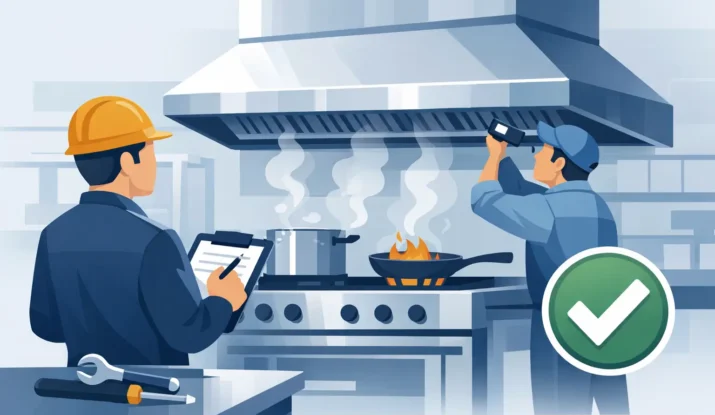
A hood inspection can expose problems that have been building above the cook line for months: grease inside ductwork, a fan that is not pulling correctly, blocked access panels, or missing service records. Knowing how to pass hood inspection is not about making the kitchen look clean the morning of the visit. It is about maintaining a fire-safe exhaust system that can be properly inspected at any time.
For Las Vegas restaurants, hotel kitchens, bars, food courts, and other high-volume operations, this work matters. Heavy cooking volume produces grease vapor quickly, and that grease travels beyond the visible hood filters into the plenum, ducts, rooftop fan, and surrounding areas. A clean, documented system protects your people, your property, and your ability to keep service moving.
What a Hood Inspection Is Looking For
The authority having jurisdiction, fire inspector, insurance representative, or facility compliance team may have different procedures. Still, they are generally looking for the same outcome: a kitchen exhaust system that does not present an unnecessary grease-fire hazard.
Inspectors commonly look at the hood canopy, filters, interior plenum, accessible ductwork, access doors, exhaust fan, grease containment, and suppression-system components. They also look for evidence that the system has been professionally serviced at the right frequency and that required inspection tags or service records are current.
A hood can look acceptable from the floor while hidden grease remains in the duct. That is why wiping the visible stainless steel is not a substitute for exhaust cleaning. The condition of the full system matters.
How to Pass Hood Inspection Before the Inspector Arrives
The best preparation begins well before an inspection date. Treat hood cleaning as scheduled fire-risk maintenance, not emergency cleanup after a warning or failed inspection.
Confirm your cleaning frequency
Commercial kitchen exhaust systems need cleaning intervals based on cooking volume, grease production, fuel type, and the type of equipment under the hood. A kitchen operating around the clock or producing large volumes of fried, charbroiled, wok-cooked, or grilled food usually needs more frequent service than a light-use kitchen.
Do not assume a quarterly or semiannual schedule is automatically correct. Your required frequency may be set by the fire code, the authority having jurisdiction, your lease, company policy, or insurer. If your menu or operating hours have changed, review the cleaning schedule. Adding a fryer, extending late-night service, or increasing production can shorten the interval needed to keep the system safe.
Make sure the entire exhaust path was cleaned
A proper hood cleaning service addresses more than filters and visible surfaces. The scope should include the hood interior, plenum, accessible horizontal and vertical ductwork, access panels, exhaust fan, and grease collection components where applicable.
Ask your provider what areas were cleaned and whether they found conditions that need repair or follow-up. If a technician cannot access part of the duct system because panels are missing, equipment blocks access, or rooftop conditions are unsafe, that issue needs to be addressed. An inaccessible section can become the exact area an inspector asks about.
Check filters, baffles, and hood surfaces daily
Kitchen staff should be able to keep basic conditions under control between professional cleanings. Filters should be seated properly, free of heavy accumulation, and not bent or damaged. Grease should not be dripping from baffles, pooling on hood ledges, or collecting on nearby walls and equipment.
Daily upkeep does not replace professional service, but it makes a meaningful difference. It also helps managers spot changes early, such as excessive grease buildup that may signal the cleaning interval is no longer adequate.
Verify that the exhaust fan is operating correctly
A clean system still needs to move air. Before inspection, confirm that the fan starts, runs, and provides appropriate capture at the cooking equipment. Smoke, heat, and vapor escaping into the kitchen can point to an airflow issue, a dirty fan, damaged belts, electrical trouble, make-up air imbalance, or another mechanical concern.
Do not wait for an inspector to identify a fan issue. If the fan is noisy, vibrating, leaking grease, or failing to pull smoke effectively, arrange service from a qualified professional. Cleaning and mechanical repairs are related, but they are not always performed by the same contractor. Make sure responsibilities are clear.
Keep documentation where your team can find it
Inspection tags and service documentation are practical proof that maintenance has been completed. Keep records of hood cleanings, deficiency notices, repairs, suppression-system inspections, and any follow-up work in one organized location.
The goal is not paperwork for its own sake. Accurate records help a manager answer basic questions quickly: When was the system last cleaned? What areas were included? Was a problem identified? Has it been corrected? In a multi-unit operation, consistent records also help corporate teams verify that each location is meeting its maintenance requirements.
Walk the System Like an Inspector Would
A short pre-inspection walk-through can prevent avoidable failures. Have a manager inspect the kitchen after the last hood cleaning and again before the scheduled inspection. Focus on conditions that are visible, accessible, and easy to correct before they turn into citations.
Check the following:
- Hood filters and baffles are installed correctly and are not heavily coated with grease.
- The hood interior, surrounding walls, ceiling areas, and cooking equipment do not show fresh grease drips or buildup.
- Access doors are present, usable, and not blocked by stored items or equipment.
- The exhaust fan is running properly, with no obvious grease overflow, unusual noise, or vibration.
- Cleaning tags and maintenance records are current and available to the person meeting the inspector.
- Fire suppression nozzles, pull stations, and detection components are not obstructed, painted over, or used as storage points.
This walk-through is also a good time to remove cardboard, paper products, towels, and other combustible materials that staff may have placed too close to the cook line. Housekeeping around the hood does not replace code compliance, but poor housekeeping can create questions about the overall condition of the kitchen.
Common Reasons Kitchens Fail or Receive Corrections
Most hood inspection problems are preventable. The most common issue is overdue or incomplete exhaust cleaning. Grease buildup inside the hood or ducts is a direct fire concern, especially in busy kitchens where cooking residue accumulates quickly.
Another common problem is a missing or unreadable cleaning tag. A system may have been cleaned, but if there is no clear evidence of service, the operator may have difficulty proving compliance during the inspection. Keep the tag in place and retain the invoice or service report.
Blocked access panels can also create trouble. Access doors exist so cleaners and inspectors can reach critical portions of the duct. Storing supplies in front of them, enclosing them during remodeling, or allowing equipment to block them can prevent a complete inspection and cleaning.
Mechanical issues are another concern. A dirty or malfunctioning exhaust fan can reduce airflow and allow grease-laden vapor to remain in the kitchen. Roof grease containment also deserves attention. Grease discharged around the fan can damage roofing, create slip hazards, and signal that the system needs service or repair.
Finally, do not confuse hood cleaning with fire suppression inspection. Both are essential, but they are separate services with different scopes. Your kitchen should maintain each on its required schedule.
Build a Schedule That Works During Service Hours
The right maintenance plan should protect compliance without disrupting your operation. For many restaurants, overnight, early-morning, or low-volume service windows are the most practical time for hood cleaning. The schedule should account for your cooking load, staff access, rooftop access, and the time needed to protect surrounding equipment and restore the kitchen for use.
Choose a provider that understands commercial kitchen exhaust systems and will clearly explain what is included. A low quote that only covers visible hood surfaces can become expensive when incomplete work leads to corrections, repeat cleaning, downtime, or increased fire risk.
Vegas Pressure Clean provides specialized kitchen exhaust hood cleaning for Las Vegas commercial kitchens, with owner-led quality control and a focus on fire-code-driven results. A clear quote, a defined scope of work, and dependable scheduling give operators a better way to stay ahead of inspections.
Prepare Your Staff for Inspection Day
The person meeting the inspector should know where maintenance records are kept and who to call if a question comes up. They should also have access to areas such as the manager’s office, roof access procedure, utility rooms, and any locked spaces that affect the exhaust system.
Avoid last-minute explanations or assumptions. If a prior service report identified a repair, confirm it was completed and retain supporting documentation. If work is scheduled but not yet finished, be honest about the status and provide the scheduled service information. Inspectors respond better to a documented corrective plan than to a condition that has been ignored.
A hood inspection should not be a surprise event that stops your kitchen. Keep the exhaust system clean, keep records current, correct small issues early, and use qualified service professionals. That approach gives your team the best chance to protect the kitchen, pass inspection, and stay focused on serving customers.
1 Comment
Overnight Restaurant Cleaning Services That Protect – Vegas Pressure Clean
[…] should also include documentation and service labeling where required, giving management a clearer record for inspections and maintenance […]