

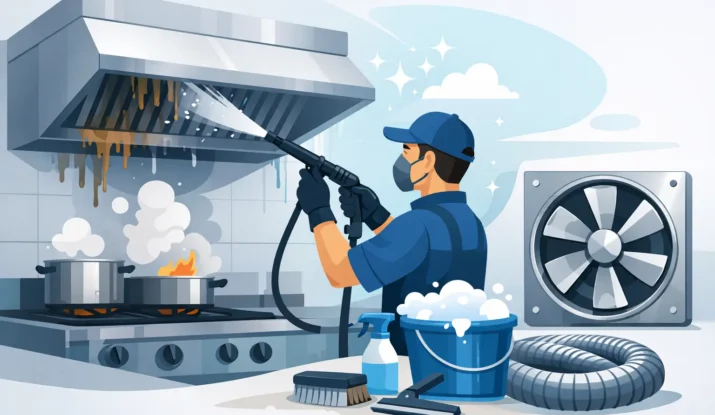
A kitchen exhaust system can look fine from the cooking line and still be hiding heavy grease where inspectors and fire risk do not ignore it. If you are asking what does hood cleaning include, the short answer is this: it is not just wiping the visible hood canopy. A proper service addresses the full grease-bearing path, including the hood, filters, ductwork, and exhaust fan, with the goal of reducing fire risk and keeping your kitchen compliant and operational.
For restaurant owners, kitchen managers, and facility teams, that distinction matters. Many problems start when a service only cleans what is easy to reach or what is visible at eye level. Real hood cleaning is about removing combustible grease throughout the exhaust system, not making the front of the hood look shiny.
What does hood cleaning include in a commercial kitchen?
In most commercial kitchens, hood cleaning includes the interior and exterior of the hood, removable filters, accessible duct runs, and the rooftop or inline exhaust fan. The work is typically performed to remove grease buildup that accumulates from cooking vapors, smoke, and heat over time.
A professional service usually starts with preparation and containment. The cooking line and nearby surfaces are protected, access panels are opened where needed, and the crew checks the condition of the system before cleaning begins. This step is practical, but it is also part of doing the job without creating unnecessary mess or disrupting the kitchen more than necessary.
The hood itself is cleaned inside and out. The visible canopy is only one part of the job. The interior plenum area, where grease collects behind the filters, is a major focus because buildup there can become a fire hazard quickly in high-volume kitchens.
Filters are removed and cleaned separately. Baffle filters are designed to capture grease before it enters the duct system, but when they become overloaded, airflow suffers and more grease can travel deeper into the exhaust path. In some cases, filters are so damaged or clogged that replacement should be discussed instead of just cleaning.
The ductwork is another core part of the service. This is where quality can vary from one provider to another. Proper hood cleaning includes scraping and pressure washing or steam cleaning accessible duct interiors to remove grease deposits. If the duct run is long, has multiple turns, or has limited access, the crew may need additional access points to reach the full system effectively.
The exhaust fan is also part of the cleaning scope. On rooftop systems, grease often builds up on the fan blades, housing, and surrounding components. That buildup affects performance, adds fire risk, and can lead to grease discharge onto the roof if ignored. A complete service cleans the fan assembly and checks that it is functioning properly after the job is done.
Why the full system matters
Grease does not stay where you can see it. It moves with heat and airflow, then settles throughout the system. That is why fire codes and inspection standards focus on the entire exhaust path, from the hood opening to the fan.
If only the lower hood is cleaned, the kitchen may still have significant grease in the duct and fan. That leaves the business exposed to the same problems operators are trying to avoid in the first place – fire hazards, inspection issues, reduced airflow, lingering odors, and premature wear on the system.
This is especially important in Las Vegas kitchens that run hard and run late. High production, frequent fryer use, charbroilers, and extended operating hours all increase grease load. The heavier the cooking volume, the less room there is for partial cleaning.
What is usually not included automatically
One of the most common misunderstandings around hood cleaning is assuming every nearby surface or every piece of kitchen equipment is part of the same service. Usually, it is not.
Standard hood cleaning generally does not include deep cleaning fryers, grills, ovens, walls, floors, or grease spills outside the exhaust system unless those items are specifically listed in the quote. Some companies offer related services, but they are often separate because they require different labor, equipment, and time.
Roof cleanup can also be a separate line item if grease has already overflowed or leaked onto the roof membrane. The same goes for hinge kit installation, access panel work, fan repairs, or replacing damaged filters. Those items may be recommended during service, but they are not always included in the base price.
This is why a clear scope matters. For commercial operators, the right question is not only what does hood cleaning include, but also what is excluded unless requested.
How the cleaning process typically works
A professional crew begins by shutting down the system and setting up the work area. Plastic containment, protective coverings, and runoff control help prevent grease and wash water from spreading onto cooking equipment or floor areas.
Next comes degreasing. Technicians apply chemicals designed to break down heavy grease, then use scraping, hot water pressure washing, or steam to remove residue from the hood interior, duct surfaces, and fan components. The exact method depends on the system, the amount of buildup, and access conditions.
After the grease is removed, the crew reassembles the system, wipes down surrounding affected areas, and confirms the fan and filters are back in place correctly. Many contractors also apply a service sticker showing the cleaning date and the next recommended interval, which can be useful during inspections.
If the system has problem areas, those should be documented. A responsible provider will let you know if there is inaccessible ductwork, excessive buildup, damaged components, missing access panels, or mechanical issues affecting safe operation. That kind of reporting is part of a compliance-minded service, not an extra courtesy.
How often should hood cleaning be done?
It depends on the type of cooking and how heavily the kitchen operates. Systems over solid fuel cooking operations usually need more frequent attention. High-volume restaurants, 24-hour kitchens, and operations with heavy fryer or charbroiler use often require service much more often than lower-grease facilities.
By contrast, churches, seasonal operations, or kitchens with lighter cooking loads may be on a longer schedule. The right interval should be based on actual grease accumulation, cooking type, and applicable code requirements, not guesswork.
Waiting too long usually costs more in the end. Heavier buildup takes longer to remove, puts more strain on the exhaust system, and increases the chance of failed inspections or downtime if the issue is flagged at the wrong time.
What to expect from a qualified provider
Not every company that offers pressure washing or janitorial services is equipped for commercial hood cleaning. This is a specialized service tied directly to fire safety and code compliance, so experience matters.
A qualified provider should understand exhaust system construction, grease containment, roof protection, access requirements, and the standards that apply to commercial kitchen exhaust cleaning. They should also be able to explain the scope clearly, document the work, and schedule service in a way that minimizes disruption to your operation.
For many operators, the best vendor is not the one with the lowest price. It is the one that shows up consistently, cleans the full system properly, and gives you confidence that the job will hold up under inspection. In a market like Las Vegas, where kitchens often run at full pace, reliability is not a bonus. It is part of the service.
Vegas Pressure Clean focuses on exactly this kind of work – exhaust system cleaning driven by safety, compliance, and practical support for busy commercial kitchens.
Signs your hood system needs attention sooner
Sometimes the schedule says one thing, but the kitchen tells you another. If filters are dripping grease, airflow feels weak, smoke lingers on the line, or grease is visible in the hood plenum, service may be overdue. Strong odors, fan imbalance, or grease on the roof near the exhaust fan can also point to a system that needs immediate attention.
These warning signs are not just cosmetic. They often indicate buildup that is already affecting performance or increasing fire exposure. Addressing it early is usually far easier than dealing with an emergency call, an inspector concern, or a shutdown during service hours.
When you ask what does hood cleaning include, think beyond the hood face. The real answer is the grease-bearing system that protects your kitchen every day, even when nobody sees it. A clear scope, proper cleaning methods, and a provider who understands compliance can make the difference between routine maintenance and a problem that interrupts business.
Comments (3)
Restaurant Exhaust Cleaning Service Guide – Vegas Pressure Clean
[…] operators use the phrase hood cleaning to describe the entire job, but a proper service goes further than wiping down the visible canopy. […]
Foodservice Fire Risk Assessment Basics – Vegas Pressure Clean
[…] kitchen fire problems are not hidden in theory. They show up in predictable places. The hood interior should be checked for grease thickness, filter condition, and evidence that airflow is being […]
Why Kitchen Exhaust Fails Inspection – Vegas Pressure Clean
[…] Inspectors and fire officials are concerned with the full path of the exhaust system, including the hood, filters, ductwork, access points, fan, and surrounding roof […]