

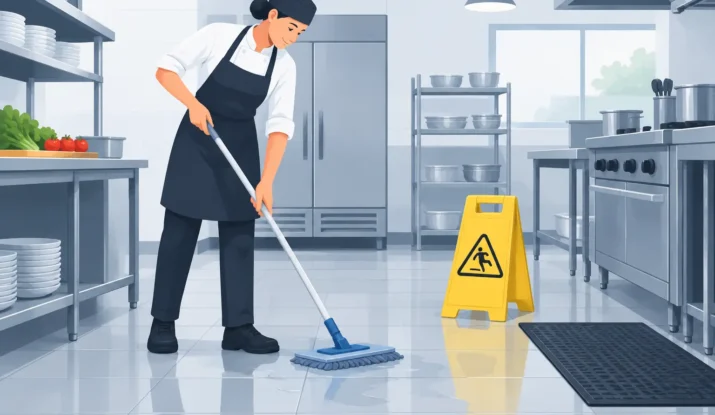
A busy Las Vegas kitchen can go from controlled to dangerous in one rush. One splash from the dish area, a leaking fryer line, or tracked-in grease near the cook line can put an employee on the floor before anyone has time to react. To prevent kitchen floor slips, operators need more than a mop stored in the corner. They need a consistent grease-control, cleaning, and reporting system that works during real service conditions.
Slip prevention protects employees, guests, productivity, and the business itself. It also supports the clean, well-maintained back-of-house environment inspectors expect to see. The most effective approach is practical: identify where liquids and grease originate, remove them correctly, and make floor safety part of every shift.
Why Commercial Kitchen Floors Become Slippery
Kitchen floor hazards rarely have a single cause. In most cases, the danger develops when grease, water, food debris, and rushed cleaning practices overlap. A floor may look clean from standing height while still holding a thin, slick film of oil that reduces traction.
Fryer stations and cook lines are common problem areas because airborne grease settles beyond the hood and equipment surfaces. Over time, that residue is carried to the floor by shoes, mop water, drips from equipment, and splashback from pans. Dish areas create a different problem: standing water, detergent residue, and food particles can spread quickly during high-volume service.
Entryways, walk-in cooler doors, beverage stations, and prep sinks also deserve attention. Condensation, wet footwear, leaking ice machines, and overloaded bus tubs can all create repeat hazards. The key is to treat these areas as active risk zones, not occasional housekeeping concerns.
Find the Source Before Mopping the Symptom
A mop can remove the immediate hazard, but it will not solve a floor that becomes slick every day at 6 p.m. Managers should look for patterns. Ask where employees regularly place wet mats, where grease collects after a shift, and where staff members take shorter routes during a rush.
Inspect the area around fryers, grills, woks, grease traps, dish machines, sinks, refrigeration units, and floor drains. Look beneath equipment as well as around it. A slow leak or a blocked drain may not be obvious during opening checks, but it can create a dangerous surface once the kitchen is operating at full speed.
When a recurring issue is found, assign ownership. The person who notices a leak should know who to notify, who can place warning signage, and who is responsible for correcting the root cause. A clear reporting process keeps small maintenance issues from becoming employee injuries or costly downtime.
Use the Right Cleaning Method for Grease
Water alone does not remove grease effectively. In fact, adding water to greasy residue can spread the hazard over a larger area. Commercial kitchen floors need a degreasing process appropriate for the flooring material, soil level, and operating environment.
Use a commercial-grade floor degreaser according to its label directions. Apply it at the proper dilution, allow enough dwell time for it to break down grease, agitate the surface with the right brush or mechanical scrubber, then remove the dirty solution completely. Leaving degreaser or dirty mop water behind can create its own slippery film.
Dirty mop water is one of the most overlooked causes of poor floor traction. Change solution frequently, especially in kitchens with heavy fryer use or long service periods. A clean mop head, clean bucket, and fresh water are not minor details. They determine whether staff are lifting grease off the floor or redistributing it.
After cleaning, allow floors to dry fully before normal traffic resumes. If drying cannot happen quickly, use wet-floor signs and direct staff around the area. Cleaning during slower hours or after close often reduces disruption, but high-risk areas may still require spot cleaning during service.
Avoid Overusing Chemicals
More chemical does not always mean a cleaner or safer floor. Over-concentrated products can leave residue, damage some surfaces, and create a tacky or slick finish. Follow manufacturer instructions and confirm that the product is suitable for quarry tile, sealed concrete, epoxy, or other flooring in the facility.
If floors remain slippery after regular cleaning, the problem may be buildup rather than a lack of daily effort. Deep cleaning, grout-line cleaning, and grease removal around fixed equipment may be necessary to restore traction.
Build a Routine to Prevent Kitchen Floor Slips
Floor safety works best when it is built into normal kitchen operations. Employees should not have to decide whether a spill is worth addressing. The answer should always be clear: contain it, clean it, mark the area if needed, and report the source when applicable.
A useful floor-safety routine includes opening, service, and closing responsibilities. At opening, check for leaks, standing water, loose mats, drainage issues, and overnight grease accumulation. During service, assign quick response responsibility for spills and keep warning signs accessible. At closing, complete the full degreasing and floor-cleaning process, including areas under and behind movable equipment.
Do not rely solely on verbal reminders. Written checklists create accountability and help managers verify that critical tasks were completed. They are especially helpful in restaurants with multiple shifts, frequent turnover, or shared responsibility across kitchen, dish, and cleaning crews.
Use Mats and Footwear Correctly
Anti-fatigue or slip-resistant mats can help in front of dish stations, prep sinks, and cook lines, but they are not a substitute for cleaning. Mats that are greasy underneath, curled at the edge, saturated with water, or placed over uneven flooring can create a trip hazard instead.
Choose commercial mats designed for wet and greasy kitchen environments. They should lie flat, provide drainage where needed, and be cleaned often enough to prevent trapped grease and food debris. Inspect mat edges daily. Replace mats that no longer grip the floor or have become difficult to clean.
Employee footwear matters just as much. Require closed-toe, slip-resistant shoes with tread designed for foodservice conditions. Worn-out soles lose their ability to grip wet or greasy surfaces, even when the shoe was originally marketed as slip-resistant. Managers should reinforce footwear standards during onboarding and address unsafe footwear before an incident occurs.
Keep Drains, Equipment, and Grease Systems Maintained
A clean floor cannot stay safe if the systems around it are failing. Slow drains allow water to pool. Grease leaks spread under equipment. Overfilled waste containers and poorly maintained grease-handling areas can create slick paths throughout the kitchen.
Floor drains should flow freely and be kept clear of food debris and grease buildup. Staff should never sweep large amounts of food waste into drains, since that can contribute to clogs and standing water. If a drain repeatedly backs up, treat it as a maintenance issue, not a problem to mop around.
Equipment cleaning also affects floor safety. Grease deposits on fryer exteriors, cook-line equipment, walls, and nearby surfaces eventually migrate downward. Scheduled cleaning around and beneath equipment reduces this buildup before it becomes a floor hazard. For high-volume operations, periodic professional degreasing can address heavy accumulation that routine staff cleaning may not fully remove.
Kitchen exhaust maintenance plays a role as well. When grease is allowed to build up in the hood, ductwork, fan, and surrounding cooking environment, it increases fire risk and contributes to overall grease contamination. Proper exhaust hood cleaning helps support a cleaner, safer cook line from the top down.
Train for Fast, Consistent Response
Employees need specific instructions, not a general reminder to “be careful.” Train new hires on the location of spill kits, mop stations, warning signs, and approved cleaning chemicals. Explain who to contact for equipment leaks, damaged flooring, or drainage problems.
Managers should also model the standard. If supervisors step over a small spill during a rush, employees receive the wrong message. A prompt response shows that floor safety is part of service, not an interruption to service.
Review incidents and near-misses without blame. If an employee slips without injury, document where it happened, what was on the floor, what conditions contributed, and whether a process needs to change. Near-miss reporting gives operators an opportunity to correct hazards before someone gets hurt.
Make Floor Safety Part of Professional Kitchen Maintenance
The safest kitchens are not the ones that clean only after a problem appears. They control grease, water, and debris before those hazards affect staff movement. That means maintaining equipment, using effective degreasing methods, checking drainage, and holding every shift to the same standard.
For operators facing recurring grease buildup, slippery cook-line floors, or difficult cleanup around equipment, specialized commercial cleaning support can help restore a safer working surface. Vegas Pressure Clean provides grease-management and commercial kitchen cleaning services designed to support fire safety, cleanliness, and dependable back-of-house operations. Addressing the source of floor contamination now is a practical way to protect the people who keep your kitchen moving.