

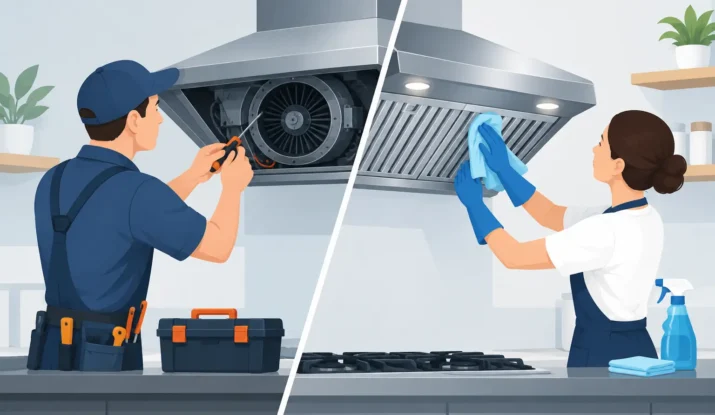
A kitchen exhaust fan can look like an equipment problem when the real issue is grease. It can also look clean enough from the roof while a worn belt, failing motor, or damaged hinge is keeping the system from doing its job. Understanding exhaust fan repair versus cleaning helps restaurant operators address the actual cause of poor airflow, smoke, grease accumulation, and inspection concerns before they disrupt service.
For commercial kitchens, this is not an either-or decision in every case. Cleaning restores the system’s ability to move air safely through grease-laden ducts. Repair restores the mechanical components that make the fan operate. A qualified inspection should determine whether the system needs one service, the other, or both.
Why the Difference Matters in a Commercial Kitchen
The exhaust system is a working safety system, not just a piece of rooftop equipment. Its hood captures heat, smoke, vapor, and grease-laden air at the cooking line. Ductwork carries that air away from the kitchen, and the exhaust fan pulls it through the system and discharges it outside.
When grease builds up inside the hood, ducts, and fan, it creates combustible fuel in a system exposed to high cooking temperatures. It can also restrict airflow, leave more smoke and heat in the kitchen, and allow grease to collect on walls, equipment, and floors. These conditions affect fire safety, employee comfort, cleanliness, and the ability to meet applicable fire-code requirements.
A mechanical failure creates a different set of problems. A fan with a broken belt, seized bearing, failing motor, electrical issue, or damaged upblast hinge may not pull enough air even when the system has recently been cleaned. Cleaning the fan will not fix a motor that does not run. Replacing a belt will not remove the grease buildup inside the ductwork.
That distinction matters because treating only the visible symptom can leave the underlying risk in place.
When Exhaust Fan Cleaning Is the Right Service
Exhaust cleaning is needed when grease accumulation is the central concern. In a commercial kitchen, proper service includes much more than wiping the canopy or pressure washing the exterior of the fan. The hood, plenum, filters, accessible ductwork, fan blades, fan housing, and rooftop containment area may all require attention, depending on the system and its condition.
A cleaning service is often the right first step when staff notice reduced capture at the hood, grease dripping from filters, visible buildup around duct access panels, or excessive grease around the rooftop fan. A kitchen may also need cleaning after an inspection identifies grease accumulation or when it has reached its scheduled service interval.
Cleaning helps restore airflow by removing restrictions inside the exhaust path. It also reduces the combustible grease load that makes kitchen exhaust systems a serious fire concern. For high-volume operations, especially kitchens using woks, charbroilers, fryers, griddles, or solid-fuel cooking equipment, regular cleaning is a core maintenance requirement rather than an occasional cosmetic service.
A professional hood cleaning crew should protect the cooking area, clean the accessible system components thoroughly, and leave documentation showing the work was completed. The goal is not simply to make visible surfaces look better. The goal is to reduce grease-related fire risk and help keep the exhaust system ready for inspection and daily operation.
Signs Grease Is Restricting the System
Grease buildup is not always obvious from the cook line. Some warning signs include heat and smoke lingering under the hood, grease running down hood surfaces, dirty or saturated filters, increased grease deposits on nearby equipment, and buildup around the fan base on the roof.
Operators should also pay attention to changes in how the kitchen feels during a busy shift. If the system used to capture cooking smoke but now allows it to roll into the room, the issue may be a dirty exhaust path, a mechanical problem, or a combination of both. That is why a complete evaluation is more useful than assuming the fan itself is the only source of the problem.
When Exhaust Fan Repair Is Necessary
Repair is necessary when the fan cannot operate correctly because of a mechanical or electrical issue. Common repair needs include worn or broken belts, misaligned pulleys, damaged fan blades, failing motors, worn bearings, loose wiring, damaged disconnects, and hinges or curb connections that prevent safe access or proper closure.
Some problems are immediately clear. If the fan does not turn on, shuts off unexpectedly, makes grinding or squealing noises, vibrates heavily, or produces a burning odor, it needs prompt mechanical attention. Continuing to operate a failing fan can cause additional damage and may leave the kitchen without adequate ventilation during service.
Other issues are less obvious. A belt-driven fan may still run with a loose belt, but it may not reach the speed needed to pull air effectively. A motor may overheat and lose performance under load. A damaged fan blade can reduce airflow and create vibration that shortens the life of other components.
Repairs should be handled by a qualified technician with the proper expertise for the equipment involved. Depending on the issue, that may mean a mechanical, electrical, HVAC, or exhaust-system service professional. The repair should be verified after completion so the operator knows the fan is running correctly and the kitchen has proper capture and exhaust performance.
Exhaust Fan Repair Versus Cleaning: How to Decide
The practical answer begins with the system’s condition. If the fan runs properly but grease is present in the hood, duct, or fan housing, cleaning is the immediate need. If the fan does not run, runs inconsistently, or shows signs of mechanical damage, repair is required. If the system has grease accumulation and poor mechanical performance, schedule both services in the proper order.
In many cases, cleaning should happen before or alongside repair work because grease can hide component condition and make safe access more difficult. A technician may also need the fan cleaned before evaluating blades, hinges, belts, and other parts accurately. However, if the fan is unsafe to operate or has an electrical failure, it may need to be shut down and repaired before normal operation resumes.
Do not rely on a recent cleaning date alone. A clean fan that is underperforming can still cause smoke, heat, and operational problems. Likewise, a repaired fan moving air through grease-coated ducts does not resolve the fire hazard that remains inside the system.
A Better Maintenance Plan Prevents Both Problems
The most reliable approach is to treat cleaning and repair as connected parts of exhaust-system maintenance. Schedule hood and duct cleaning based on the type and volume of cooking, the equipment in use, and applicable requirements. During each cleaning, have the crew observe visible fan conditions such as heavy vibration, belt wear, damaged hinges, grease leaks, and abnormal noise.
Kitchen managers can support that process with simple daily awareness. Train staff to report unusual fan sounds, smoke escape, odors, excess heat, and grease drips promptly. Keep rooftop access controlled and do not allow untrained personnel to open or service the fan. Improper access can damage the equipment, create fall hazards, or leave the fan improperly secured after service.
For Las Vegas restaurants, hotels, commissaries, and foodservice facilities operating long hours, downtime has a direct cost. Planned service is usually easier to manage than a fan failure during a rush or an inspection issue that demands immediate attention. Vegas Pressure Clean focuses on commercial kitchen exhaust cleaning with owner-led quality control, helping operators keep the grease-management side of that maintenance plan on schedule.
Do Not Let One Problem Hide the Other
A repaired motor can make a neglected duct system work harder. A freshly cleaned hood can still perform poorly if the fan belt is slipping. The strongest maintenance decision is the one based on a clear inspection of grease conditions and equipment performance, followed by the right qualified service for each issue.
If your kitchen is seeing smoke escape, heavy grease deposits, unusual fan noise, or declining airflow, address it before the next busy shift makes the problem more expensive. A clean, properly operating exhaust system protects the people working below it and keeps the kitchen ready to operate with confidence.