

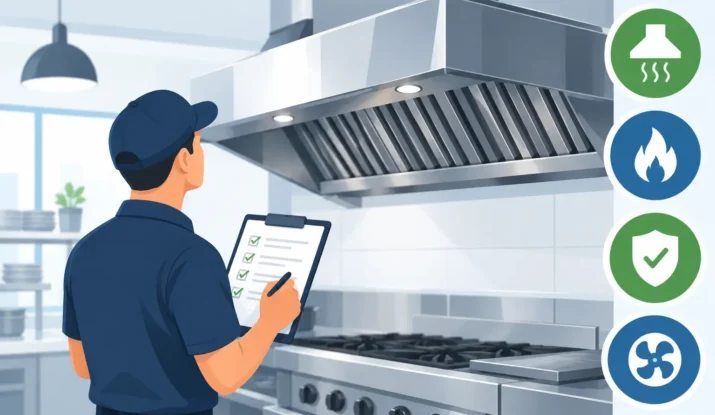
A hood system can look acceptable from the cook line and still hold a serious grease hazard above the filters. The best restaurant hood inspection checklist helps operators catch the warning signs before a fire inspector, equipment failure, or kitchen fire forces the issue. For Las Vegas restaurants running long hours, high heat, and heavy production, a documented inspection routine is one of the most practical ways to protect people, property, and service.
A hood inspection is not the same as a hood cleaning. Your team can inspect visible conditions between professional services, but exhaust ducts, rooftop fans, and inaccessible areas require qualified cleaning and maintenance. Use this checklist to identify issues early, confirm that cleaning is being completed to a satisfactory standard, and keep accurate records for management and the authority having jurisdiction.
Start With a Safe Inspection Routine
Perform visual checks when cooking equipment is off and surfaces have cooled. Do not remove electrical panels, enter ductwork, climb onto roofs, or attempt repairs outside your team’s training. Grease, hot metal, sharp filter edges, and energized equipment all create unnecessary risk when an inspection is rushed.
Assign the check to a manager or trained shift lead, and record the date, inspector, findings, and corrective action. A simple log is valuable because it shows whether grease buildup is returning faster than expected, whether a fan problem is recurring, or whether your cleaning frequency needs to change.
The required cleaning schedule depends on the type and volume of cooking. High-volume operations using solid fuel, charbroilers, woks, fryers, or heavy grease-producing equipment typically need more frequent service than a low-volume kitchen. Your fire code requirements, insurer, equipment manufacturer instructions, and local fire authority should guide the final schedule.
Best Restaurant Hood Inspection Checklist: Hood and Filters
Begin where your staff can safely see the system every day. The hood canopy and filters are not the whole exhaust system, but their condition often reveals what is happening farther into the system.
Check the following during a routine walk-through:
- Hood surfaces: Look for grease film, drips, streaks, discoloration, peeling residue, and grease collecting along seams or corners. Grease running onto cooking equipment, floors, or walls needs immediate attention.
- Baffle filters: Confirm every filter is installed, seated correctly, and free of dents, gaps, and heavy grease blockage. Missing or damaged filters allow grease to move into areas where it is harder to remove.
- Filter orientation: Baffle filters must be installed in the correct direction so grease drains into the collection channel rather than toward the cooking line or duct opening.
- Grease cups and troughs: Empty and clean grease cups before they overflow. Check that cups are present, secure, and positioned to catch drainage from the filters.
- Plenum area: With filters removed only when equipment is cool and the area is safe, inspect the visible plenum for excessive grease accumulation. A light film may be expected between services; pooled, sticky, or dripping grease is not.
- Hood lights and controls: Check for loose fixtures, broken lenses, exposed wiring, or grease-coated switches. Report electrical issues to a qualified technician rather than trying to clean around damaged components.
Do not treat polished stainless steel as proof that the system is clean. A hood can look presentable on the outside while grease remains in the plenum, duct riser, and fan assembly. The inspection needs to focus on safety conditions, not appearance alone.
Check Airflow and Fan Performance
Poor airflow affects more than comfort. When smoke, heat, vapor, and grease-laden air are not captured effectively, grease can deposit where it does not belong. It can also make the line hotter, reduce visibility, and create a difficult work environment during peak service.
With the system operating, observe whether smoke and steam are being pulled into the hood. Watch for fumes rolling into the kitchen, heat hanging around the cook line, or visible vapor escaping at the front or sides of the canopy. These signs can point to a fan issue, blocked filters, makeup air imbalance, a damaged belt, or changes to the cooking setup.
Listen for unusual sounds such as rattling, squealing, grinding, or vibration. A rooftop exhaust fan may be out of balance, have a worn belt, or need mechanical service. Kitchen staff should report the issue promptly, but fan repairs should be handled by a qualified contractor.
Also look at the makeup air system. Exhaust and makeup air work together. If makeup air is not operating correctly, the kitchen can become negatively pressurized, doors may be difficult to open, and the hood may not capture smoke as designed. A hood cleaning company can identify grease-related conditions, while an HVAC professional may be needed to diagnose airflow or mechanical problems.
Inspect the Duct Access Points and Service Label
Your exhaust system should have accessible openings that allow a professional cleaner to reach the ductwork. Inspect visible access panels for secure closures, damaged hinges, missing fasteners, or grease leakage around the edges. Access doors should not be painted shut, blocked by equipment, or hidden behind permanent construction.
After each professional cleaning, confirm that the service label is present and legible. The label should identify the cleaning company, the date of service, and the next scheduled service date. If the label is missing, outdated, or difficult to read, correct the record before it becomes an inspection issue.
Review the cleaning report as well. It should identify the areas serviced and note any conditions requiring repair or follow-up. A report that says the hood was cleaned does not remove the operator’s responsibility to act on reported defects such as inaccessible duct sections, leaking access doors, missing filters, or fan problems.
Review Fire Suppression Components Without Tampering
The hood’s fire suppression system is a separate life-safety system, and it deserves a careful visual check. Do not pull manual activation stations, discharge the system, remove nozzle caps, or adjust detection lines during routine inspections.
Look for nozzles that are missing, bent, obstructed, heavily coated with grease, or aimed away from the protected cooking appliance. Make sure the protective caps are present where required. Confirm that cooking equipment has not been moved so far that nozzles no longer cover the intended hazard.
Check that the manual pull station is visible, accessible, clearly identified, and not blocked by boxes, carts, or stored supplies. Verify that required portable fire extinguishers are in their designated locations and have current inspection tags. If your kitchen layout, appliances, or fuel sources have changed, arrange for a qualified fire suppression contractor to review the system. Moving a fryer or adding a charbroiler without reassessing protection can create a serious compliance gap.
Look Beyond the Hood for Grease Hazards
Grease management does not stop at the canopy. Floors, walls, equipment exteriors, roof areas, and waste handling practices can all affect safety and inspection readiness.
Check floors around fryers, ranges, and under the hood for grease buildup or slippery residue. A small drip from a grease cup can become a fall hazard during a busy shift. Inspect nearby walls, ceiling tiles, and equipment sides for splatter or grease trails that suggest poor capture or overdue detail cleaning.
If rooftop access is authorized and safe for trained personnel, look for obvious grease discharge around the fan base, curb, and surrounding roof surface. Do not open the fan or perform rooftop work without proper training and fall protection. Grease on the roof can signal a fan hinge problem, failed containment, or incomplete cleaning, and it may create damage and slip risks outside the kitchen.
Know When Inspection Means It Is Time to Schedule Service
Schedule professional hood cleaning promptly when you find dripping grease, visibly loaded filters, heavy plenum accumulation, grease leaking from access panels, rooftop discharge, or a service label that is past due. Do not wait for a failed inspection or a visible flame event. The cost of urgent cleanup, lost operating time, and possible fire damage is far greater than planned maintenance.
Vegas Pressure Clean helps commercial kitchens maintain cleaner hood systems with fire-code-focused exhaust cleaning and straightforward documentation. For operators, the goal is simple: know what your staff can monitor, correct small issues quickly, and bring in qualified service before grease becomes a fire risk. Keep the checklist with your maintenance records, use it consistently, and let the condition of your kitchen – not the calendar alone – tell you when attention is needed.