

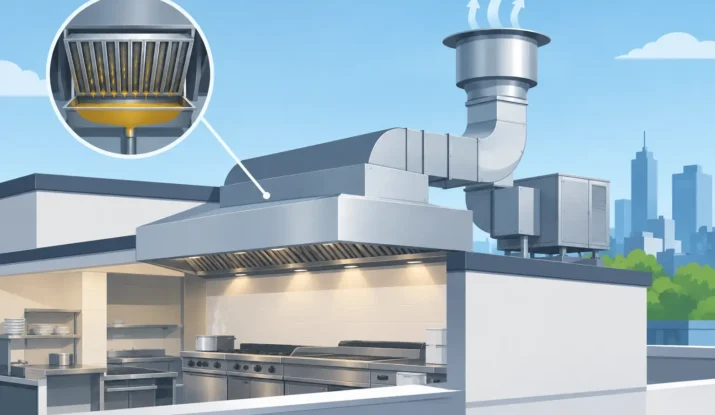
A commercial kitchen can look clean at closing time while its exhaust system is sending a different problem to the roof. Grease vapor that escapes through the fan can collect on the rooftop, migrate across roofing material, stain walls, create slip hazards, and eventually reach drains or neighboring areas. Proper rooftop exhaust grease containment gives that grease a controlled place to collect before it becomes a property, safety, or compliance issue.
For Las Vegas restaurants, hotels, casinos, commissaries, and other high-volume kitchens, this is not a minor maintenance detail. Rooftop grease is a predictable result of cooking operations, especially where equipment runs long hours and produces heavy grease-laden vapor. The right containment setup, maintained on a schedule, helps protect the building while supporting a cleaner and safer exhaust operation.
What Rooftop Grease Containment Is Designed to Do
A rooftop containment system is installed beneath or around a kitchen exhaust fan to capture grease that drips, leaks, or is discharged from the fan area. Most systems use a metal frame or low-profile tray fitted with absorbent media. The media captures grease while allowing rainwater to drain as designed, helping prevent standing water and uncontrolled runoff.
The goal is simple: keep grease off the roof. That protection matters because grease can deteriorate roofing materials, create a slip-and-fall concern for maintenance personnel, and leave a facility with an expensive cleanup problem. A greasy rooftop can also create tension with landlords, property managers, neighboring tenants, and building owners when runoff or odor becomes noticeable.
Containment is not a substitute for professional hood, duct, and fan cleaning. It is a secondary line of defense. A properly maintained exhaust system reduces the grease reaching the roof, while the containment system captures what still escapes during normal operation. Both services work together.
Why Rooftop Exhaust Grease Containment Matters
Grease does not always stay directly beneath the fan. Wind, rain, heat, and rooftop foot traffic can spread it beyond the original discharge area. On a flat commercial roof, even a small ongoing leak can travel farther than operators expect. By the time the problem is visible from the ground, the affected area may be much larger.
Roof damage can become a building expense
Grease can soften or stain certain roofing surfaces and interfere with coatings, seams, and drainage paths. The exact impact depends on the roof type, its age, and the volume of grease exposure. Still, a preventable grease stain is far less costly than addressing a damaged roof section or paying for specialized environmental cleanup.
Containment also makes the problem easier to inspect. Instead of trying to identify residue across a large roof area, a technician can examine the absorbent media, tray, and fan base. Saturated media gives a clear signal that service is needed.
Safety concerns do not stop at the kitchen door
Kitchen staff understand that grease on a floor is a slip hazard. The same is true on a roof. HVAC technicians, roofers, inspectors, and exhaust cleaning crews may need access to the area around the fan. Grease on a walking surface creates unnecessary risk, particularly when the roof is wet or when technicians are carrying tools.
A containment system does not eliminate the need for safe rooftop practices, but it helps keep the immediate fan area more controlled. That is a practical benefit for any facility manager responsible for vendors and building access.
Runoff can create broader problems
Grease that reaches roof drains, scuppers, walls, or ground-level surfaces can create a larger cleanup issue. It may also produce odors and visible staining that reflect poorly on the operation. In multi-tenant properties, one kitchen’s rooftop grease can quickly become a building management concern.
Local requirements, lease obligations, and fire inspection expectations vary by property and jurisdiction. Operators should not assume that an old tray or a makeshift collection pan meets current needs. The containment system should be appropriate for the fan configuration, roof layout, and grease load of the kitchen.
Choosing the Right Containment Setup
There is no single tray size or absorbent material that fits every commercial kitchen. A small, lower-volume operation may need a compact system under one fan. A busy restaurant, hotel kitchen, or food production facility may require larger containment coverage and more frequent media changes.
The system should fit securely beneath the fan without blocking service access or interfering with drainage. It must also be sized to handle the expected grease output. An undersized tray can overflow. A tray that is poorly installed can shift, allow grease to bypass the media, or make routine fan service harder than it needs to be.
The absorbent media matters as much as the frame. Quality media is designed to hold grease while managing rain exposure. It should be replaced when saturated, damaged, or heavily soiled. Reusing exhausted media defeats the purpose of the system and can leave the roof vulnerable during the next period of heavy cooking activity.
When evaluating a containment solution, consider the fan’s discharge pattern, the cooking volume, the roof surface, local weather exposure, and how often the exhaust system is professionally cleaned. A system that works well for a lightly used kitchen may not be adequate for a 24-hour operation.
Signs Your Rooftop Containment Needs Service
Containment systems are easy to overlook because they are out of sight. That is why they should be inspected as part of a planned maintenance program rather than only after a leak is reported. Watch for these conditions:
- Absorbent media that is dark, saturated, torn, or holding visible grease.
- Grease stains extending beyond the containment tray or fan base.
- Standing water, blocked drainage paths, or debris collected in the tray.
- Loose frames, damaged edges, or a tray that no longer sits level beneath the fan.
These conditions do not always mean the fan is failing, but they do mean the system needs attention. An inspection can identify whether the immediate issue is spent media, a poor containment fit, excess grease discharge, fan maintenance needs, or a combination of factors.
Pair Containment With Professional Exhaust Cleaning
A greasy roof often points back to the exhaust system. Filters may be overloaded, ductwork may carry excessive buildup, or the fan may be due for service. Kitchen exhaust cleaning removes grease from the hood, plenum, ducts, and fan components according to the needs of the system and the operation’s cleaning schedule.
When the fan is cleaned, the rooftop area should be evaluated as well. Technicians can inspect for grease accumulation around the curb, hinges, wiring, and service access points. They can also confirm that the containment system remains in place and that its media is still effective.
This approach is especially valuable before fire inspections, property walkthroughs, roof work, or ownership transitions. Addressing rooftop grease early helps avoid last-minute corrections that disrupt operations or delay other maintenance work.
At Vegas Pressure Clean, kitchen exhaust work is approached as a fire-safety and compliance responsibility, not just a cosmetic cleaning task. A clear scope of service and routine attention to the fan and roof area help operators keep grease management from turning into an emergency.
Build Rooftop Checks Into Your Maintenance Plan
The best schedule depends on cooking volume, equipment type, hours of operation, and the amount of grease produced. High-volume charbroiling, frying, wok cooking, and long operating hours generally demand closer attention than a low-volume kitchen with lighter cooking processes.
Rooftop containment should be reviewed during scheduled exhaust service and after major weather events, roof repairs, or fan work. Facility managers should also make sure rooftop access is controlled and that vendors know where grease containment is located. A tray can only do its job if it stays correctly positioned and is not damaged during other maintenance.
A clean roof around the exhaust fan is one of the clearest signs that grease management is being handled before it becomes a liability. If your containment media is overdue, the tray is stained or damaged, or grease is appearing outside the fan area, schedule an inspection before a small rooftop issue reaches the kitchen, the property manager, or the next inspection.