

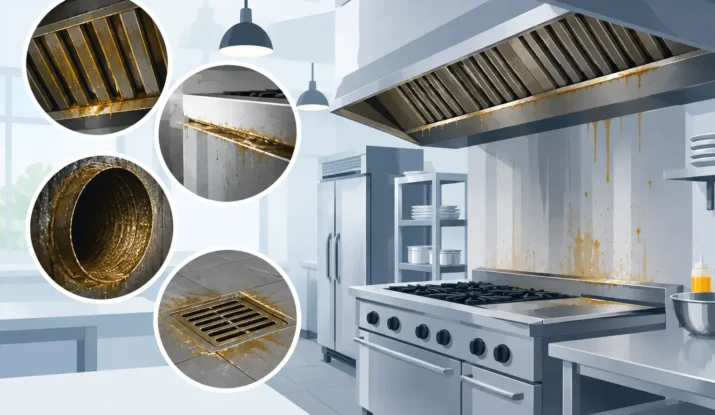
A kitchen can look clean at the cook line and still have a serious grease problem overhead. The top signs of grease accumulation often appear first in the hood, filters, duct access points, and exhaust fan – areas that are easy to overlook during daily cleaning but central to fire safety and code compliance.
For Las Vegas restaurants, hotel kitchens, and other high-volume foodservice operations, grease buildup is not simply a housekeeping issue. It can restrict airflow, create unpleasant odors, increase slip hazards, and provide fuel for a fast-moving kitchen fire. Recognizing the warning signs early gives managers time to schedule service before the issue affects an inspection, equipment performance, or normal operations.
Top Signs of Grease Accumulation to Watch For
Grease dripping from hood filters or seams
Drips are one of the clearest warnings that grease has moved beyond ordinary surface residue. Grease may collect along the lower edge of hood filters, run from seams in the canopy, or drip onto cooking equipment, walls, and floors. This is especially common after long, high-heat shifts involving fryers, charbroilers, woks, or solid-fuel cooking.
A small amount of residue on filters can be expected between cleanings. Active dripping is different. It indicates that grease is collecting faster than the system can safely contain it, and it should be addressed promptly. Grease on the floor also creates a slip-and-fall exposure for kitchen staff.
Sticky residue around access panels and duct openings
Kitchen exhaust ducts are designed to carry heat, smoke, vapor, and grease-laden air away from the cooking line. When grease is visible around duct access doors, hood seams, or joints, there may be heavier accumulation inside the system.
Do not assume the problem is limited to the spot you can see. Grease travels through the exhaust path and can settle in duct turns, vertical risers, and other areas that are not visible from the kitchen. A qualified exhaust cleaning team uses access points to inspect and clean the full system, not only the hood canopy.
Smoke, heat, or odors lingering in the kitchen
A properly operating exhaust system should remove smoke, heat, and cooking odors efficiently. If the kitchen stays smoky after service begins, feels noticeably hotter than usual, or carries a stale grease odor even after cleaning, restricted airflow may be part of the problem.
This does not automatically mean the ductwork is dirty. Fan performance, make-up air balance, damaged filters, and equipment changes can also affect ventilation. But lingering smoke and heat are operational warning signs worth investigating, particularly if they are new or getting worse.
Dark, heavy buildup on filters and hood surfaces
Filters serve as the first line of defense in the exhaust system. When they are coated in dark, tacky grease, airflow can be reduced and more grease can pass into the ductwork. A hood surface that quickly becomes sticky again after routine wiping can point to high grease production or an overdue cleaning schedule.
The condition of the filters matters, but replacing or washing filters alone is not a substitute for cleaning the complete hood, duct, and fan system. Filters catch only part of the grease generated during cooking. The rest continues through the exhaust path.
Grease on nearby walls, ceilings, and equipment
Look beyond the hood itself. A greasy film on nearby walls, ceiling tiles, light fixtures, refrigeration equipment, or the exterior of the cooking line may indicate that grease vapor is escaping or settling throughout the kitchen.
This residue can become harder to remove over time and may affect sanitation standards. It also signals that daily cleaning may not be keeping pace with the volume and type of cooking taking place. High-output kitchens often need a maintenance plan that reflects their actual cooking conditions, not a generic schedule.
Excessive fan noise, vibration, or visible discharge
The exhaust fan is a critical part of the system, yet it is often out of sight and out of mind. Grease buildup on fan blades and housings can contribute to imbalance, vibration, noise, and reduced exhaust performance. In some cases, grease may be visible around the fan area or on the roof surface near the discharge point.
A noisy fan can have several causes, including mechanical wear. Still, it should never be ignored. If the exhaust fan is not moving air effectively, heat, smoke, and grease vapor can remain in the kitchen or deposit more heavily inside the ductwork.
Why Visible Grease Is Only Part of the Risk
The most concerning grease is often the grease employees cannot see during a normal shift. Exhaust ducts can run above ceilings, through walls, and across rooflines. As grease accumulates, it can form a flammable layer inside the system.
If a cooking fire reaches the exhaust path, accumulated grease can help carry flames beyond the appliance and hood. That is why commercial kitchen exhaust cleaning is a fire-prevention service, not cosmetic cleaning. The goal is to remove grease from the hood, plenum, ductwork, and exhaust fan to reduce the available fuel load.
Fire code requirements and cleaning frequency vary based on cooking volume, equipment type, and the authority having jurisdiction. A kitchen operating fryers, charbroilers, or wok stations generally produces more grease than a low-volume operation with limited cooking. The right service interval depends on how the kitchen actually operates and the condition of the system between cleanings.
When Routine Cleaning Is No Longer Enough
Daily and weekly cleaning by kitchen staff remains essential. Wiping hood exteriors, cleaning accessible surfaces, managing floor grease, and maintaining filters all support a safer workspace. However, employees should not attempt to clean inaccessible ductwork or roof-mounted fans without the proper equipment, access, and safety procedures.
Professional service is needed when grease is visible beyond the filters, airflow changes become noticeable, odors persist, or cleaning records show that the scheduled interval has passed. It is also wise to schedule an inspection after menu changes, increased production, or the installation of new cooking equipment. A kitchen that adds a charbroiler or expands fryer capacity may require more frequent exhaust cleaning than it did before.
A thorough service should address the complete exhaust system. That includes the hood interior, plenum, filters as applicable, accessible ductwork, and exhaust fan. The work should be documented so managers have a clear record for internal maintenance tracking and fire inspection readiness.
Protecting Operations Between Hood Cleanings
The best way to control grease is to treat it as an ongoing maintenance responsibility. Train staff to report drips, smoke changes, unusual fan noise, and greasy surfaces as soon as they appear. Small changes are easier to investigate before they become a disruption during a busy service.
Keep hood filters properly seated and avoid operating grease-producing equipment when filters are missing or damaged. Maintain clear access to hood and duct panels so service technicians can do their work without unnecessary delays. If your kitchen has recurring floor grease or buildup around equipment, schedule targeted cleaning before it creates a safety issue for staff.
Vegas Pressure Clean provides commercial kitchen exhaust cleaning with a focus on fire safety, honest service, and minimizing disruption to your operation. A consistent cleaning plan can help protect your kitchen, support compliance, and keep your team focused on serving guests instead of dealing with preventable grease problems.
If you are seeing drips, lingering smoke, heavy filter buildup, or grease where it should not be, do not wait for an inspection or a service interruption to force the issue. Schedule a professional assessment and establish a cleaning interval that matches the way your kitchen works.