

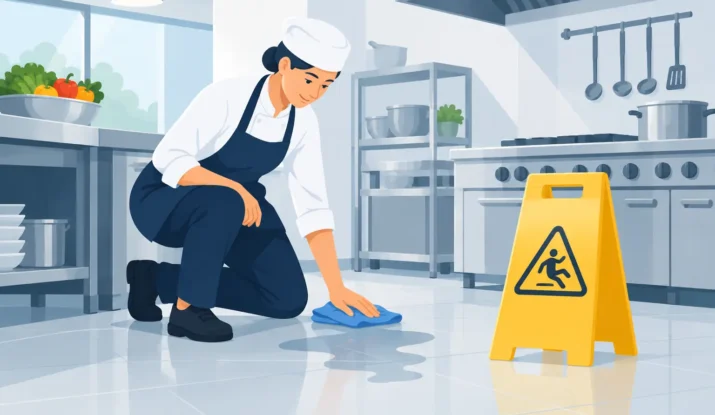
A busy service can turn a clean floor into a slip hazard in minutes. Water around a dish station, cooking oil near a fryer, grease tracked from the line, and an overflowing floor drain can all create risk before a manager has time to react. To prevent kitchen slip hazards, commercial operators need more than a mop kept in the corner. They need clear routines, the right cleaning methods, and prompt attention to the grease sources behind recurring floor problems.
Why kitchen floors become dangerous
Commercial kitchen floors take constant abuse. Employees carry hot food, move heavy racks, wash equipment, unload deliveries, and work quickly in tight spaces. In Las Vegas restaurants, hotels, and high-volume foodservice operations, that pace can make a small spill a serious employee safety issue.
The most common hazards are not always obvious puddles. A thin film of grease can make quarry tile or sealed concrete slick without looking wet. Detergent residue left after mopping may reduce traction. Condensation around walk-ins, leaking equipment, damaged floor grout, and clogged drains can all leave the floor unsafe.
Slip prevention matters because one fall can lead to injuries, missed shifts, workers’ compensation claims, disrupted service, and possible scrutiny during a safety or health inspection. It also affects the day-to-day confidence of a kitchen crew. Staff should be able to move with urgency without wondering whether the next step will slide out from under them.
Prevent kitchen slip hazards at the source
The most effective floor-safety program starts by controlling what reaches the floor. Mopping is necessary, but it should be the final response, not the only one.
Control grease around cooking equipment
Fryers, grills, ranges, flat tops, and hood systems are frequent sources of grease. Splatter, overflowing grease containers, poorly maintained equipment, and residue dripping during cleaning can spread far beyond the cook line. Grease then gets carried by shoes, wheels, and mop heads into prep areas, dish rooms, and walkways.
Train staff to handle grease carefully during filtering, disposal, and equipment cleaning. Grease containers should be stable, covered when practical, and moved only on clear routes. Any spill should be isolated and cleaned immediately with a degreasing product suited to the floor surface.
This is also where scheduled exhaust hood and equipment cleaning supports floor safety. When grease accumulation is allowed to build on hoods, filters, walls, and equipment exteriors, it has more opportunities to migrate downward. Professional grease-management work helps address the broader conditions that contribute to unsafe kitchen surfaces, while supporting fire-safety and cleanliness requirements.
Keep drainage working as intended
Floor drains are not a substitute for routine cleanup, but they are essential when water is used for washing and sanitation. A slow or clogged drain lets water spread into travel paths. Broken drain covers, uneven floors, and standing water around drains create additional risk.
Check drains at the beginning and end of each shift, especially in dish areas and near equipment that is regularly washed down. Remove visible debris before it enters the drain, and address recurring backups rather than simply pushing water toward them. If drainage problems persist, document the location and have the underlying issue evaluated.
Repair floor conditions that trap grease
Cracked tile, missing grout, worn coatings, and uneven concrete are more than cosmetic concerns. They hold grease and moisture, make thorough cleaning harder, and can create tripping hazards as well as slippery areas. A floor with damaged joints may look clean after mopping while still holding residue below the surface.
Repairs require planning, particularly in an operation that cannot close during peak periods. Still, postponing them can raise cleaning labor and accident risk every day. Schedule repairs during slower hours or coordinated maintenance windows whenever possible.
Build cleaning routines around traffic and risk
A closing mop is not enough for a commercial kitchen. Floor care should match the way the kitchen operates, with extra attention during prep, service, dishwashing, and closing.
Use a cleaner or degreaser that is appropriate for the specific floor material and follow the product instructions for dilution and contact time. Stronger is not always better. Over-concentrated chemicals can leave a residue, damage coatings, or create a surface that is difficult to rinse. After degreasing, rinse as needed so the loosened oil is removed rather than spread across the floor.
Mop water must be changed often. A gray, greasy mop bucket does not clean a floor; it redistributes contamination. Color-coded tools can help prevent a mop used near trash or dish areas from being used in food prep spaces.
Place wet-floor signs before cleaning begins, not after someone enters the area. Whenever possible, clean one section at a time and keep a dry, clear path available for staff. This is especially important near exits, walk-ins, time clocks, and dish stations where employees may be carrying items with limited visibility.
Treat spills as an immediate task
Employees should know exactly who responds to spills and what supplies to use. A fast response does not require a complicated policy, but it does require accountability. The staff member who sees a spill should either guard the area and clean it or notify someone who can respond without delay.
For high-risk spills, use a simple sequence: block the area, remove the spill, degrease or sanitize as appropriate, dry the surface, and remove warning signs only after traction has been restored. Do not leave towels over a wet area as a permanent solution. They can shift, absorb grease, and create another tripping concern.
Choose mats and footwear carefully
Anti-slip mats can help in wet zones, but they are not automatically safe. Mats that curl, slide, become saturated with grease, or are difficult to clean can make conditions worse. Use commercial-grade mats with beveled edges and backing designed for the floor type. Inspect them daily, clean beneath them regularly, and replace them when they no longer lie flat.
Mats work best in targeted locations, such as dish stations, prep sinks, and areas where workers stand for long periods. Covering too much floor can interfere with cleaning and hide grease buildup. The right approach depends on the layout, traffic volume, and how often water reaches the area.
Footwear is just as important. Require shoes with slip-resistant soles suitable for commercial kitchen work, and make that standard part of new-hire orientation. Shoes with worn tread, food residue packed into the soles, or smooth casual footwear reduce the benefit of even the best floor-maintenance program.
Train, inspect, and document the process
Floor safety works when it becomes part of normal operations rather than a rule discussed only after an accident. Include spill response, mop procedures, drain checks, footwear expectations, and reporting requirements in regular staff training. Supervisors should reinforce the standard during pre-shift meetings and correct unsafe practices promptly.
A short documented inspection is useful for identifying repeat issues. Walk the kitchen at different times of day, not just before opening. Look for wet areas near the dish machine, grease trails from the line, leaks under equipment, loose mats, drain odors, and areas where employees routinely take shortcuts through a wet zone.
When a problem repeats, look beyond the person holding the mop. A recurring slick spot may point to a leaking fryer, an overloaded grease container, poor drainage, an ineffective cleaning chemical, or a service schedule that no longer fits the kitchen’s volume. Correcting the cause is more reliable than asking employees to clean the same hazard more often.
Bring in specialized support when grease is the issue
Some floor hazards are a sign of a larger grease-management problem. Heavy buildup around equipment, recurring grease runoff, or residue from neglected hood systems may require professional cleaning beyond daily staff maintenance. Vegas Pressure Clean provides commercial grease-management and kitchen cleaning support designed around safety, compliance, and operational scheduling.
A qualified service provider should explain what will be cleaned, protect surrounding work areas, and leave the kitchen in a condition that supports safe reopening. For operators, the goal is not simply a cleaner appearance. It is reducing the conditions that lead to falls, fire risk, failed inspections, and avoidable downtime.
A safer kitchen floor is built one shift at a time. Give your team the tools, procedures, and maintenance support to act quickly when grease or water reaches the floor, and small hazards are far less likely to become costly incidents.