

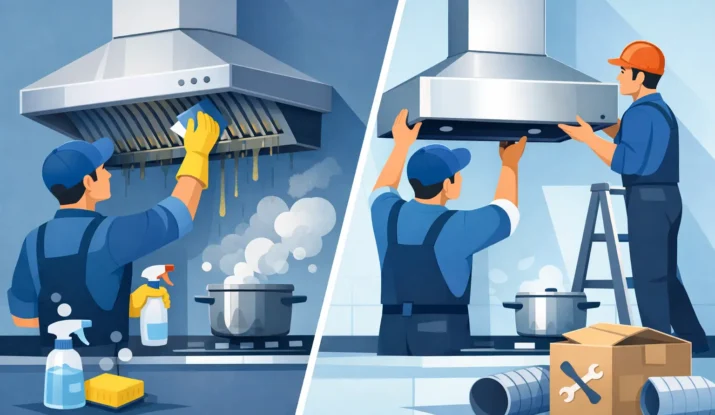
A hood that is dripping grease, pulling poorly, or drawing attention during an inspection creates an immediate question for any kitchen operator: is this a cleaning problem or an equipment problem? Hood cleaning vs replacement is not simply a budget decision. It affects fire safety, code compliance, kitchen airflow, staff working conditions, and whether your operation can stay open without avoidable disruption.
For most commercial kitchens, professional exhaust system cleaning is the correct first step. Grease buildup can make a sound hood, duct, and fan look neglected or perform poorly. But cleaning has limits. When metal is corroded through, components no longer operate safely, or the system cannot contain and remove cooking vapors as designed, replacement or repair may be necessary.
What Hood Cleaning vs Replacement Really Means
Commercial hood cleaning removes combustible grease from the accessible interior and exterior surfaces of the exhaust system, including the hood plenum, ducts, filters, and exhaust fan. A qualified contractor also checks the system’s condition while cleaning. This work is preventive maintenance with a direct fire-safety purpose.
Replacement means removing a component that can no longer perform its intended function. Depending on the issue, that could be a damaged baffle filter, grease cup, fan belt, hinge kit, exhaust fan, section of ductwork, or the hood itself. Replacing an entire hood is a much larger project that may require permitting, fire suppression coordination, electrical work, roof work, and downtime.
The right decision depends on the condition of the metal and mechanical components after grease has been removed. A greasy system can hide serious damage. It can also make a perfectly serviceable system appear worse than it is. That is why an informed decision starts with a thorough cleaning and inspection rather than assumptions based on surface appearance.
When Professional Hood Cleaning Is the Right Answer
If the hood and ducts are structurally intact, cleaning is usually the practical and cost-effective solution. Grease is an operational hazard, not automatic proof that equipment has reached the end of its life. High-volume cooking, deferred maintenance, and hard-to-reach duct runs can allow deposits to build quickly, especially in Las Vegas restaurants operating long hours.
A professional cleaning can restore clear airflow paths, remove fuel that could feed a fire, reduce grease drips, and give managers a clearer view of the equipment’s actual condition. It also helps protect the kitchen from failed fire inspections and reduces the odors and residue that spread into surrounding work areas.
Cleaning is especially appropriate when the issue is limited to accumulated grease on otherwise sound stainless steel, dirty baffle filters, a full grease containment cup, or buildup on the fan and duct surfaces. These conditions require prompt attention, but they do not necessarily require new equipment.
Cleaning cannot be a cosmetic shortcut
A proper service is more than wiping the visible canopy above the cooking line. Grease travels through the entire exhaust path. The hood, plenum, filters, ducts, rooftop fan, and grease containment areas all need to be evaluated and cleaned according to the system’s needs.
Be cautious of any service that focuses only on the kitchen-facing surfaces. A hood can look clean at eye level while heavy deposits remain inside the ductwork or at the fan. The hidden areas are where fire risk and airflow problems can continue.
When Replacement or Repair Is Necessary
Cleaning will not fix physical deterioration or equipment failure. Once grease is removed, look for corrosion, cracks, loose seams, warped metal, failed welds, missing parts, or holes in the hood or duct. These defects can compromise containment and create areas where grease escapes, water enters, or smoke and heat move where they should not.
Corrosion deserves particular attention. Surface discoloration may be manageable, but metal that is pitted, thinning, flaking, or perforated is a different issue. Kitchen exhaust systems operate under heat, moisture, cleaning chemicals, and grease exposure. Over time, these conditions can damage metal components beyond what cleaning can correct.
Mechanical failures can also justify targeted replacement. A fan that will not operate reliably, damaged hinges that prevent safe rooftop access, worn belts, leaking grease containment components, or filters that no longer fit securely should be repaired or replaced. In many cases, replacing a specific component avoids the expense and disruption of replacing the whole hood system.
Full hood replacement is usually reserved for major structural damage, an improperly sized or installed hood, extensive corrosion, or a kitchen remodel that changes the cooking equipment and ventilation requirements. If the cooking line has expanded from light-duty equipment to heavy grease-producing appliances, the existing hood may no longer be designed for the load. That is a system design issue, not a cleaning issue.
Compliance Depends on Both Cleanliness and Condition
Fire-code-driven maintenance requires more than a clean appearance. Authorities and inspectors look for a system that is maintained, accessible, and capable of operating safely. Cleaning documentation matters, but records do not cancel out damaged equipment.
At the same time, replacement is not a substitute for routine cleaning. A new hood will begin collecting grease as soon as cooking resumes. Without a scheduled cleaning program, even new equipment can become a fire risk and create compliance concerns.
For Las Vegas operators, working with a Nevada State Fire Marshal licensed cleaning provider adds practical value. An experienced technician can identify issues that should be referred to a qualified hood installer, mechanical contractor, or fire suppression professional. The cleaning company should be clear about what it can correct through service and what needs equipment repair or replacement.
Consider Downtime, Cost, and Kitchen Operations
Cleaning is generally less disruptive because it can often be scheduled around service hours. A professional crew prepares the work area, protects nearby equipment, cleans the exhaust system, and leaves the kitchen ready for operation. The timing still depends on the size and condition of the system, but the impact is usually manageable with advance planning.
Replacement requires more coordination. Portions of the kitchen may need to be closed, cooking equipment moved, utilities disconnected, and permits obtained. If new ductwork, fans, or fire suppression components are involved, the project can affect the roof, ceiling, and multiple trades. The expense is justified when safety or system performance demands it, but it should not be the default response to grease buildup.
The lowest initial price is not always the lowest operational cost. Delaying a necessary repair can lead to failed inspections, unsafe conditions, reduced ventilation, and emergency downtime. On the other hand, replacing equipment that only needs professional cleaning wastes capital that could be used for staffing, equipment upgrades, or planned maintenance.
Make the Decision After a Clear Assessment
Start with the service history. If the system has missed scheduled cleanings, assume buildup may be affecting performance and safety until it is professionally evaluated. A complete cleaning can reveal the true condition of the hood, ducts, fan, filters, and containment components.
Next, separate cleanliness concerns from structural and mechanical concerns. Grease deposits, odors, and visible residue point toward cleaning. Holes, corrosion, broken components, poor capture of smoke, recurring leaks, or a fan that cannot perform reliably point toward repair or replacement.
Finally, consider whether the kitchen has changed. New fryers, charbroilers, woks, or expanded production can increase the grease load beyond the original system’s capacity. If operations have outgrown the ventilation design, a qualified equipment professional should assess the hood system before the problem becomes a safety issue.
Vegas Pressure Clean helps commercial kitchens address the cleaning side of this decision with honest, fire-safety-focused service. When cleaning exposes a condition that needs repair or replacement, addressing it early gives operators more control over cost, scheduling, and compliance.
A clean exhaust system gives you more than a better-looking kitchen. It gives you a reliable baseline to spot real equipment problems before they interrupt service, put staff at risk, or become an inspection-day surprise.