

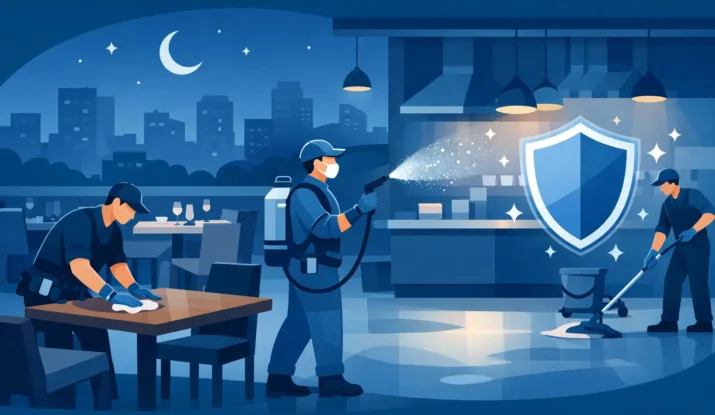
A busy Las Vegas kitchen does not get safer just because the dining room closes. Grease is still on the hood filters, residue remains around cooking equipment, and a spill that seemed manageable during service can become a slip hazard by morning. Overnight restaurant cleaning services give operators time to address these risks without taking productive kitchen hours away from guests, staff, or revenue.
For restaurants, hotels, casinos, commissaries, and other commercial foodservice operations, the value of overnight work is not simply convenience. It is a practical way to keep high-risk areas clean, support fire-code compliance, protect equipment, and start the next shift with a more organized back of house.
Why Overnight Restaurant Cleaning Services Make Sense
Daytime cleaning has limits. Prep crews need access to worktables, cooks need equipment available, and management may not be able to take a fryer line or loading area out of use when the kitchen is producing meals. Cleaning after hours creates a controlled service window when specialists can work thoroughly without competing with normal operations.
That matters most in areas where grease, heat, and foot traffic create ongoing risk. Exhaust hoods and filters collect grease-laden vapor during every shift. Equipment exteriors accumulate baked-on residue. Floors, walkways, dumpster areas, and concrete surfaces can become slick or unsanitary if spills are not properly cleaned. These conditions affect employee safety, inspection readiness, and the overall condition of the facility.
Overnight service also helps operators avoid the false choice between cleaning properly and staying open. A qualified crew can schedule work around closing, complete the agreed scope, remove waste appropriately, and leave the work area ready for the morning team. The exact schedule depends on the operation. A 24-hour property may need cleaning completed between peak periods, while an independent restaurant may prefer a full overnight window after the last employee leaves.
The Areas That Need More Than a Quick Wipe-Down
Routine staff cleaning is essential, but it is not a replacement for specialized grease-management work. Line crews can maintain surfaces daily, yet hard-to-reach and high-risk areas require the right equipment, cleaning methods, and experience.
Exhaust Hoods, Ducts, and Fans
The kitchen exhaust system is one of the most important fire-safety systems in a commercial kitchen. It is designed to capture heat, smoke, and grease-laden vapors, but that process also creates buildup inside hoods, ducts, filters, and fans. When grease accumulates, it increases fire risk and can interfere with system performance.
A professional hood-cleaning service addresses the full accessible exhaust path, not only the visible hood canopy. The work typically includes cleaning the hood interior and exterior, filters, accessible ductwork, and exhaust fan components according to the service scope. Proper service should also include documentation and service labeling where required, giving management a clearer record for inspections and maintenance planning.
Cleaning frequency is not one-size-fits-all. It depends on cooking volume, menu type, equipment use, and the amount of grease produced. A high-volume kitchen with charbroiling, wok cooking, or heavy frying generally needs more frequent attention than a low-volume operation with limited grease-producing equipment. Fire-code requirements and the authority having jurisdiction should guide the final schedule.
Kitchen Equipment and Grease-Prone Surfaces
Grease does not stay confined to the hood. It settles on fryers, ranges, oven exteriors, walls, backsplash areas, and nearby equipment. Over time, that residue becomes harder to remove and can contribute to odors, pest concerns, equipment wear, and difficult working conditions.
Overnight equipment cleaning is particularly useful when a restaurant needs a deeper reset without interrupting meal periods. The right approach protects the equipment while removing buildup from the areas that staff may not have time to address during daily closing duties. It is also a chance to identify recurring grease leaks or splash patterns before they become larger cleanup or maintenance issues.
Floors, Concrete, and Grease Spills
A clean cooking line is only part of a safe kitchen. Grease tracked across floors or released near loading zones can create a serious slip hazard for employees, delivery drivers, and maintenance staff. Outside, grease-stained concrete near dumpsters, grease containers, and receiving areas can make a poor impression and become difficult to manage if neglected.
Professional pressure cleaning and grease spill cleanup can restore these hard surfaces when standard mopping is not enough. The method should fit the surface and the contamination. Excessive pressure, poor runoff control, or improper chemical use can create new problems, which is why commercial experience matters.
What Reliable Overnight Service Looks Like
The best overnight cleaning program starts with a clear scope of work. Operators should know what will be cleaned, what access is needed, how long the service is expected to take, and what the kitchen team needs to do before the crew arrives. Clear expectations reduce delays and prevent surprises on the invoice.
A dependable provider also works with the realities of a commercial kitchen. That means protecting nearby surfaces, controlling the work area, communicating with the onsite contact, and cleaning up after the job. Night service should not leave your opening crew to deal with equipment moved out of place, standing water, or unresolved access issues.
For hood and exhaust work, qualifications are especially important. Restaurant operators should look for a provider that understands commercial kitchen fire hazards, follows applicable fire-safety requirements, and can explain the recommended cleaning interval in plain language. In Nevada, licensing and local fire-code familiarity provide added confidence that the work is being performed by a specialist, not a general janitorial crew.
Vegas Pressure Clean focuses on the areas where grease creates the greatest operational and fire-safety concerns. Owner-led quality control helps ensure the agreed work receives direct attention, whether the job involves exhaust cleaning, equipment degreasing, a grease spill, or commercial concrete cleaning.
How to Prepare Your Kitchen for Night Cleaning
Preparation does not need to be complicated, but it has a direct effect on how efficiently the crew can work. Management should confirm access procedures, alarm instructions, parking or loading access, and the name of the person who can answer questions if needed. If the cleaning involves the exhaust system, staff should understand whether cooking equipment must be cool and whether filters or nearby items need to be removed in advance.
Before service, remove food, utensils, and small movable items from the affected area whenever possible. Cover or relocate sensitive inventory according to the cleaner’s instructions. If equipment has active leaks, electrical problems, or unusual damage, communicate that before work begins. These details help the crew protect the kitchen and avoid delays.
It is also wise to coordinate overnight cleaning with other maintenance work. For example, hood cleaning may be a good time to schedule an exhaust fan inspection, replace worn filters, or address repairs that require access above the cooking line. Combining compatible tasks can reduce disruption, but only if each vendor’s responsibilities are clearly defined.
Choosing the Right Cleaning Frequency
A cleaning schedule should be based on risk, not habit. Some operators schedule only when buildup becomes visible or an inspection is approaching. That approach can lead to rushed decisions, higher cleaning difficulty, and unnecessary exposure to fire or slip hazards.
A better plan is built around your cooking operation. Consider the volume of food produced, hours of operation, the number of grease-producing appliances, menu changes, and the condition of the exhaust system. A property with multiple kitchens may also need separate schedules because a banquet kitchen, casino outlet, and quick-service fryer line do not produce the same level of grease.
Regular service is generally easier to budget, easier to document, and less disruptive than emergency cleanup. It also gives management a consistent way to monitor conditions over time. If the crew begins finding unusually heavy buildup between scheduled visits, that may indicate the interval needs adjustment or that an equipment issue is sending grease where it should not be.
Cleaning After Hours Protects More Than Your Schedule
The strongest reason to invest in overnight cleaning is that it supports the people and systems your operation depends on. A cleaner hood system can help reduce grease-related fire exposure. Cleaner floors and concrete can reduce slip risks. Better-maintained equipment areas can make daily sanitation easier for staff and create a more professional environment for inspections.
Not every task requires an overnight crew, and not every kitchen needs the same frequency. But when cleaning involves grease, exhaust systems, pressure washing, or areas that cannot be taken offline during service, after-hours scheduling is often the responsible choice. Build a documented plan, work with a qualified local specialist, and give your team the clean, safe kitchen they need before the next shift begins.