

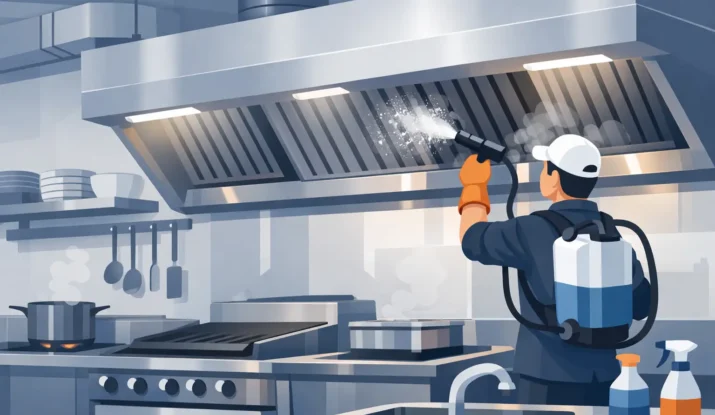
A restaurant hood cleaning example is most useful when it shows more than a shiny canopy. For a busy Las Vegas kitchen, proper exhaust cleaning means removing grease from the hood, filters, ductwork, and rooftop fan – then documenting the work so the operator has a clear record of service. The goal is to reduce fire risk, support inspection readiness, and keep the kitchen operating without unnecessary disruption.
Consider a high-volume restaurant with a 12-foot Type I hood over fryers, a griddle, charbroiler, and range. The kitchen runs lunch and dinner service seven days a week, and grease has begun collecting around the filters and hood seams. The manager needs the system cleaned after hours before an upcoming fire inspection.
Restaurant Hood Cleaning Example: From Arrival to Sign-Off
A qualified hood cleaning crew does not begin by simply pressure washing the visible hood. The work starts with an assessment of the complete exhaust path and a plan to protect the kitchen.
1. Inspecting the hood, ducts, and fan
The technician first reviews the hood system, access panels, grease filters, duct route, and rooftop exhaust fan. They look for visible grease accumulation, damaged filters, loose access doors, fan hinge issues, and areas that may need special attention. This inspection also confirms whether the crew can access all portions of the system safely.
In this example, the hood canopy has a moderate layer of grease, but the deeper concern is above the filters. The plenum and lower duct sections have heavier buildup from daily fryer and charbroiler use. The rooftop fan also has grease around the blades and housing. These conditions are not unusual in a high-volume kitchen, but they require a full-system cleaning rather than a quick surface wipe-down.
The technician should also identify conditions outside the scope of cleaning. A damaged fan belt, missing access panel, or faulty fire-suppression component needs attention from the appropriate qualified provider. Cleaning contractors should not conceal those problems or represent them as corrected when they are not.
2. Preparing the kitchen for controlled cleaning
Before degreasing begins, the crew protects nearby cooking equipment, walls, floors, and food-contact areas. They cover equipment as needed, set up containment, and make sure cleaning water and grease residue can be captured and removed properly.
This preparation matters. A hood cleaning job that leaves grease water on the floor creates a slip hazard and gives the kitchen staff another cleanup problem. In a restaurant that must reopen for breakfast, the crew must work carefully and efficiently without cutting corners on containment.
The manager may need to confirm that cooking equipment is off, the area is clear of food and loose supplies, and access to the roof is available. In some properties, roof access requires coordination with security, building management, or engineering staff. Handling those details before the scheduled service helps avoid delays.
3. Removing filters and cleaning accessible components
The crew removes the grease filters and cleans them separately. Filters are a critical first line of defense, but they are only one part of the system. A clean filter does not mean the plenum, ducts, and fan are clean.
Next, the team applies a commercial degreaser suited to kitchen exhaust grease. After allowing appropriate dwell time, they clean the interior and exterior hood surfaces, the plenum, and accessible duct sections. Depending on the system layout and grease load, this can involve controlled hot-water pressure washing, scraping, hand cleaning, or a combination of methods.
In this restaurant hood cleaning example, the crew finds thick grease deposits near the transition from the hood to the vertical duct. That area takes more focused work than the visible canopy. This is exactly why a proper service cannot be judged solely by the appearance of the front hood panel.
4. Cleaning the rooftop fan and completing the exhaust path
The exhaust fan is where the system completes its path. Grease-laden vapor travels from the cooking line, through the hood and ducts, and exits at the fan. If the fan is not cleaned, the system has not received a complete exhaust cleaning.
At the roof, the technician checks that the fan can be opened safely on its hinge. They clean grease from the fan blades, housing, and accessible surrounding surfaces. Grease buildup on fan components can contribute to poor performance and creates an additional fire concern.
Roof conditions vary. Some fans are easy to access, while others are located behind parapet walls, near other mechanical equipment, or on multi-story buildings that require additional safety planning. The cleaning method and time required depend on that access, the duct configuration, and the amount of accumulated grease. A responsible contractor explains those variables before work begins rather than treating every hood system as identical.
5. Final verification and cleanup
Once cleaning is complete, the crew reinstalls the filters, removes protective coverings, and cleans the surrounding work area. The technician verifies that access doors are closed, the fan is secured, and no cleaning residue has been left on cooking equipment or floors.
The manager should be able to see a clear difference inside the hood and at accessible duct and fan areas. More importantly, the service provider should provide documentation of the work performed. A service report and required inspection sticker help the operator maintain maintenance records and show that the system has been professionally serviced.
A sticker alone is not proof of quality. The cleaning should be thorough, the records should be accurate, and any defects observed during service should be communicated plainly. If an inspector identifies an issue later, the restaurant needs a vendor who can discuss what was cleaned, what was observed, and what follow-up may be needed.
What This Hood Cleaning Example Shows
The central lesson is that kitchen exhaust cleaning is a fire-safety service, not a cosmetic cleaning task. Grease can accumulate where staff cannot see it: behind filters, inside ductwork, at transitions, and around rooftop fan components. Those are the areas that require specialized access, proper chemicals, controlled cleaning methods, and experienced judgment.
For restaurant operators, the right cleaning frequency depends on the type and volume of cooking. A kitchen using solid-fuel cooking, charbroilers, woks, or continuous frying may need more frequent service than a lower-volume operation with limited grease-producing equipment. Your local fire authority and applicable standards determine the requirements for your facility.
There is also a practical operating benefit. A scheduled cleaning program gives managers a predictable maintenance plan, helps reduce last-minute inspection stress, and allows service to be arranged around business hours. Waiting until grease is visibly dripping or an inspection is already scheduled can limit options and create unnecessary pressure on the kitchen team.
Questions to Ask Before Booking Hood Cleaning
Before selecting a contractor, ask whether the quoted service includes the hood, plenum, full duct path, filters, and rooftop fan. Confirm how the crew protects equipment and contains wastewater, whether they provide service documentation, and how they handle access issues or conditions requiring repair.
It is also reasonable to ask who will be on-site and how quality is checked. Restaurant owners and facility managers need accountability, especially when the work affects fire safety and compliance. A low quote that excludes the rooftop fan, skips difficult duct sections, or leaves cleanup to your staff can become expensive when problems surface later.
Vegas Pressure Clean approaches kitchen exhaust work with that responsibility in mind. Since 2002, the company has focused on grease-management services for commercial kitchens, with owner-led quality control and a direct approach to scheduling, quotes, and documented service.
The best time to address grease buildup is before it becomes an inspection issue or operational interruption. Review your hood cleaning records, look closely at your next required service date, and schedule qualified cleaning around your kitchen’s hours while there is still time to plan it properly.