

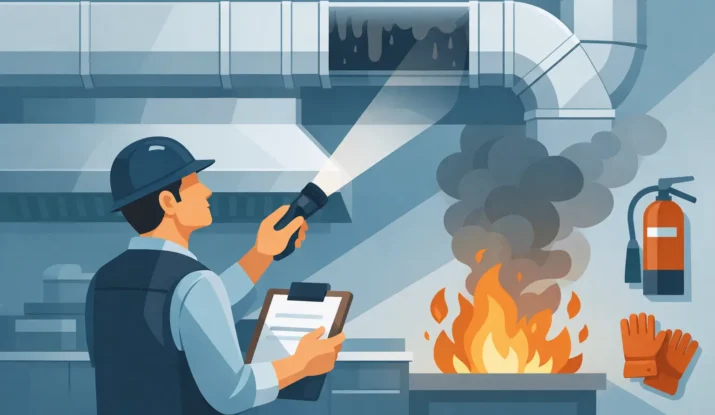
A grease duct can look fine from the kitchen floor while concealed deposits inside are creating a serious fire hazard. Knowing how to inspect grease ductwork helps restaurant operators catch warning signs early, document maintenance needs, and avoid preventable disruption during a fire or health inspection. The goal is not to perform a full duct cleaning in-house. It is to recognize when the exhaust system needs qualified attention.
For Las Vegas kitchens, that matters even more in high-volume operations where charbroiling, frying, wok cooking, and extended service hours can accelerate grease accumulation. A practical inspection should focus on the hood, accessible duct sections, access doors, rooftop fan, and the condition of prior service records.
Know What a Grease Duct Inspection Is Meant to Find
The grease duct is the enclosed pathway that moves smoke, heat, vapors, and grease-laden air from the kitchen hood to the exhaust fan and discharge point. Grease naturally collects along this path. When enough residue accumulates, it becomes fuel for a fire that can travel beyond the cooking line and into concealed areas of the building.
A routine operator inspection is a visual and operational check. It can reveal excessive buildup, leaking grease, damaged access doors, loose components, unusual airflow, or a missed cleaning interval. A full compliance inspection and cleaning assessment requires a trained hood-cleaning professional who can safely access the system and evaluate areas that are not visible during normal kitchen operations.
Do not confuse a clean-looking hood canopy with a clean exhaust system. The visible stainless steel may be wiped down daily while grease remains inside the plenum, duct runs, fan housing, and rooftop containment area.
How to Inspect Grease Ductwork Before Service Begins
The best time for a basic in-house review is before a shift starts, when equipment is cool and the cooking line is not under pressure. Begin at the hood and work outward. Use adequate lighting, keep clear of energized equipment, and do not remove panels or enter ductwork unless you are trained and authorized to do so.
Look first at the hood filters and grease troughs. Filters should sit securely in their frames with no major gaps that allow grease-laden air to bypass them. Grease dripping from filters, pooling in troughs, or running down the hood face can indicate overloaded filters, poor maintenance, or an airflow issue.
Then inspect the visible interior of the hood plenum through normal accessible openings. A thin film of grease may be expected between professional cleanings, depending on the cooking volume and cleaning schedule. Thick, sticky deposits, hanging grease, or dark baked-on layers are not routine conditions. Photograph what you find and record the location rather than attempting to scrape or wash inaccessible areas yourself.
Pay attention to odors as well. A persistent burnt-grease smell when the system starts, especially after the kitchen has been closed, can point to residue near the hood, duct, or fan. Odor alone does not confirm a hazard, but it is useful information for the service provider.
Check Access Doors, Seams, and Visible Duct Sections
Access doors allow qualified cleaners and inspectors to reach the inside of the duct system. They should be present where needed, clearly usable, and secured. During your walk-through, look for missing doors, warped covers, damaged latches, stripped fasteners, or grease leaking around the edges.
Grease outside the duct is a warning sign. Check visible seams, elbows, horizontal runs, and penetrations where ducts pass through walls or ceilings. Streaks on the duct exterior, grease on ceiling tiles, or residue on nearby equipment may indicate a leaking seam or failed access-door gasket. These conditions should be reported promptly because grease can migrate into areas that are difficult to clean and may create fire, sanitation, and slip hazards.
Also look for unauthorized modifications. A new appliance, changed cooking process, or remodeled line can alter the amount of grease produced and how the hood captures it. If cooking equipment has been moved or added, the exhaust system may need a professional review even if the ductwork itself appears intact.
Do Not Judge Buildup by One Access Point
Grease does not accumulate evenly throughout a system. Duct turns, horizontal runs, areas near the fan, and sections above high-grease appliances often collect more residue than other locations. A clean-looking spot near the hood does not prove the full duct system is clean.
This is why cleaning technicians use approved access points and examine the full exhaust path. If a contractor only wipes what is visible from the hood opening, that is not the same as servicing the complete system.
Inspect the Exhaust Fan and Roof Area Safely
The rooftop exhaust fan is often where operators discover problems first. It should only be checked when roof access is safe, permitted, and practical for your facility. Never take unnecessary risks on a roof, particularly in wind, rain, extreme heat, or around electrical equipment.
From a safe position, look for grease running down the fan housing, pooling on the roof surface, or collecting in containment equipment. Grease outside the fan can damage roofing materials, create slip hazards, and lead to costly cleanup. It may also mean the fan has not been cleaned thoroughly or that grease is escaping from the system.
Listen for unusual fan noise during operation. Vibration, grinding, rattling, or a fan that struggles to start can signal mechanical trouble. Poor fan performance reduces capture at the hood, allowing smoke and grease to escape into the kitchen. That affects employee comfort and can lead to grease deposits on walls, ceilings, and nearby equipment.
A fan inspection should also confirm that the hinge kit, electrical connection, and service access are functioning as intended. Qualified technicians need to open and service the fan safely. A fan that cannot be opened correctly can leave the upper duct and fan base inadequately cleaned.
Review Cleaning Records and Service Frequency
Inspection is not only about what you see. Your documentation should show when the system was last professionally cleaned, who performed the work, what areas were serviced, and when the next cleaning is due. The service sticker placed on the hood after cleaning should be current and legible.
Cleaning frequency depends on the type and volume of cooking. A busy kitchen using solid-fuel equipment, charbroilers, fryers, or woks may need more frequent service than a lower-volume operation with lighter cooking methods. The applicable fire code, local authority requirements, and actual grease production should guide the schedule.
If your kitchen has recently become busier, extended operating hours, changed its menu, or added high-grease cooking, a schedule that once worked may no longer be adequate. Waiting until grease is visibly dripping is not a maintenance plan. It is a sign that the system may already be overdue for attention.
Know When to Call a Qualified Hood-Cleaning Professional
Schedule professional service promptly if you find heavy deposits, grease leaks, damaged access doors, excessive rooftop grease, poor hood capture, or an expired service sticker. You should also call if the system was cleaned recently but still has visible residue in accessible areas. That can indicate incomplete work, an equipment problem, or a duct section that needs better access.
A qualified provider should inspect the entire system from the hood through the ductwork and exhaust fan, protect kitchen equipment during service, remove grease from accessible interior surfaces, and leave clear documentation of the work performed. Ask direct questions about what is included, whether the fan and rooftop area are part of the service, and how findings will be reported.
Vegas Pressure Clean provides commercial hood, duct, and fan cleaning with a safety-first focus for working kitchens in the Las Vegas area. For operators, the value of professional service is not just a cleaner hood. It is a documented maintenance process that supports fire safety, compliance, and reliable daily operations.
Make Inspection Part of Kitchen Management
Assign a manager to complete a quick visual check at regular intervals and after any unusual event, such as a flare-up, grease spill, fan malfunction, or equipment change. Keep observations with your maintenance records so patterns are easy to identify. A recurring leak or airflow complaint deserves follow-up, even if it seems minor during a busy shift.
Grease ductwork is out of sight for most of the day, but it should never be out of mind. A careful inspection, paired with dependable professional cleaning, gives your team a safer kitchen and gives you fewer surprises when service is at its busiest.