

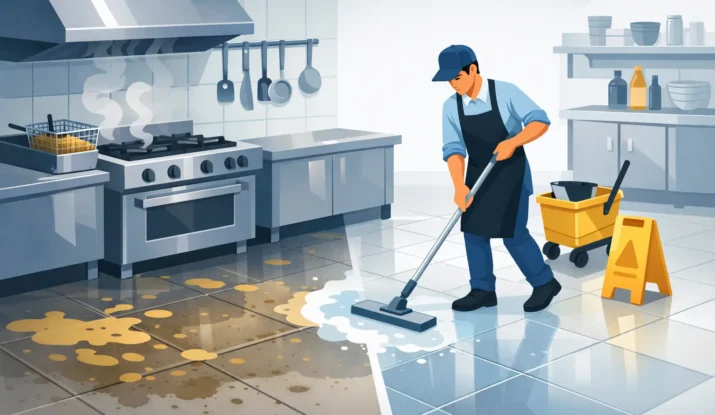
A greasy floor behind the line is more than a cleaning problem. It creates an immediate slip hazard, tracks contamination into other areas, and can make a kitchen look poorly maintained during an inspection. Knowing how to remove floor grease correctly helps protect employees, preserve flooring, and keep a high-volume operation ready for service.
The right approach depends on whether the grease is a fresh spill, a sticky film around fryers and grills, or heavy buildup that has been neglected over time. In every case, the goal is the same: break down the grease, remove it from the surface and grout, rinse it away safely, and leave the floor dry before staff return to work.
Why Commercial Kitchen Floor Grease Requires Fast Action
Cooking grease does not stay where it lands. Foot traffic spreads it across tile, quarry tile, concrete, walk-in entrances, and service corridors. Heat from cooking equipment can also bake grease into porous surfaces, making a mop-and-water routine less effective with each passing shift.
The most obvious concern is employee safety. Greasy floors increase the chance of slips and falls, particularly during rush periods when cooks and dish staff are carrying hot food, knives, and heavy pans. A fall can cause an injury, workers’ compensation claim, or disruption that affects the entire shift.
Grease buildup also creates sanitation and maintenance issues. It holds food debris, attracts pests, produces odor, and can leave dark staining in grout lines and textured flooring. When wash water is not managed properly, grease can be pushed toward drains, where it may contribute to blockages and recurring drainage problems.
How to Remove Floor Grease Safely and Effectively
Start by controlling the area. Place wet-floor signs at all entrances, keep nonessential staff out of the work zone, and remove loose boxes, mats, and equipment that can be moved safely. If the grease is near electrical equipment, confirm that water and cleaning solution will not reach outlets, cords, or exposed connections.
For a fresh spill, first absorb as much grease as possible with absorbent pads, disposable towels, or an approved dry absorbent. Do not begin by flooding the area with water. Water can spread the grease farther across the floor and increase the slip hazard before the degreaser has a chance to work.
Once excess grease has been removed, apply a commercial-grade kitchen degreaser that is compatible with the flooring. Follow the product’s dilution instructions. Stronger is not always better: an overly concentrated chemical can leave residue, damage finishes, or create a slippery film of its own. Give the solution enough dwell time to emulsify the grease, but do not allow it to dry on the surface.
Agitate the floor with a stiff deck brush, floor machine, or other tool appropriate for the surface. Focus on grout, corners, floor edges, underneath fryer batteries, and the space around cooking equipment legs. These are the areas where grease is repeatedly deposited and where routine mopping usually misses the soil.
Remove the dirty solution with a wet vacuum, squeegee, or mop system that is changed frequently. Then rinse with clean water as needed to remove chemical and loosened grease. The final step is critical: dry the floor thoroughly before reopening the area. A clean but wet kitchen floor is still a safety problem.
Use the Right Method for the Floor Type
Quarry tile is common in commercial kitchens because it offers traction and durability, but its texture and grout lines hold grease tightly. It generally needs regular degreasing, mechanical agitation, and complete solution recovery. Simply running a mop across quarry tile can spread soil over the raised surface while leaving grease in the low areas.
Sealed concrete can be easier to clean, although its condition matters. Damaged or worn sealer allows grease to penetrate, which can lead to staining and persistent odor. Avoid harsh products that may dull or weaken the coating, and address cracks or failed sealant before grease reaches the concrete below.
Vinyl composition tile and other resilient floors require extra care. Aggressive chemicals, abrasive pads, or excessively hot water can damage the finish. Check both the flooring manufacturer’s guidance and the degreaser label before using a heavy-duty product.
Avoid These Common Grease-Cleaning Mistakes
A degreaser is only effective when it is given time to work and then removed completely. Rushing the job often leaves a thin, slick residue that may be harder to see than the original spill. Reusing dirty mop water causes the same problem, depositing grease back onto the floor instead of removing it.
Do not mix cleaning chemicals. Combining products, especially bleach with acids or ammonia-based cleaners, can create dangerous fumes. Use one product at a time, keep the area ventilated, and ensure employees have the proper gloves, eye protection, and training for the chemicals in use.
It is also a mistake to wash grease into a floor drain without considering where that wastewater goes. Drains should be protected according to the property’s wastewater procedures. Grease-heavy water may require collection and proper disposal rather than being sent directly into the plumbing system.
High-pressure washing can be useful for certain commercial concrete and exterior service areas, but it is not automatically the right answer inside every kitchen. Pressure can force water, grease, and debris into walls, equipment bases, electrical areas, or drains. Indoor cleaning requires controlled water use, proper containment, and recovery equipment.
Build Floor Degreasing Into the Cleaning Schedule
The best way to prevent severe buildup is to separate daily cleaning from periodic deep cleaning. Staff should remove visible spills immediately and degrease high-risk areas at the end of each shift. Fryer lines, grill stations, dish areas, and routes leading to dumpsters or loading zones often need more attention than the rest of the kitchen.
A deeper scheduled cleaning should address the areas that shift crews cannot safely or realistically reach during normal operations. That may include moving equipment, cleaning behind and underneath cooking lines, scrubbing grout, recovering wastewater, and treating accumulated grease around drains and wall bases.
The frequency depends on volume, menu, equipment layout, and operating hours. A busy Las Vegas restaurant with continuous frying and late-night service may need professional floor degreasing more often than a small café with limited grease-producing equipment. The condition of the floor should guide the schedule, not just the calendar.
When a Professional Grease Cleanup Is the Better Choice
Call a qualified commercial cleaning provider when grease has spread beyond a manageable spill, when the floor remains slick after routine cleaning, or when buildup is concentrated beneath equipment. Professional service is also appropriate after an equipment leak, a grease-container failure, or a cleanup that requires water containment and recovery.
A commercial specialist can evaluate the floor material, select the appropriate chemistry and equipment, protect nearby kitchen systems, and remove the wastewater without creating a second problem. This is especially valuable for operators managing multiple locations, tight overnight cleaning windows, or inspection concerns.
For restaurants that need reliable grease-management support, Vegas Pressure Clean provides commercial cleanup services with the same safety-focused approach used for kitchen exhaust and fire-risk cleaning. The work should be planned around your operating schedule and completed with clear accountability for the condition of the area.
A dry, clean floor gives your team a safer path through every shift. Address grease before it becomes embedded buildup, and treat repeated slick spots as a maintenance warning that deserves a lasting fix.