

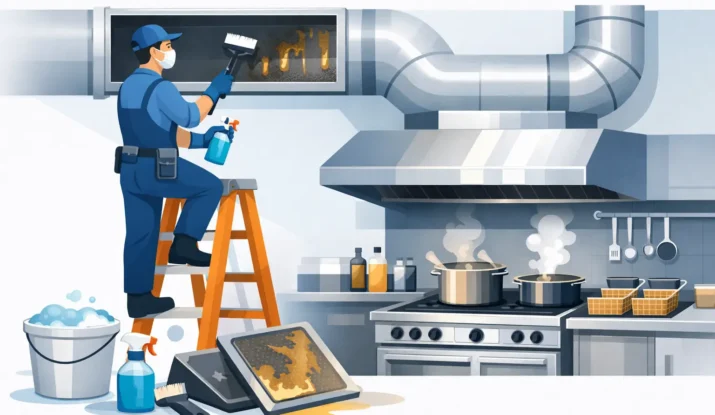
A clean hood is only part of the job. When grease vapor travels past the filters, it coats the plenum, ductwork, and exhaust fan – often in areas your kitchen team cannot see or safely reach. Knowing how to clean grease ducts starts with understanding that this is a fire-safety service, not routine surface cleaning. For a working restaurant, hotel kitchen, or foodservice operation, the goal is to remove combustible grease from the entire exhaust system while keeping the kitchen protected and ready to reopen.
Grease duct cleaning should be handled by trained commercial exhaust professionals. It involves working around rooftop fans, electrical components, hot equipment, access panels, and containment requirements. A proper service protects employees, supports fire-code compliance, and helps prevent the disruption of an avoidable kitchen fire.
Why grease ducts need professional cleaning
Cooking creates airborne grease, smoke, heat, and moisture. Hood filters capture a portion of that grease, but vapor continues into the exhaust system. As it cools, it deposits along the duct walls and inside the fan housing. The heavier the cooking volume and the greasier the menu, the faster that buildup can occur.
This buildup is a serious fire hazard. If a flame reaches the hood or duct system, grease deposits can provide a path for fire to travel through the exhaust system. A system that looks acceptable from the cook line may still contain heavy deposits above the ceiling, behind walls, or on the roof.
Cleaning also supports day-to-day operations. Grease accumulation can restrict airflow, contribute to smoke and heat in the kitchen, place added strain on the exhaust fan, and leave unpleasant odors behind. A properly cleaned system gives managers a clearer view of their maintenance condition and helps avoid surprises during an inspection.
How to clean grease ducts the right way
Commercial grease duct cleaning is a controlled process. The exact approach depends on the kitchen layout, the type of cooking equipment, the duct path, rooftop access, and the amount of buildup found. A qualified crew should inspect the entire system before choosing methods and setting up the work area.
Start with a full system inspection
The technician begins at the hood and follows the exhaust path as far as access allows. This includes the hood interior, filters, plenum, accessible ductwork, access doors, fan base, fan blades, and surrounding rooftop area. The inspection identifies grease levels, missing or inadequate access panels, damaged components, and any conditions that should be brought to the operator’s attention.
The key word is entire. Cleaning filters alone does not clean grease ducts. Likewise, cleaning the hood canopy without addressing the duct and fan leaves combustible material in the system.
Protect the kitchen before work begins
A professional crew prepares the kitchen to contain water, grease, and cleaning solution. Equipment below the hood is covered or shielded as needed. Floors, walls, and nearby surfaces are protected, and the work area is organized to prevent slips and contamination.
This step matters in busy commercial kitchens because poor containment can create a second problem: water or degreaser reaching food-prep areas, electrical equipment, ceilings, or finished surfaces. The right crew plans for cleanup before the first tool is used.
Remove filters and clean the hood interior
Filters are removed and cleaned separately. The hood’s interior surfaces, including the plenum behind the filters, are treated with an appropriate commercial degreaser. Technicians use scraping, brushing, and controlled hot-water pressure washing where suitable to break down accumulated grease.
Cleaning solutions must be matched to the surface and soil level. Strong chemicals or uncontrolled pressure can damage finishes, force water into electrical areas, or spread grease into places it does not belong. More pressure is not automatically better. Proper technique and containment are what produce a clean, safe result.
Clean accessible ducts from approved access points
Ductwork is cleaned through existing access doors or properly installed access points. Technicians apply degreaser, agitate grease deposits, and use specialized tools to remove residue from the duct walls. Depending on the system, this may involve hot-water pressure equipment, rotary tools, scrapers, or hand cleaning.
Access is a major factor. Long horizontal runs, multiple elbows, vertical shafts, and concealed duct sections all require a plan. If technicians cannot reach an area that needs cleaning, the system may require additional access panels. Those panels are not a cosmetic upgrade – they allow future cleaning and inspection to be completed safely and thoroughly.
Service the exhaust fan and rooftop components
The exhaust fan is part of the grease removal system and cannot be skipped. Grease often collects on fan blades, inside the fan housing, on the grease trough, and around the curb. Excess buildup can affect performance and can drip onto the roof, creating both a fire concern and a housekeeping issue.
The crew cleans the fan components without damaging belts, wiring, hinges, or other mechanical parts. After cleaning, the fan should be returned to its proper operating position and checked for normal function. If a technician sees worn belts, damaged hinges, failed seals, or other maintenance concerns, the operator should receive a clear recommendation for follow-up.
Final cleanup, inspection, and service documentation
Once grease has been removed, the crew cleans the work area, removes protective materials, and confirms that equipment and surfaces are left in acceptable condition. The hood filters are reinstalled, the exhaust system is checked, and the kitchen is prepared for normal operation.
A professional service should also provide documentation of the cleaning. This commonly includes the service date, areas cleaned, technician or company information, and a record sticker placed where it can be easily reviewed. Documentation helps kitchen managers track maintenance, prepare for inspections, and establish a consistent service schedule.
How often should commercial grease ducts be cleaned?
There is no one cleaning interval that fits every kitchen. Frequency depends on the volume of cooking, the type of fuel used, the menu, operating hours, and local fire-code requirements. A high-volume restaurant cooking with solid fuel, heavy frying, charbroiling, or wok equipment will generally require more frequent cleaning than a low-volume operation with limited grease-producing equipment.
Your authority having jurisdiction, fire inspector, insurance carrier, or property manager may have specific requirements. National fire-safety standards also provide commonly used cleaning-frequency guidance based on cooking operations. The practical answer is to set a schedule based on your actual risk, then adjust it if inspections show heavier buildup than expected.
Waiting until grease is visibly dripping from the hood is not a maintenance plan. By that point, deposits may already be substantial inside the duct and fan.
What kitchen staff can handle between services
Kitchen teams play an important role, but their work does not replace professional duct cleaning. Staff should clean accessible exterior hood surfaces, wipe grease from nearby walls and equipment, and maintain filters according to the manufacturer’s guidance and the kitchen’s operating procedures.
Managers should also watch for warning signs: reduced exhaust performance, smoke lingering on the cook line, unusual odors, grease dripping from the hood, noisy fans, or grease appearing around rooftop fan components. These conditions deserve prompt attention, especially if they appear between scheduled cleanings.
Do not send staff into ductwork, onto roofs without proper safety controls, or near fan and electrical components to attempt a deep clean. The risk of injury, equipment damage, and incomplete grease removal is too high. A superficial cleaning can also create a false sense of security while leaving the most hazardous buildup in place.
Choosing a grease duct cleaning company
Ask whether the company specializes in commercial kitchen exhaust work, cleans the hood, duct, and fan as one system, and provides clear service documentation. Confirm that the crew understands local fire-safety requirements and can work around your hours without unnecessarily disrupting service.
Price matters, but a low quote that covers only the visible hood area can cost more later in failed inspections, roof damage, repeat cleaning, or fire risk. Look for a provider that explains what is included, identifies access or maintenance issues honestly, and leaves the kitchen clean after the work is complete.
For Las Vegas operators, Vegas Pressure Clean provides owner-led commercial exhaust cleaning focused on keeping kitchens clean, fire-safe, and ready for inspection. The right maintenance schedule gives your team one less emergency to manage and keeps attention where it belongs: running a safe, dependable kitchen.