

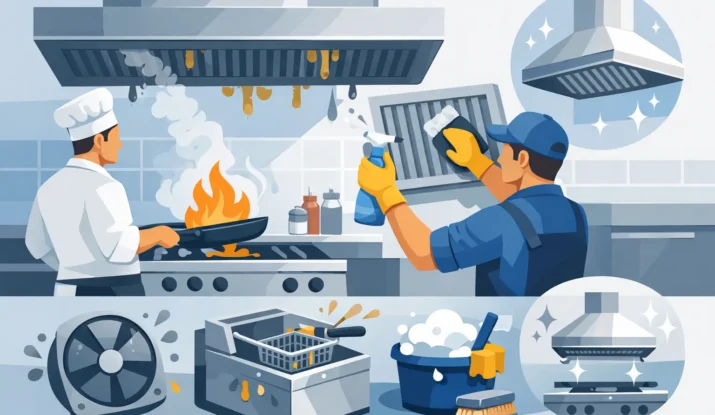
A busy Las Vegas kitchen can produce a surprising amount of grease in one shift. Vapors from fryers, grills, ranges, woks, and charbroilers travel upward, cool on metal surfaces, and turn into a sticky film inside hoods, filters, ducts, and fans. Knowing how to reduce grease buildup is not only about keeping the kitchen presentable. It is a direct part of fire prevention, equipment performance, employee safety, and inspection readiness.
Grease cannot be eliminated from a commercial cooking operation, especially one with high-volume or solid-fuel cooking. It can, however, be controlled with the right daily habits, equipment maintenance, and professional exhaust cleaning schedule. The goal is to keep grease from accumulating faster than your team and service vendors can safely remove it.
How to Reduce Grease Buildup Before It Becomes a Hazard
The most effective grease-management plan starts at the cooking line. Exhaust systems are designed to capture heat, smoke, vapor, and grease-laden air, but they work best when the kitchen crew uses equipment correctly and maintains the areas that need frequent attention.
Start by making filter care part of the regular closing routine. Hood filters are the first line of defense between cooking equipment and the exhaust duct. When filters are heavily coated, bent, missing, or installed incorrectly, grease can bypass them and collect deeper in the system. That creates a larger fire risk and makes professional hood cleaning more difficult.
Filters should be removed and cleaned on a schedule that matches the volume and type of cooking in the kitchen. A high-output fryer or charbroiler line will generally need more frequent attention than a low-volume prep kitchen. Staff should also check that filters are fully dry and seated correctly before cooking resumes. An open gap in the filter bank is an easy way for grease to enter the plenum and ductwork.
Daily wipe-downs matter as well. Clean exterior hood surfaces, backsplash areas, equipment fronts, fryer exteriors, and nearby walls before grease hardens. Fresh grease is easier and safer to remove than baked-on residue. Use the cleaning method approved for the surface and avoid spraying chemicals into electrical controls, fan switches, or sensitive equipment components.
Control Grease at the Source
Small operating changes can significantly reduce the amount of airborne grease entering the hood. They will not replace required exhaust cleaning, but they help slow the buildup between services.
Keep cooking equipment positioned under the hood canopy, especially fryers and charbroilers. If equipment is pulled too far forward during service or moved during a remodel without considering hood coverage, grease vapor may escape capture. That grease can settle on ceilings, walls, floors, and nearby equipment instead of being drawn into the exhaust system.
Use lids or covers where the cooking process allows. Covering pots during long simmering periods and managing splatter at fry stations can reduce the grease mist released into the air. Be realistic about the menu and production demands, though. A cover is not practical for every item, and it should never interfere with food quality, safe cooking procedures, or employee visibility.
Temperature control is another practical factor. Overheated oil smokes more, breaks down faster, and can contribute to heavier deposits around fryers and hoods. Train staff to follow equipment temperature settings, monitor oil condition, and avoid overfilling fry baskets. These practices support food quality while reducing unnecessary airborne grease.
Pay Attention to High-Grease Cooking Equipment
Not every kitchen needs the same cleaning frequency. Charbroilers, mesquite or solid-fuel cooking equipment, wok stations, fryers, and high-volume griddles usually produce more grease than ovens, steam equipment, or light prep stations. A kitchen that changes its menu, adds a fryer, extends operating hours, or increases production may need to revisit its hood-cleaning interval.
This is where a generic schedule can cause problems. The right interval depends on the cooking equipment, volume, fuel source, ventilation design, and local fire-code requirements. If grease is visible above the hood line, on ceiling tiles, around the fan, or inside accessible duct areas, waiting for the next routine service may not be the safest choice.
Maintain the Exhaust System Between Professional Cleanings
Kitchen staff should perform visual checks of the accessible system components, but they should not attempt to clean hidden ductwork or roof-mounted exhaust fans without the proper training, access, and safety controls. Those areas require specialized service because they involve grease, electrical equipment, elevated work, and fire-code cleaning standards.
A manager can still look for warning signs during regular walk-throughs. Watch for grease dripping from filters or hood seams, unusual smoke in the kitchen, weak capture at the cooking line, grease stains on the roof near the fan, or a fan that sounds different than normal. These conditions may indicate dirty filters, airflow issues, worn components, or grease accumulation that needs prompt attention.
Do not ignore a system that appears to be pulling poorly. Poor capture can leave heat and smoke in the kitchen, make the work environment less comfortable, and allow grease to settle outside the hood. It can also signal that makeup air, belts, fan components, or the exhaust path need evaluation. Cleaning alone cannot correct every ventilation problem, but a professional service provider can identify conditions that should be addressed before they affect operations.
Keep access panels unobstructed and clearly reachable. Technicians need proper access to clean the full system, including the hood, plenum, ducts, and fan. Storing supplies in front of access points, building around them, or covering them during renovations can make complete cleaning difficult and may create compliance concerns.
Keep Floors, Equipment, and Grease Areas on a Routine Schedule
Grease management extends beyond the hood system. Greasy floors create slip hazards, and neglected equipment surfaces can become a sanitation issue or a source of smoke and odor. Assign daily cleaning responsibility for the line, then schedule deeper cleaning for areas that cannot be fully handled during a normal close.
Areas behind and beneath fryers, ranges, grills, and refrigeration equipment are common trouble spots. Grease can migrate under equipment, collect around casters, and mix with dust and food debris. Over time, that buildup becomes difficult to remove and can attract pests, create odors, and make equipment maintenance more complicated.
Grease spills require immediate attention. Block off the area if necessary, remove the spill with the appropriate materials, and clean the remaining film so employees do not track it across the kitchen or into guest-facing areas. For larger spills or heavily contaminated surfaces, professional grease cleanup can help restore a safer work area without pulling managers away from service.
Concrete areas around trash enclosures, loading zones, and exterior grease-handling locations deserve attention too. Grease tracked outside can create a liability issue and leave a poor impression on inspectors, vendors, and guests. Routine exterior cleaning helps prevent grease from becoming embedded in porous surfaces.
Build a Cleaning Schedule That Supports Compliance
A written schedule turns good intentions into a repeatable safety process. Daily staff duties should cover accessible surfaces, filters, spill response, and visual checks. Weekly or periodic duties can cover harder-to-reach equipment areas, floor drains, wall surfaces, and storage zones around the cooking line. Professional hood, duct, and fan cleaning should be scheduled according to the cooking operation and applicable fire requirements.
Document completed cleaning and maintenance tasks. A simple log gives managers visibility across shifts, helps identify recurring issues, and shows that the operation takes safety seriously. Keep service records from qualified hood-cleaning providers available for inspections and internal facility reviews.
The lowest-cost approach is not always the best value. Delaying cleaning may appear to save money in the short term, but it can lead to heavier grease removal, equipment problems, employee injuries, failed inspections, or a disruption during peak service. Scheduled maintenance is easier to budget, easier to coordinate around operating hours, and far less disruptive than responding to an urgent grease problem.
Choose a Provider Focused on Exhaust Safety
Commercial hood cleaning is specialized work. Ask whether the provider cleans the complete system, including the hood, accessible ductwork, and fan, rather than only polishing visible stainless steel. Confirm that technicians understand applicable fire requirements and can document the service clearly.
For Las Vegas operators, Vegas Pressure Clean provides fire-code-focused hood, duct, and fan cleaning with an emphasis on practical scheduling and accountable service. A qualified provider should also communicate honestly about what was cleaned, what conditions were found, and whether follow-up maintenance is recommended.
A clean kitchen is built shift by shift, not only on the day the hood-cleaning crew arrives. When staff control grease at the line, managers maintain a realistic schedule, and qualified professionals clean the full exhaust system, grease stays manageable and the kitchen remains better prepared for safe, reliable service.