

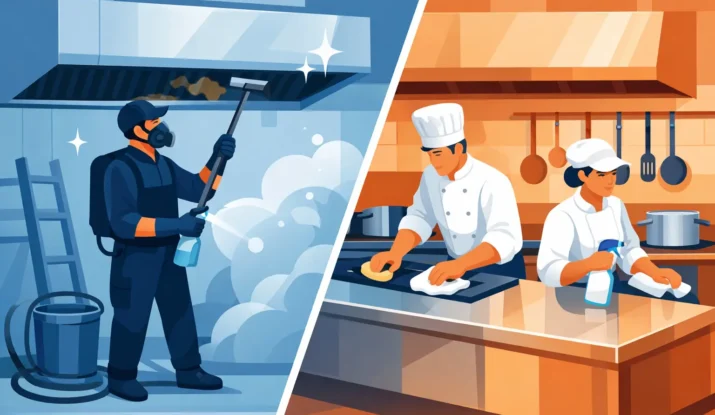
A cook wipes down the hood filters at the end of a shift. A manager schedules a professional exhaust cleaning crew after closing. Both tasks help control grease, but they are not interchangeable. The real question behind hood cleaning vs kitchen staff is not who works harder. It is who is qualified, equipped, and responsible for cleaning each part of the kitchen safely.
For Las Vegas restaurants, hotel kitchens, bars, and high-volume foodservice operations, that distinction directly affects fire risk, inspection readiness, equipment performance, and business continuity. Kitchen staff should handle daily sanitation. A qualified hood cleaning contractor should handle the grease-laden exhaust system.
What Kitchen Staff Should Clean
Kitchen employees are the first line of defense against grease, spills, and unsanitary conditions. Their routine work matters because grease does not stay in one place. It moves from cooking surfaces to floors, equipment exteriors, wall areas, filters, and eventually into the exhaust system.
Daily and shift-based cleaning should generally include the accessible areas that staff can safely reach and maintain without dismantling equipment or working inside the exhaust path. This includes wiping down hood exteriors, cleaning cooktops and fryer exteriors, removing spills, mopping grease-prone floors, cleaning accessible backsplash areas, and changing or washing removable baffle filters according to the manufacturer’s instructions and the kitchen’s operating procedures.
A disciplined staff cleaning routine delivers real benefits. It reduces slip hazards, improves sanitation, keeps visible grease from becoming baked-on buildup, and makes it easier for managers to spot leaks or developing problems. It also helps prevent an avoidable situation where a professional crew arrives to find excessive grease on floors, appliances, or surrounding surfaces that should have been addressed during normal operations.
Still, a clean-looking kitchen is not proof that the hood system is clean. The most serious grease buildup is often above the cooking line, inside the plenum, ductwork, and rooftop fan system – areas kitchen staff cannot properly inspect or clean during a normal shift.
Hood Cleaning vs Kitchen Staff: Where the Line Is
Commercial hood cleaning is a specialized fire-safety service, not a more intensive version of nightly kitchen cleaning. The work involves cleaning the full grease-exhaust system, including the hood interior, plenum, accessible ductwork, and exhaust fan. The goal is to remove combustible grease deposits before they can contribute to a fast-moving fire.
A professional contractor has the training, tools, containment methods, access equipment, and cleaning products needed to perform this work correctly. Depending on the system and site conditions, that may involve protecting appliances and surrounding areas, accessing ducts through service panels, cleaning the rooftop fan, collecting wastewater, and documenting the completed service.
Kitchen staff should not be expected to reach into ducts, remove fan components, pressure wash the interior of a system, or work on a roof. These are not simply unpleasant jobs. They create safety, property-damage, and compliance concerns when handled without the right experience and equipment.
There is also a practical operational issue. A line cook or dishwasher pulled from a busy shift to perform deep hood work is no longer doing the job needed to keep service moving. Even a capable employee may not know whether hidden duct sections are clean, whether a fan hinge kit is functioning correctly, or whether grease remains in areas an inspector may examine.
Why Grease Exhaust Cleaning Requires a Specialist
Grease-laden vapor rises from cooking equipment and is drawn into the hood. As that vapor cools, grease can accumulate on the interior surfaces of the exhaust system. High-volume cooking, charbroiling, wok cooking, frying, and long operating hours can accelerate the buildup.
If a fire starts on the cooking line, flames can travel into the exhaust system. Grease deposits in the hood or ducts can intensify that event and allow it to spread beyond the original appliance. That is why exhaust cleaning schedules are based on cooking volume and type, not on whether the hood exterior looks acceptable.
Fire codes and standards such as NFPA 96 establish expectations for maintaining commercial cooking exhaust systems. Local fire authorities and property requirements may set the final inspection and cleaning expectations for a specific facility. A reputable provider understands that cleaning is about more than appearance. It is about servicing the system thoroughly, identifying conditions that need attention, and leaving documentation that supports your maintenance records.
Professional service also protects the equipment around the hood. Incorrect use of water, degreasers, or pressure can damage electrical components, create runoff issues, affect ceiling areas, or send grease-laden water into places it does not belong. A trained crew plans the work area, protects the kitchen, and cleans with the exhaust system and the facility in mind.
The Risks of Assigning Deep Hood Work In-House
The appeal of using in-house labor is easy to understand. It may appear less expensive than hiring a contractor, especially when a kitchen is trying to control costs. But the comparison changes when the scope is clear.
An employee may be able to clean filters and visible hood surfaces, but that does not mean the ducts and fan have been cleaned to an acceptable standard. Hidden grease can remain untouched, and an incomplete job can create false confidence before an inspection or after a kitchen fire.
There are liability considerations as well. Staff members can be exposed to fall hazards, sharp metal edges, strong chemicals, hot surfaces, electrical equipment, and rooftop access. If deep cleaning causes damage to the exhaust system or leaves a grease problem unresolved, the initial labor savings can disappear quickly through repairs, failed inspections, downtime, or insurance complications.
The best approach is not to treat staff and contractors as competing options. They serve different functions. Staff maintain the kitchen every day. Exhaust cleaning professionals perform periodic, system-level fire-risk cleaning.
A Better Division of Responsibility
A reliable kitchen maintenance plan assigns each team a clear role. Kitchen staff keep grease from building up on accessible surfaces and report anything unusual, such as smoke, dripping grease, excessive filter buildup, unusual fan noise, or poor capture at the hood. Management monitors cleaning logs, confirms that filters are maintained, and schedules professional exhaust cleaning based on the operation’s cooking activity and applicable requirements.
The hood cleaning contractor handles the deep work inside the system and provides clear service documentation. If access panels, fan components, duct conditions, or surrounding grease issues need attention, the contractor should communicate that directly instead of leaving the operator to guess.
This division also makes service easier to schedule. A professional crew can work during off-hours or around the kitchen’s operating schedule, helping reduce disruption to prep, service, and revenue. For multi-unit operators and hospitality groups, consistent scheduling helps standardize maintenance across locations rather than relying on different in-house practices at every kitchen.
How Often Should a Hood System Be Cleaned?
There is no single schedule that fits every commercial kitchen. A 24-hour casino restaurant with heavy frying and charbroiling has different needs than a small operation with limited cooking hours. The appropriate frequency depends on cooking volume, equipment type, grease production, hours of operation, previous cleaning condition, and requirements from the authority having jurisdiction.
High-grease operations typically need more frequent service. Lower-volume kitchens may require less frequent cleaning, but they still need a documented schedule and regular attention. Waiting until grease is visibly dripping, the kitchen smells smoky, or an inspection is approaching is not a maintenance plan. By then, the issue may already be affecting safety and operations.
Vegas Pressure Clean helps commercial kitchens maintain a practical schedule built around real cooking conditions, not guesswork. The focus is thorough exhaust cleaning, honest communication, and service that supports fire safety without creating unnecessary disruption.
Your kitchen staff should be proud of a clean closing routine. Give them the responsibility they can perform safely every day, and give your exhaust system the specialized cleaning it needs before grease buildup becomes a fire, compliance, or downtime problem.