

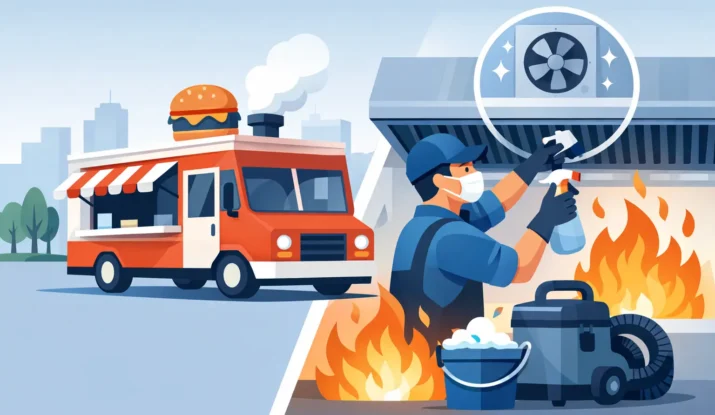
A food truck can serve hundreds of customers in a shift from a kitchen measured in square feet. That tight footprint makes grease control especially serious. Food truck exhaust cleaning removes the grease that collects above cooking equipment and throughout the hood, ductwork, and fan system – buildup that can turn a small cooking fire into a much larger emergency.
For Las Vegas operators, a clean exhaust system is not simply a cosmetic maintenance item. It supports fire safety, helps protect valuable equipment, and keeps the mobile kitchen ready for inspections and service. The work must be thorough, documented, and performed around the realities of a working food truck.
Why Food Truck Exhaust Cleaning Cannot Wait
Every hood system is designed to capture heat, smoke, grease-laden vapor, and combustion byproducts before they spread through the kitchen. In a food truck, the system has little room to spare. Fryers, griddles, charbroilers, and ranges often operate close together beneath a compact hood, producing concentrated grease vapor during every service.
Some of that vapor is trapped by the filters. The rest can settle inside the hood plenum, ductwork, fan, and rooftop discharge area. Over time, that coating becomes fuel. If flames enter the hood or duct, grease deposits can support rapid fire spread through areas that are difficult to reach during an emergency.
Grease also creates operational problems before a fire ever occurs. Restricted airflow can leave more smoke and heat in the truck, increase strain on the fan, and make the cooking line less comfortable for employees. Drips from neglected filters or hood surfaces can contaminate work areas and create slip hazards. On a busy route, those issues can quickly affect food quality, employee safety, and service speed.
What a Proper Food Truck Exhaust Cleaning Includes
A quality cleaning is more than wiping visible surfaces or swapping out filters. The goal is to remove grease from the full accessible exhaust path. That typically includes the hood interior and exterior, removable filters, accessible duct sections, the exhaust fan, and surrounding areas affected by grease runoff.
The crew should first protect the cooking equipment, service counters, electrical components, and nearby surfaces. Degreasing compounds are then applied to break down accumulated grease. Depending on the system and condition, technicians use controlled hot-water pressure washing and hand cleaning to remove deposits without damaging components or leaving contaminated wastewater behind.
Filters require separate attention. Baffle filters are a first line of defense, but they are not a substitute for cleaning the hood and ducts. When filters are packed with grease, they restrict airflow and allow grease to drip back toward cooking equipment. They should be cleaned thoroughly and reinstalled correctly.
The fan matters just as much. A grease-coated fan blade and housing can reduce exhaust performance, create vibration, and spread grease around the roofline. On food trucks, fan access can be more complicated than in a fixed restaurant because of the vehicle roof, installed equipment, and limited working space. That is one reason specialized commercial exhaust service is a better fit than general cleaning.
Fire Code Compliance Depends on the Whole System
Food truck operators often focus on the visible hood because it is easy to see before an inspection. Inspectors, however, may look beyond the surface. A clean-looking canopy does not prove that the duct and fan are free of grease or that the exhaust system is functioning as intended.
Cleaning frequency depends on the volume and type of cooking, as well as the requirements of the local authority having jurisdiction. A truck that runs fryers and charbroilers daily needs more frequent service than a unit used occasionally for low-grease warming. High-volume events, late-night service, and festival schedules can also increase grease accumulation faster than an operator expects.
A professional provider can help establish a realistic cleaning schedule based on the equipment in the truck and its actual usage. The schedule should not be treated as a one-time box to check. It should be reviewed when the menu changes, operating hours expand, or new cooking equipment is added.
Exhaust cleaning is also different from fire suppression maintenance. Both services are necessary, but they address separate risks. The suppression system is designed to respond if a fire starts. Exhaust cleaning reduces the grease fuel load that makes a hood fire more dangerous. One does not replace the other.
Signs Your Truck May Be Overdue
The most reliable approach is scheduled maintenance, not waiting for a problem. Still, certain conditions should prompt an immediate inspection or service request:
- Grease is visibly dripping from filters, hood seams, or the fan area.
- Smoke lingers in the truck or the kitchen feels hotter than usual during cooking.
- The exhaust fan sounds different, vibrates, or does not appear to pull effectively.
- Grease is collecting on the roof, exterior walls, or nearby service surfaces.
- An inspector, property manager, event organizer, or fire authority has raised concerns about the system.
Do not try to solve heavy accumulation with a quick degreaser wipe. Surface cleaning may improve appearances while leaving grease inside the duct and fan. It can also create a false sense of security before an inspection.
The Right Cleaning Plan for a Mobile Kitchen
Food trucks present practical access and scheduling challenges. The truck may be parked at a commissary, operating at an event, or moving between service locations. A cleaning plan needs to account for where the work can be completed safely, how wastewater will be controlled, and how quickly the truck needs to return to service.
For many operators, off-hours service is the least disruptive choice. It protects revenue-producing service time and allows the system to be cleaned while equipment is cool and the workspace is clear. The provider should explain the scope before work begins, identify any access issues, and leave the area clean after service.
Documentation is also valuable. Keep records of completed cleanings, recommendations, and any observed concerns. If a fan component, hinge kit, duct access panel, or filter needs attention, addressing it early is generally less expensive and less disruptive than waiting for a failed inspection or equipment breakdown.
Why Experience Matters With Food Truck Systems
Mobile kitchen exhaust systems are compact, but the risks are not small. Technicians need to understand grease movement, equipment protection, fan access, wastewater containment, and the fire-safety purpose behind each step of the job. A provider who only cleans what is visible may miss the areas where grease creates the greatest hazard.
Vegas Pressure Clean provides specialized hood, duct, and fan cleaning for commercial foodservice operations, with a focus on fire-risk reduction and compliance-minded service. For a food truck operator, the right partner is one that gives a clear quote, works around the service schedule when possible, and treats the exhaust system as a safety-critical part of the business.
A clean truck helps protect more than the next inspection. It helps protect the employees working beneath the hood, the customers waiting at the window, and the business you have built one service at a time.