

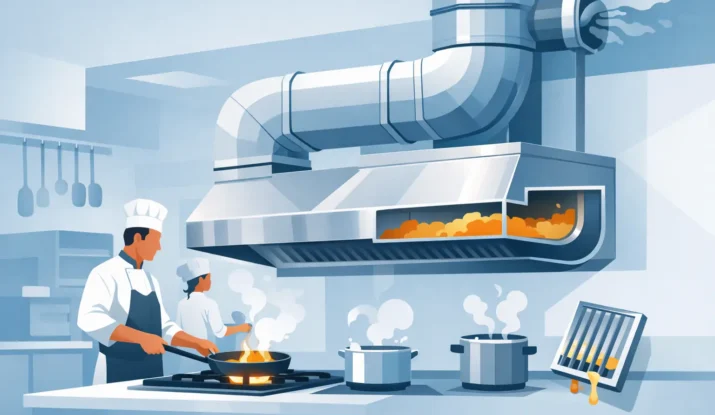
A grease duct is one of the most critical fire-safety components in a commercial kitchen, yet it is usually out of sight above the ceiling or behind walls. When a cooking line produces grease-laden smoke and vapors, the duct carries those contaminants from the hood to the exhaust fan and ultimately outside the building. Its job is simple in principle, but the condition of that duct can have serious consequences for restaurant safety, inspections, equipment performance, and business continuity.
For Las Vegas restaurants, hotel kitchens, casinos, and other high-volume foodservice operations, grease duct maintenance is not a cosmetic task. It is a fire-code responsibility. Grease accumulation inside an exhaust system can become fuel for a fast-moving duct fire, putting employees, guests, property, and operations at risk.
What Is a Grease Duct?
A grease duct is the enclosed metal passageway that serves a Type I commercial kitchen exhaust system. Type I hoods are installed over grease-producing appliances such as fryers, griddles, charbroilers, woks, ranges, broilers, and certain ovens. The hood captures heat, smoke, grease vapor, and combustion byproducts. The grease duct then transports that air through the building to the exhaust fan.
The duct is not the same as the hood, filters, or roof-mounted fan, although all of these parts work together. The hood is the visible capture area above the cooking equipment. Filters help remove a portion of airborne grease before it enters the duct. The duct carries the exhaust away, and the fan provides the pull that keeps air moving through the system.
Unlike ordinary HVAC ductwork, a grease duct is built and installed for a much higher-risk environment. It must be constructed, sealed, supported, and routed to meet applicable fire and mechanical requirements. Its design is intended to contain grease-laden vapors and withstand the conditions associated with commercial cooking exhaust.
Why Grease Ducts Become a Fire Risk
Cooking smoke may look harmless once it disappears into the hood, but it contains tiny particles of grease. As that hot air travels through the exhaust system, grease can condense and stick to filters, duct walls, access doors, fan blades, and the fan housing.
Over time, that residue becomes thicker and more combustible. A flare-up on the cook line can be drawn into the hood and travel into the exhaust system. If enough grease has accumulated inside the duct, the fire can spread beyond the appliance and hood area. This is why exhaust cleaning is directly tied to fire prevention, not just kitchen appearance.
Grease buildup can also restrict airflow. When airflow drops, the hood may not capture smoke and heat effectively. Staff may notice haze in the kitchen, lingering cooking odors, excess heat near the line, or grease collecting around hood filters. These are operational warning signs, but a duct can be heavily contaminated even when the kitchen appears reasonably clean from below.
The risk level depends on the menu, cooking volume, equipment type, hours of operation, and how well the system is maintained. A kitchen that runs fryers and charbroilers for long hours will generally load its exhaust system with grease faster than a lower-volume operation with limited grease-producing cooking.
How a Commercial Grease Duct System Works
A properly functioning exhaust system follows a continuous path. Air is captured at the hood, passes through filters, moves into the grease duct, and is pulled by the exhaust fan to an approved discharge point. Make-up air is also needed to replace the air being exhausted, helping the kitchen maintain balanced airflow.
Each part of that path matters. Dirty filters allow more grease to move into the duct. Poor airflow can leave smoke and heat in the kitchen. A neglected fan can reduce system performance and collect combustible residue. A clean hood alone does not mean the system is clean if the duct and fan have not been serviced.
Access panels are especially important. These are installed at necessary points along the duct so qualified technicians can inspect and clean the interior. Long horizontal runs, offsets, elbows, and difficult-to-reach sections can collect grease. If access is blocked, missing, damaged, or poorly located, thorough cleaning becomes more difficult and inspection concerns may follow.
The Duct Is Often the Hidden Portion of the System
Kitchen managers can usually see whether hood filters need attention. The ductwork is different. It may run above a ceiling, through a shaft, across a roof, or along areas that are not accessible during normal operations. That hidden location is exactly why scheduled professional cleaning and documentation matter.
A contractor should clean the accessible interior surfaces of the hood, duct, fan, and related components according to the service scope and applicable requirements. After service, the system should be inspected for remaining buildup, accessibility issues, damaged components, or conditions that need correction.
Grease Duct Cleaning and Fire-Code Compliance
Commercial kitchen exhaust systems are commonly maintained under fire-safety standards such as NFPA 96, along with local requirements and the direction of the authority having jurisdiction. Cleaning frequency is not one-size-fits-all. It is based on the type and volume of cooking, with higher-volume grease-producing operations requiring more frequent service.
For example, a busy 24-hour kitchen, steakhouse, casino operation, or restaurant with heavy charbroiling may need a shorter cleaning interval than a kitchen with limited cooking activity. The right schedule should reflect actual grease production, not simply the date that is most convenient for the operator.
During an inspection, fire officials and facility teams may look for visible grease buildup, current service records, proper access, system condition, and a cleaning sticker that identifies the servicing company and next scheduled service date. Records help demonstrate that the operator has an active maintenance program rather than reacting only after a problem occurs.
Cleaning is also an opportunity to identify issues that could affect compliance. These can include damaged filters, excessive grease at the fan, obstructed access panels, leaks around duct connections, or components that may need repair by the appropriate trade. A cleaning company should not ignore visible concerns just because the scheduled task is grease removal.
What Professional Grease Duct Cleaning Includes
Professional hood and duct cleaning begins with protecting the kitchen and surrounding work areas. Technicians typically prepare the hood system, establish containment, remove or clean filters as needed, and use appropriate methods to remove grease from accessible exhaust components.
The service should address more than the visible hood canopy. A complete approach considers the plenum area, accessible duct interior, fan blades, fan housing, and grease collection components where present. The exact process depends on the system layout, condition, roof access, operating schedule, and whether the kitchen can be taken offline during service.
There are trade-offs to consider. Cleaning during operating hours may reduce after-hours cost in some situations, but it can disrupt food preparation and expose the work area to unnecessary traffic. After-hours or off-peak scheduling is often the better choice for busy kitchens because it protects service flow and gives technicians room to perform the work correctly.
A quality service provider should leave the work area clean, communicate any concerns clearly, and provide service documentation. This gives operators a record for internal maintenance files, facility managers, insurance requirements, and fire inspections.
Signs Your Grease Duct May Need Attention
The most reliable approach is to follow an established cleaning schedule, not wait for obvious symptoms. Still, several conditions should prompt a review of the exhaust system: smoke escaping the hood line, reduced capture performance, excessive heat in the kitchen, grease dripping from filters or duct connections, strong cooking odors outside normal service periods, or visible buildup around the exhaust fan.
A change in menu or operating hours also matters. Adding a fryer, expanding charbroiling, extending late-night service, or increasing production can change how quickly grease accumulates. A maintenance schedule that worked for a smaller operation may no longer be adequate after those changes.
Protect the System Before It Becomes an Emergency
A grease duct is not just hidden ductwork. It is part of the kitchen’s fire-protection strategy, ventilation performance, and compliance record. Keeping it clean helps reduce combustible grease, supports better airflow, and gives your team a clearer picture of the system’s condition.
For commercial kitchens that need dependable, code-focused exhaust cleaning, Vegas Pressure Clean provides professional hood, duct, and fan cleaning built around safety, honest service, and minimal disruption. Scheduling maintenance before grease becomes a problem is one of the most practical ways to protect your kitchen, your staff, and your ability to stay open.