

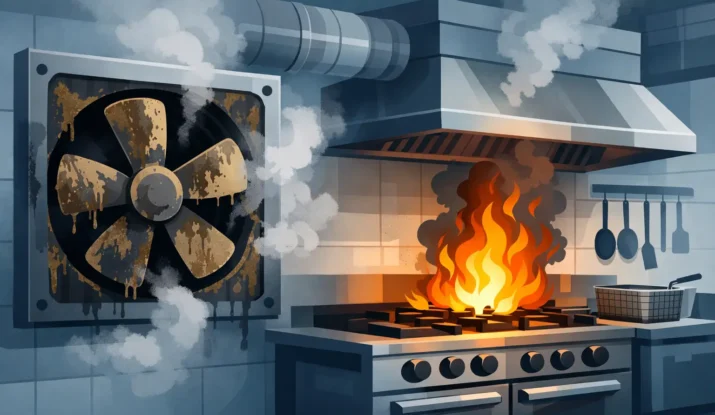
A kitchen exhaust fan may be out of sight on the roof, but it is part of the same grease-laden exhaust path as the hood and ductwork below. Can dirty fans cause fires? Yes. When grease buildup reaches the fan, it can provide fuel for a fire that starts at the cooking line and travels into the exhaust system.
For Las Vegas restaurants, hotel kitchens, and other high-volume foodservice operations, this is not simply a cleaning issue. A dirty fan can contribute to a serious fire hazard, reduce exhaust performance, complicate inspections, and create expensive downtime. The risk depends on the type of fan, the amount and type of buildup, the cooking volume, and whether the entire system is being cleaned to fire-code requirements.
Why Dirty Exhaust Fans Create a Fire Risk
A commercial kitchen exhaust system is designed to capture heat, smoke, vapor, and grease-laden air generated by cooking equipment. That air moves from the hood through the ductwork and eventually reaches the exhaust fan. While filters remove a portion of airborne grease, they do not remove all of it.
Over time, grease can collect on the fan blades, fan housing, curb, hinges, and surrounding duct connections. The fan keeps moving air, but it also becomes another surface coated with combustible residue. If flames flare up at a fryer, charbroiler, wok range, or other appliance, the exhaust system can pull heat and flames upward. Grease inside the duct and fan can then ignite or help the fire spread farther through the system.
The danger is not limited to visible drips or heavy deposits. Grease can build up in areas that are difficult to see during a routine walk-through, including the interior of the fan housing and the upper duct connection. A fan that looks acceptable from the outside may still have significant buildup where it matters most.
Grease Is the Main Concern
Dust on a standard circulating fan is usually more of a maintenance and air-quality concern than a major fire threat. In a commercial kitchen, however, the word “dirty” often means grease-contaminated. Grease changes the equation because it is a fuel source.
Cooking oils and fats can become sticky, hardened, and increasingly difficult to remove as they age. High heat can bake deposits onto fan components. Once grease is present throughout the hood, duct, and fan, cleaning only the hood canopy does not address the full hazard.
Electrical and Mechanical Issues Can Add Risk
Grease buildup can also affect how an exhaust fan operates. Excessive residue can throw fan blades out of balance, strain belts and bearings, interfere with moving parts, and reduce airflow. A poorly maintained motor or electrical component may overheat or fail.
A mechanical issue is not the same as a grease fire, but both conditions deserve attention. Reduced airflow can allow more smoke and grease to remain near the cooking area. In a busy kitchen, that can make working conditions worse while allowing the exhaust system to accumulate contamination faster.
Can Dirty Fans Cause Fires Outside the Exhaust System?
Yes, other fans in a foodservice facility can present concerns, although the risks are different. Floor fans, wall-mounted air movers, makeup-air equipment, and refrigeration fan components can collect dust, grease, or lint. If a motor overheats, wiring is damaged, or combustible debris collects near electrical parts, the risk increases.
Still, kitchen exhaust fans require the greatest attention because they are directly connected to the path grease-laden vapors take out of the building. A roof-mounted exhaust fan is not a separate maintenance item. It is a critical component of the kitchen hood system.
For this reason, professional exhaust cleaning should address accessible areas of the complete system, including the hood, plenum, ducts, fan, and related components. Leaving grease at the fan means leaving combustible material in the system.
Warning Signs Your Exhaust Fan Needs Attention
A kitchen team may not see the inside of the fan housing, but operations often reveal that something is wrong. Weak capture of smoke, lingering cooking odors, heat building up under the hood, or grease appearing around the fan curb can all point to a system that needs service.
Watch for these conditions:
- Grease dripping from hood seams, duct access doors, or rooftop fan components
- Smoke or heat escaping into the kitchen during normal cooking
- Unusual fan vibration, squealing, grinding, or changes in operating sound
- Visible grease deposits on the fan blades, housing, roof curb, or surrounding roof area
- A cleaning schedule that no longer matches the kitchen’s current cooking volume or menu
These signs do not always mean a fire is imminent. They do mean the system should be inspected and cleaned before the issue turns into a larger safety, compliance, or equipment problem.
Fire Code Compliance Depends on the Whole System
Commercial kitchen exhaust cleaning is a fire-safety service, not a cosmetic pressure-washing job. Fire codes and applicable standards require grease-removal systems to be maintained, and cleaning frequency is based on the type and volume of cooking. A 24-hour operation with heavy frying, broiling, or wok cooking usually needs more frequent service than a low-volume kitchen with limited grease production.
The exact schedule should be based on your operation, local requirements, inspection history, and the condition of the system. A restaurant should not assume that an old cleaning interval still fits after adding a new menu item, extending operating hours, or increasing production.
Proper service also includes clear documentation. After cleaning, operators should have a record of the work performed and a system that is visibly identified as serviced. This documentation helps facility managers track maintenance and gives inspectors evidence that the exhaust system is being managed responsibly.
What Professional Fan Cleaning Should Include
A qualified kitchen exhaust cleaning provider begins by protecting the kitchen and surrounding areas from runoff. The crew accesses the hood system, ductwork, and fan using the appropriate methods for the site. Grease is removed from accessible interior surfaces rather than simply sprayed around or covered up.
At the fan, that means more than wiping the exterior housing. The blades, interior housing, grease collection areas, and duct connection need attention. The fan may need to be opened or hinged back safely so the crew can clean the surfaces where grease accumulates.
A professional crew should also identify conditions that need repair or follow-up, such as damaged hinges, missing access panels, belt problems, excessive vibration, or grease leaks around the roof curb. Cleaning does not replace mechanical repair, but a thorough service helps reveal issues before they become harder and more costly to address.
Vegas Pressure Clean provides commercial kitchen exhaust hood and fan cleaning with safety, compliance, and minimal operational disruption in mind. For busy operators, the goal is simple: keep the system clean, documented, and ready for the next inspection and the next service period.
Do Not Treat Fan Cleaning as an Optional Add-On
A clean hood face can create a false sense of security if the duct and fan remain coated in grease. Fire follows fuel, airflow, and heat. In a kitchen exhaust system, those three factors can come together quickly when maintenance is delayed.
The practical approach is to manage the entire grease path on a schedule that reflects your actual operation. Review your current service interval, pay attention to performance changes, and make sure the exhaust fan is included in every complete cleaning scope. A properly maintained fan protects more than equipment – it helps protect your staff, your facility, and the continuity of your business.
1 Comment
What Is a Grease Duct in a Commercial Kitchen? – Vegas Pressure Clean
[…] allow more grease to move into the duct. Poor airflow can leave smoke and heat in the kitchen. A neglected fan can reduce system performance and collect combustible residue. A clean hood alone does not mean the […]