

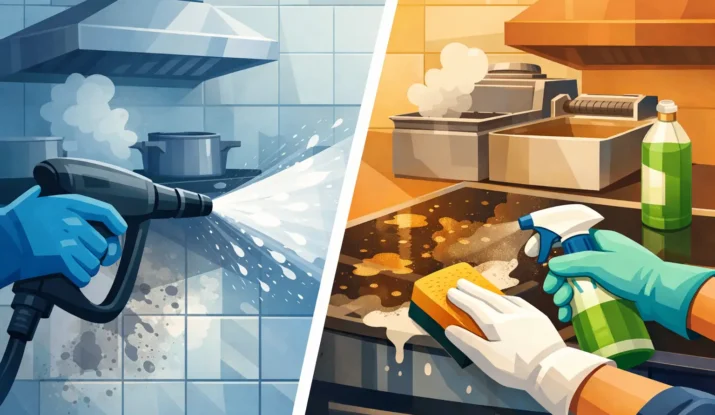
A greasy kitchen floor after a rush is not just a housekeeping problem. It can create a slip hazard, attract pests, affect sanitation, and turn routine cleaning into a larger maintenance issue. For commercial operators, pressure washing vs degreasing is not really a question of which service is better overall. The right choice depends on what is being cleaned, how heavily it is soiled, where the grease is located, and whether water can be safely contained.
Pressure Washing vs Degreasing: The Core Difference
Degreasing uses purpose-made cleaning chemicals to break down oils, fats, and baked-on grease so they can be lifted from a surface. It is often the first necessary step when grease has accumulated on equipment, floors, walls, concrete, or other hard surfaces. A good degreaser does more than make an area look cleaner. It loosens the bond between grease and the surface so the contamination can be removed instead of merely spread around.
Pressure washing uses pressurized water to rinse away dirt, grease residue, cleaning solution, and accumulated debris. It can clean large, durable surfaces quickly and thoroughly when the right water pressure, temperature, nozzle, and containment process are used.
The distinction matters because pressure alone does not neutralize heavy grease. On the other hand, degreaser alone may leave dissolved soil and chemical residue behind if it is not properly rinsed, wiped, extracted, or collected. In many commercial settings, the best result comes from applying degreaser first and pressure washing second.
When Degreasing Is the Better First Step
Degreasing is the more controlled option when the area has concentrated grease, sensitive components, limited drainage, or surfaces that cannot tolerate high-pressure water. This is common around cooking equipment, wall panels, floor edges, fryer areas, grease containers, and parts of a back-of-house operation where electrical connections or moving equipment are present.
A technician applies the appropriate chemical, allows the necessary dwell time, agitates the surface when needed, and then removes the loosened grease through rinsing, wiping, wet vacuuming, or a controlled wash process. The chemical selection matters. A product that is too weak may leave residue behind, while one that is too aggressive can damage finishes, discolor materials, or create a safety concern for employees.
Degreasing is also useful for routine maintenance. If staff address fresh splatter and small buildup before it hardens, floors and equipment are easier to maintain, and deep-cleaning visits can focus on areas that need specialized attention.
Where Degreasing Has Limits
Degreasing requires proper application and follow-through. Spraying chemical on a floor and mopping it around does not remove the grease load. It can leave a slick film behind, particularly if the floor is not rinsed and the wastewater is not collected.
It is also slower for broad exterior surfaces. A large loading area, dumpster pad, or grease-stained concrete zone may need more than hand-applied degreaser and manual scrubbing. That is where pressure washing becomes more efficient.
When Pressure Washing Makes Sense
Pressure washing is especially effective on durable, water-tolerant surfaces with enough room for safe wastewater control. Commercial concrete, exterior walkways, dumpster enclosures, loading zones, drive-through areas, and some kitchen floor surfaces can benefit from a professional wash process.
For Las Vegas restaurants and hospitality properties, exterior grease buildup can become a visible liability as well as a safety concern. Grease tracked from kitchens to rear exits, trash areas, or delivery paths can make concrete slippery and difficult to clean with standard janitorial methods. Pressure washing can remove embedded grime and restore a cleaner, safer surface when paired with the right degreasing treatment.
The goal is not maximum pressure. Excessive pressure can damage grout, force water into seams, strip coatings, scar concrete, or push contaminants into areas where they do not belong. Professional work starts with an assessment of the surface and soil condition, then uses the lowest effective pressure to get the job done.
Pressure Washing Requires Containment
Water runoff is a major operational consideration. Grease, cleaning chemicals, food debris, and wastewater should not be allowed to flow into storm drains, public areas, or neighboring property. A proper service plan accounts for drainage, recovery, access points, nearby vehicles, pedestrian routes, and business hours.
Inside a kitchen, uncontrolled pressure washing can create more problems than it solves. Water can reach electrical equipment, enter wall cavities, affect ceiling systems, and disrupt service. That is why indoor cleaning often calls for targeted degreasing, careful rinsing, extraction, and surface-specific methods instead of open pressure washing.
The Right Method for Common Commercial Kitchen Areas
Kitchen equipment usually needs focused degreasing rather than high-pressure cleaning. Grills, fryers, ranges, ovens, and prep-area equipment collect heavy soil, but they also include burners, controls, electrical components, and surfaces that require careful handling. The equipment manufacturer’s guidance should always be considered.
Kitchen floors often need both methods. Degreaser helps release cooking oils and foot-traffic grime from tile, grout, and textured surfaces. Controlled pressure washing or hot-water washing may then be used where the floor construction, drainage, and containment setup allow it. The final result should be clean, free of slippery residue, and dry enough to return safely to service.
Concrete around dumpster pads and grease-storage areas frequently benefits from a combined approach. Degreaser cuts through the oily buildup, while pressure washing removes loosened contamination from the concrete’s pores and surface texture. Because these areas are exposed to deliveries, waste handling, and weather, scheduled maintenance is usually more cost-effective than waiting until the stains become severe.
Exhaust hoods, ducts, and fans are a separate category. Kitchen exhaust cleaning is a fire-safety service, not a general pressure-washing task. Grease inside the exhaust system must be removed according to applicable fire-safety requirements and with methods appropriate for the system. Cleaning the visible hood canopy or kitchen floor does not address grease accumulation deeper in ducts and fans.
Safety and Compliance Should Drive the Decision
The best cleaning method is the one that removes the hazard without damaging the property or creating a new one. For foodservice operators, that means looking beyond appearance. A floor can look clean while still holding a slick grease film. A hood can shine on the outside while combustible grease remains within the exhaust system.
Fire inspections, health inspections, employee safety, and operational uptime are connected. Regular cleaning helps protect staff from slips, reduces the chance of grease migration, supports a more sanitary work environment, and makes it easier to identify leaks or equipment issues before they become costly.
For exhaust systems, cleaning frequency should be based on cooking volume, fuel type, menu, grease production, and applicable requirements. High-volume operations may need more frequent service than a lower-volume kitchen. A qualified specialist can help establish a schedule that fits the operation instead of relying on a one-size-fits-all interval.
Vegas Pressure Clean provides commercial cleaning with a focus on grease management, fire-risk cleaning, and practical service for busy foodservice operations. For an operator, the value is not simply having a cleaner surface. It is having work performed with accountability, appropriate methods, and minimal interruption to business.
How to Choose the Right Service
Start by identifying the type of soil and the surface involved. Fresh oil on a kitchen floor needs a different response than years of buildup on exterior concrete. Then consider whether the area has drainage, electrical exposure, food-contact concerns, coatings, grout, or sensitive equipment nearby.
Ask how wastewater will be controlled and where it will go. Confirm that the provider understands commercial kitchen conditions rather than treating the work as a basic exterior wash. For hood and duct cleaning, verify that the company is qualified to perform fire-code-driven exhaust cleaning and can document the service appropriately.
A dependable maintenance plan normally combines daily staff cleaning with scheduled professional degreasing, concrete cleaning, and exhaust-system service as needed. That approach keeps grease from reaching the point where it threatens safety, inspections, equipment performance, or service hours.
The practical answer is simple: degrease when grease must be chemically broken down, pressure wash when durable surfaces need a thorough controlled rinse, and use both when the job calls for it. Addressing buildup early is usually the least disruptive way to keep a commercial kitchen safer, cleaner, and ready for the next inspection or service rush.