

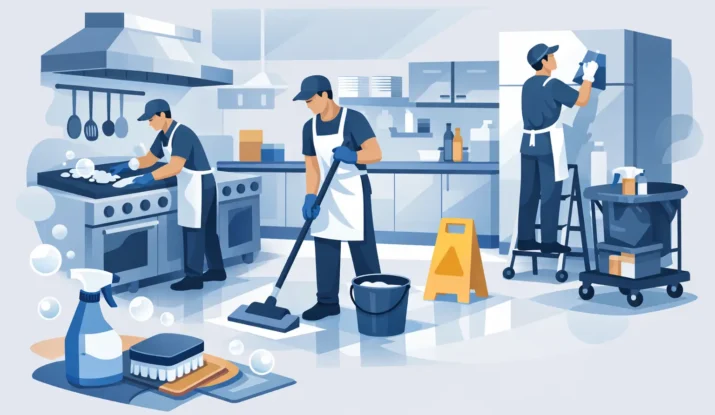
A kitchen can look clean at the end of a shift and still carry a serious fire or safety risk behind the line. The top commercial kitchen cleaning priorities are not just about appearance. They address the grease, residue, spills, and hard-to-reach areas that can lead to failed inspections, equipment problems, employee injuries, and costly disruption to service.
For Las Vegas restaurants, hotels, commissaries, and high-volume foodservice operations, cleaning priorities should be based on risk. The areas most likely to create a fire hazard, contaminate food, cause slips, or interfere with equipment need consistent attention first. A clear cleaning plan also helps managers document maintenance, assign responsibilities, and avoid last-minute scrambling before an inspection.
Top Commercial Kitchen Cleaning Priorities for Safer Operations
1. Kitchen exhaust hoods, ducts, and fans
Grease-laden exhaust systems belong at the top of the list because they are directly connected to fire safety. Vapors produced by cooking collect in the hood, filters, ductwork, and exhaust fan. Over time, that residue becomes fuel. If a flame reaches accumulated grease, fire can spread quickly through areas that kitchen staff cannot see or access.
A proper hood cleaning service removes grease from the full exhaust system, not only the visible hood canopy. That includes accessible ductwork, filters, fan components, and surrounding areas affected by buildup. The goal is to reduce combustible grease and keep the system functioning as intended.
Cleaning frequency depends on the type and volume of cooking, the fuel used, the equipment under the hood, and local fire-code requirements. A kitchen that runs fryers, charbroilers, woks, or high-volume cooking for long hours will generally need more frequent service than a low-volume operation. Your Authority Having Jurisdiction, fire inspector, and system condition should guide the final schedule.
Do not treat hood cleaning as a cosmetic washdown. It is a specialized fire-prevention service that should be performed by qualified professionals who understand commercial exhaust systems, containment, cleanup, and compliance documentation.
2. Grease-producing cooking equipment
Fryers, griddles, ranges, ovens, charbroilers, and surrounding work surfaces accumulate grease every day. Left in place, that buildup can smoke, create odors, reduce equipment performance, and increase the chance of a flare-up. It can also make basic daily cleaning more difficult because old grease hardens onto hot surfaces and nearby walls.
Daily wipe-downs matter, but periodic deep cleaning is equally necessary. Cleaning should reach behind and beneath equipment, where grease often collects out of sight. Casters, legs, utility connections, splash areas, and wall surfaces can hold heavy residue even when the front line looks acceptable.
There is a practical balance to consider. Staff can handle routine surface cleaning during closing procedures, while professional deep cleaning is often the better option for heavy buildup, difficult access, and high-risk equipment. Removing equipment incorrectly or using unsuitable chemicals can damage finishes, electrical connections, or gas components. A planned service reduces that risk while allowing the kitchen to stay focused on production.
3. Floors, drains, and grease spill areas
A clean floor is a safety requirement, not a finishing touch. Grease, water, food debris, and cleaning chemicals can create slip hazards in busy paths between cooking equipment, dish areas, walk-ins, and storage rooms. One fall can lead to injury, missed shifts, claims, and operational stress that no manager needs during service.
Floor cleaning should focus on more than a quick mop. Degreasing is often needed around fryers, cook lines, dish stations, and floor drains where residue builds up. Grout lines and textured concrete can trap grease that standard mopping does not remove. When grease is allowed to migrate toward drains or exits, it can also create odors and extend the hazard beyond the original spill area.
Spills need immediate response, especially around fryers, oil delivery areas, dumpsters, and loading zones. Keeping absorbent materials and clear response procedures on hand helps staff contain a problem before it spreads. For substantial grease spills or exterior buildup, commercial cleanup equipment may be necessary to restore traction and prevent runoff concerns.
4. Food-contact and sanitation-critical surfaces
Fire prevention gets much of the attention in commercial kitchens, but sanitation remains a daily operational priority. Prep tables, cutting boards, slicers, mixers, refrigeration handles, utensils, and small equipment must be cleaned and sanitized according to the product instructions and your operation’s food safety procedures.
Cleaning and sanitizing are different steps. Cleaning removes visible soil, grease, and food residue. Sanitizing reduces microorganisms on a properly cleaned food-contact surface. Skipping the cleaning step can make sanitizing less effective, particularly when grease or dried food is present.
Managers should also pay attention to overlooked touch points. Cooler handles, door latches, faucet controls, cart handles, POS-adjacent surfaces, and employee break areas may not look heavily soiled, but they are used repeatedly throughout the day. Assigning these areas to a shift checklist helps prevent gaps between deep-cleaning visits.
5. Exterior walkways, pads, and waste areas
The back-of-house exterior often tells a different story than the dining room. Grease can collect around dumpster pads, loading zones, exterior doors, and walkways from leaking containers, bagged waste, grease transport, or spills during deliveries. This can create slip hazards for staff and vendors while attracting pests and producing unpleasant odors.
Exterior concrete cleaning is especially valuable where grease has been ground into porous surfaces. A basic hose-down may spread residue without actually removing it. Professional pressure cleaning and grease-management methods can help restore cleaner, safer walking areas while keeping the work controlled and appropriate for a commercial property.
Waste areas should be inspected regularly for leaking grease, damaged lids, overflowing containers, and residue under bins. The right schedule depends on traffic, waste volume, and the layout of the property. A hotel kitchen with multiple outlets may need more frequent attention than a smaller single-unit restaurant.
Build a Cleaning Schedule Around Risk, Not Convenience
The strongest cleaning programs divide work into daily, weekly, periodic, and professional service tasks. Daily work should cover immediate food debris, spills, food-contact surfaces, and routine grease removal. Weekly tasks can address areas behind movable equipment, drains, walls, and storage zones. Periodic deep cleaning handles the buildup that daily crews cannot reasonably reach during a normal close.
Exhaust hood cleaning requires its own documented schedule based on cooking operations and applicable requirements. Do not wait until grease is visibly dripping, staff notice smoke, or an inspection is approaching. By that point, the operation may already be carrying unnecessary risk.
Keep service records, inspection tags, invoices, and notes on repairs in an organized place. This supports accountability across shifts and gives managers useful documentation when a fire inspector, corporate representative, insurer, or facility team asks for proof of maintenance. It also makes it easier to spot recurring issues, such as a fryer that is splashing excessively or a floor area that becomes slippery after every rush.
Vegas Pressure Clean works with commercial operators who need dependable exhaust, grease, equipment, and concrete cleaning without unnecessary disruption. A clear quote, the right service interval, and qualified work can turn cleaning from a recurring emergency into a controlled part of kitchen operations.
The best next step is to walk your kitchen from the hood to the dumpster area and identify where grease, moisture, or residue is building faster than your current schedule can handle. Address that risk before it becomes a fire issue, a slip incident, or a failed inspection.