

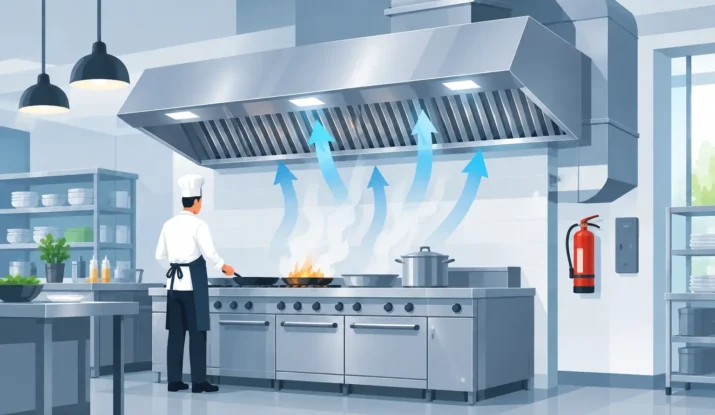
A kitchen exhaust system is easy to ignore when it is working. Cooks see the hood, but much of the system operates above the ceiling and on the roof, where grease can accumulate out of sight. This restaurant exhaust system guide explains what operators need to know to protect staff, pass inspections, reduce fire risk, and keep a busy Las Vegas kitchen running without unnecessary disruption.
What a Restaurant Exhaust System Does
A commercial kitchen exhaust system removes heat, smoke, steam, grease-laden vapors, and combustion byproducts created during cooking. It is not simply a ventilation feature. It is a fire-safety system that must capture contaminants at the cooking line, move them through ductwork, and discharge them safely outside.
The system normally begins with a Type I hood over grease-producing equipment such as fryers, charbroilers, woks, griddles, ranges, and broilers. Baffle filters inside the hood capture a portion of airborne grease before it reaches the duct. From there, the exhaust fan pulls air through the ductwork and releases it outdoors. Makeup air replaces the air removed, helping the hood capture effectively and preventing uncomfortable pressure problems inside the building.
When any part of that chain is neglected, grease does not disappear. It collects on filters, hood surfaces, ducts, fan blades, roof components, and nearby equipment. That buildup can fuel a fire, restrict airflow, create smoke and heat problems on the line, and lead to inspection concerns.
The Main Parts Operators Should Understand
Kitchen managers do not need to service every component themselves, but they should know what a qualified exhaust cleaning contractor is evaluating.
Hood canopy and plenum
The canopy is the visible portion above the cooking equipment. The plenum is the area behind the filters where grease-laden air enters the duct. Both require cleaning because grease can collect heavily around the filter tracks, seams, lights, and interior surfaces.
Filters
Baffle filters are a first line of defense, not a replacement for professional exhaust cleaning. Staff should clean filters regularly according to the volume and type of cooking. A filter that is bent, missing, improperly installed, or clogged with grease reduces capture performance and allows more grease into the duct system.
Ductwork
Ducts are the hidden pathway between the hood and fan. They may run vertically, horizontally, or through multiple building areas before reaching the roof. Grease inside the duct is one of the most serious concerns because a fire can travel through the system beyond the cooking line.
Exhaust fan and roof area
The rooftop fan creates the pull that makes the entire system work. Grease on blades and housings can reduce performance, add strain to the equipment, and create roof contamination. During a complete service, the fan and accessible duct components should be addressed, with the work coordinated around the system’s design and access requirements.
Makeup air
As exhaust air leaves the kitchen, replacement air must enter. If makeup air is insufficient or out of balance, doors may become difficult to open, the dining area may feel drafty, smoke may spill from the hood, and conditioned air costs can rise. Exhaust cleaning alone cannot correct every airflow issue, but a recurring smoke or capture problem deserves prompt evaluation by the appropriate qualified professional.
Why Grease Buildup Becomes a Business Risk
Grease is combustible. In a high-volume kitchen, vaporized cooking grease can build up faster than operators expect, especially with charbroiling, frying, wok cooking, or extended operating hours. A flare-up on the line is dangerous enough. If flames enter a grease-laden hood or duct, the fire can spread rapidly through concealed areas.
The risk is not limited to a major fire event. Grease accumulation can also cause odors, visible smoke, poor hood capture, slippery surfaces, roof runoff concerns, and premature wear on fans and related equipment. These conditions affect employee safety, customer comfort, maintenance costs, and the kitchen’s ability to operate reliably.
For operators, the practical issue is accountability. Fire inspectors and local authorities look for a system that is maintained, accessible, and documented. A clean hood exterior does not prove the duct and fan are clean. The complete exhaust path matters.
Restaurant Exhaust System Guide: Cleaning Frequency
There is no single cleaning schedule that fits every kitchen. Frequency depends on cooking volume, fuel type, menu, equipment, operating hours, and the amount of grease produced. A restaurant with multiple fryers and charbroilers may need service far more often than a low-volume kitchen that does limited cooking.
Industry fire-safety standards commonly establish cleaning intervals based on the type and volume of cooking, while the authority having jurisdiction may impose or enforce additional local requirements. Your fire marshal, insurer, landlord, franchise standards, or facility requirements may also affect the schedule. The right approach is to treat the required interval as a minimum and adjust when actual grease accumulation shows the system needs more attention.
A professional provider should inspect the condition of the hood, accessible ductwork, filters, and fan during service. If grease is accumulating heavily before the next scheduled visit, the answer is usually a shorter interval, not a rushed surface cleaning before an inspection.
What Professional Hood and Exhaust Cleaning Should Include
A proper exhaust cleaning service is more involved than spraying the hood and wiping visible surfaces. The crew should protect nearby equipment and floors, remove or manage filters, access the duct and fan where required, remove grease deposits from the system, and leave the work area clean and serviceable.
The exact process depends on the kitchen layout. Some systems have difficult roof access, multiple fans, long horizontal duct runs, or equipment that limits access to hood areas. A qualified contractor identifies those conditions before work begins and communicates what is included. Clear scope matters because inaccessible or excluded areas can become a compliance issue later.
After cleaning, the service provider should provide appropriate documentation and place the required service label where applicable. Keep records available for inspections and facility files. If an inspector asks when the system was last cleaned, vague assurances are not enough. Accurate service records protect the operator.
Vegas Pressure Clean provides specialized hood, duct, and exhaust fan cleaning with an emphasis on fire-code compliance, practical scheduling, and owner-led quality control for commercial kitchens in the Las Vegas area.
Daily and Weekly Habits That Support a Clean System
Professional cleaning is essential, but kitchen staff still play a role between scheduled services. Train employees to report smoke escaping the hood, excessive grease on filters, unusual fan noise, grease drips, odors, or water intrusion around hood and duct areas. Small warning signs are easier to address before they become downtime or a safety problem.
Staff should also avoid blocking hood airflow with stacked pans, signage, or equipment placed too high near the cooking line. Filters must be returned in the correct direction after washing. A filter installed backward or left out during service changes how the hood handles grease and can expose the duct to heavier buildup.
Do not pour grease into floor drains, roof drains, or areas around exterior equipment. Maintain grease containers and clean spills promptly. Grease management is connected across the property: what leaves the cook line can create slip hazards, plumbing problems, exterior mess, and maintenance concerns elsewhere.
Signs Your System Needs Attention Before the Next Service
Do not wait for an inspection notice if the kitchen is showing clear warning signs. Smoke lingering at the line, heat that feels worse than normal, greasy film forming around the hood, dripping grease, dirty rooftop fan areas, and persistent cooking odors all deserve attention.
A sudden change can also point to a mechanical issue rather than cleaning alone. The fan may not be operating correctly, makeup air may be out of balance, belts or controls may need service, or the fire suppression system may require inspection. Use the right trade for the problem, but do not overlook grease accumulation while troubleshooting airflow or equipment performance.
Choosing an Exhaust Cleaning Provider
The lowest quote is not always the lowest risk. Ask whether the provider cleans the complete system, including the hood, accessible ductwork, and fan. Confirm that the company understands applicable fire-safety requirements, provides service documentation, carries appropriate credentials, and can work around your operating schedule.
It also helps to ask how the crew handles access, roof protection, equipment protection, wastewater, and cleanup. A contractor who cannot explain the scope clearly may leave you with a clean-looking hood but unresolved grease inside the system. For multi-unit operators and facility managers, consistent reporting and dependable scheduling are just as valuable as the cleaning itself.
A restaurant exhaust system should never be treated as a background maintenance item. Keep the schedule current, keep records organized, and address warning signs early. That disciplined approach gives your kitchen a safer work environment and lets your team focus on service instead of preventable disruptions.