

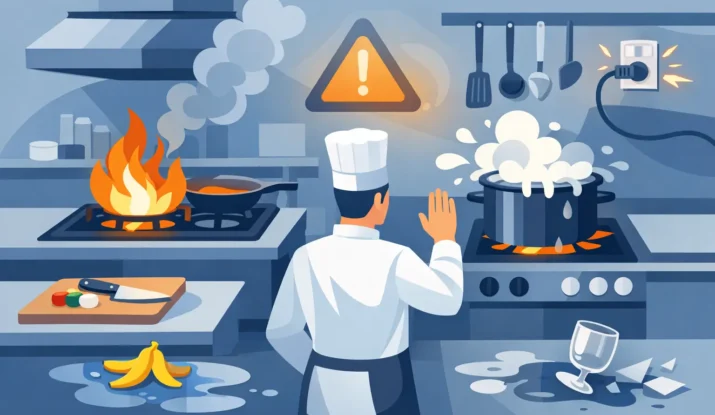
A busy Las Vegas kitchen can go from routine service to a costly emergency in minutes. The top commercial kitchen hazards usually build up out of sight or get treated as small maintenance issues until they cause a fire, injury, failed inspection, or service interruption. Controlling them requires more than a quick wipe-down at closing. It takes scheduled cleaning, clear staff procedures, and attention to the equipment that carries heat, grease, water, and power through the kitchen.
For restaurant owners, kitchen managers, and facility teams, the goal is not just a cleaner back of house. It is a safer operation that can stay open, protect employees, and meet applicable fire and health requirements.
Top Commercial Kitchen Hazards That Demand Attention
Grease buildup in hoods, ducts, and exhaust fans
Grease is one of the most serious fire hazards in any commercial kitchen. Cooking vapors rise into the hood system, where grease deposits collect on hood filters, plenum areas, ductwork, and rooftop exhaust fans. The hotter and busier the cooking line, the faster that buildup can develop.
A surface-level hood cleaning does not address the full risk. If grease remains inside the exhaust path, a flare-up on the cooking equipment can travel into the hood and ducts. Once fire enters a grease-laden exhaust system, it can spread quickly and create extensive damage.
Cleaning frequency depends on the volume and type of cooking. A high-volume operation using fryers, charbroilers, woks, or solid-fuel equipment generally needs more frequent service than a lower-volume kitchen with limited grease-producing equipment. The right schedule should reflect the kitchen’s actual use, not a one-size-fits-all calendar. Professional exhaust cleaning should remove grease from the accessible hood, ducts, filters, fan, and related components, with documentation available for your records.
Cooking equipment flare-ups and open-flame risks
Ranges, broilers, fryers, grills, ovens, and burners create obvious heat hazards, but the risk often increases when grease, food debris, or carbon buildup is allowed to remain around the equipment. A dirty charbroiler can send flames higher than expected. An overfilled fryer can spill hot oil. A grease pan left unattended can ignite during a rush.
Staff training matters here. Employees should know where the manual fire-suppression pull station is located, how to shut off fuel or power when appropriate, and why water should never be used on a grease fire. They also need enough room to work safely. Crowded cooking lines, blocked access to suppression controls, and stacked boxes near heat sources are preventable problems.
Equipment cleaning is a practical fire-prevention measure, not just a presentation issue. Regularly removing grease from exterior surfaces, behind units, and from difficult-to-reach areas helps reduce fuel for a fire while making mechanical problems easier to spot.
Slips, trips, and falls on kitchen floors
A wet floor near the dish area may look like a minor inconvenience, but slips and falls are among the most common workplace injuries in foodservice. Water, grease, food debris, cleaning chemicals, and tracked-in dirt can all reduce traction. In a fast-moving kitchen, a fall can mean an injured employee, lost labor, workers’ compensation exposure, and a disrupted shift.
The most effective response combines cleaning with control measures. Floors should be cleaned with products and methods appropriate for grease, not simply mopped with water that spreads it around. Leaks from dish machines, ice machines, coolers, fryers, and plumbing should be repaired promptly. Floor mats must lie flat, stay clean, and be replaced when their edges curl or their backing no longer grips.
Grease spills deserve immediate attention. A small spill can spread under shoes and across walkways before anyone notices. Keep spill-response materials accessible and assign responsibility during every shift so the problem is handled before someone gets hurt.
Electrical hazards near water and heat
Commercial kitchens run on power, and many electrical risks develop gradually. Damaged cords, overloaded outlets, loose connections, and equipment placed too close to water can lead to shock, burns, or electrical fires. Heat, steam, grease, and frequent cleaning all accelerate wear on outlets and wiring.
Managers should regularly inspect visible cords, plugs, and outlets. Equipment with cracked insulation, exposed wires, scorch marks, or recurring breaker trips should be removed from use until a qualified technician evaluates it. Do not solve capacity problems with extension cords and power strips intended for temporary or light-duty use.
Water increases the danger. Keep electrical equipment away from sinks and wet floor areas whenever possible, and make sure staff understand that they should never handle electrical plugs or controls with wet hands. This is especially relevant in dishwashing areas, beverage stations, and prep spaces where hoses are used.
Chemical exposure and unsafe storage
Degreasers, sanitizers, oven cleaners, and drain products are necessary tools, but they can cause burns, respiratory irritation, and other injuries when handled carelessly. The risk is higher when chemicals are stored in unmarked containers, mixed improperly, or left where food and food-contact items are kept.
Every chemical should remain in its original labeled container or a properly labeled secondary container. Safety data information should be accessible to employees, and staff should be trained on dilution, protective equipment, first-aid steps, and the proper response to a spill. More chemical is not always better. Overconcentrated products can damage surfaces, create fumes, and leave residues that complicate food-safe cleaning.
Never mix cleaning products unless the manufacturer specifically directs it. Combining incompatible chemicals can create dangerous gases or reactions. Clear storage areas, separate from food and single-service items, help keep this hazard under control.
Cuts, burns, and rushed work habits
Knives, slicers, sharp can edges, hot pans, steam, and boiling liquids are part of daily kitchen work. Most injuries happen when routine tasks are rushed, equipment is poorly maintained, or employees work around clutter.
Sharp knives are safer than dull ones because they require less force and are less likely to slip. Slicers and food processors need guards in place, and employees should be trained to disconnect equipment before cleaning or clearing a jam. Heat-resistant gloves, dry side towels, and proper pan handling are simple controls that make a real difference around ovens, steam tables, fryers, and dish machines.
A clean, organized work area reduces both cut and burn risks. When tools have a defined place and aisles remain clear, employees do not have to reach across hot surfaces or carry heavy items around obstacles.
Blocked exits and poor emergency access
Deliveries, storage overflow, and temporary staging often create another major hazard: blocked exits and obstructed emergency equipment. Boxes in a corridor may feel harmless during a slow period, but they can delay evacuation during a fire. The same applies to items stored in front of electrical panels, fire extinguishers, suppression pull stations, or access points needed by emergency responders.
Keep exit routes clear at all times, not only before an inspection. Check that exit doors open properly, emergency lighting is functional, and employees know the designated evacuation procedure. Fire extinguishers should be visible, accessible, and maintained according to applicable requirements. A kitchen is safest when emergency access is treated as part of the normal operating standard.
Build a Hazard-Control Routine That Works During Service
The best safety program is one your team can actually maintain on a busy night. Daily opening and closing checks can catch floor hazards, clutter, leaks, damaged cords, and visible grease. Weekly checks can focus on equipment condition, storage areas, and safety supplies. Scheduled professional service addresses the work that cannot be handled effectively during a shift, including exhaust-system grease removal and deep cleaning around heavy equipment.
Document what is found and what was corrected. This creates accountability, helps identify repeat issues, and gives managers a clearer maintenance record. If a fryer leak keeps returning or grease accumulates faster than expected, the solution may be a repair or a shorter cleaning interval rather than another reminder to staff.
For Las Vegas operators, working with a qualified, fire-code-focused cleaning provider helps keep critical exhaust work from becoming an afterthought. Vegas Pressure Clean provides owner-led commercial kitchen exhaust and grease-management cleaning designed to support safer, more reliable operations with minimal disruption.
A safer kitchen is built shift by shift. Keep grease under control, give employees clear expectations, and address small hazards while they are still easy to fix. That steady discipline protects the people in your kitchen and the business they keep moving.