

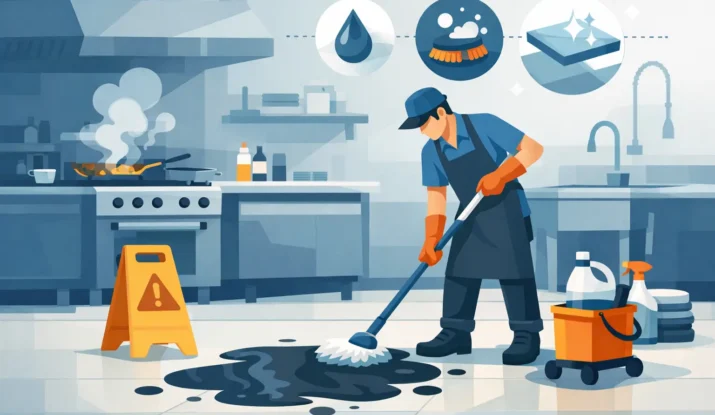
A grease spill behind the line is not a minor housekeeping issue. In a busy kitchen, restaurant grease spill cleanup is a safety job, a compliance job, and often a same-day operational problem that needs to be handled correctly the first time. When oil, animal fat, or greasy residue spreads across tile, concrete, walkways, loading areas, or dumpster pads, the risks stack up fast – slips, tracking, odors, pest activity, and potential fire hazards if grease is left to build up around equipment and exhaust areas.
For restaurant operators in Las Vegas, the real concern is not just getting the floor to look better. It is getting the area safe, clean, and back in service without creating more downtime than the spill already caused.
Why restaurant grease spill cleanup matters
Grease behaves differently than ordinary dirt or a simple water spill. It spreads quickly, seeps into grout and porous concrete, and leaves behind a slick film even after a quick mop. That film is what causes repeat slips and ongoing sanitation problems. If staff members walk through it, the contamination can move from the kitchen to storage areas, dining-adjacent corridors, back doors, and delivery routes.
There is also the issue of compliance. Commercial kitchens are expected to maintain safe working conditions and clean foodservice environments. A visible grease problem near cooking equipment, floor drains, exterior pads, or waste handling areas can raise concerns during inspections and create liability if someone is injured. For high-volume restaurants, casinos, hotels, and commissaries, a small spill can become a much larger operational problem by the end of a shift.
The cost of handling it poorly is usually higher than the cost of handling it correctly. Lost labor, staff injuries, repeat cleaning, complaints, and damaged surfaces add up quickly.
Where grease spills usually happen
Most operators think first about fryers, and that is fair. Fryer oil transfer, filtering, equipment movement, and drain issues are common causes of spills. But restaurant grease spill cleanup is often needed in more places than owners expect.
Back-of-house floors and cook line areas
This is the obvious trouble spot. Oil splatter, leaking equipment, overfilled grease containers, and rushed end-of-shift cleaning can create slick conditions around fryers, grills, and prep stations. In older kitchens, worn grout lines and uneven floor surfaces make the problem harder to remove with standard janitorial methods.
Dumpster pads and exterior concrete
Exterior grease buildup is easy to ignore until it becomes visible, odorous, or dangerous. Leaking grease bins, improper disposal, and runoff around trash enclosures can stain concrete and create slip hazards for staff, vendors, and haulers. In desert heat, the smell can get worse fast, and stains can bake into the surface if they are not treated properly.
Loading zones, walk-ins, and service corridors
Grease often gets tracked into places where it should never be. A spill near a receiving door or storage path can spread into cooler thresholds, hallway transitions, and shared service areas. That matters even more in hospitality properties where multiple tenants, staff teams, or departments use the same back-of-house routes.
Why mopping is usually not enough
A standard mop-and-degreaser approach can help with a very light surface issue, but it rarely solves a true grease spill. In many cases, it just spreads the material, leaves a slippery residue, or pushes grease toward drains and edges without fully removing it.
That is the main trade-off with in-house cleanup. It looks cheaper on paper, but if the area is still slick or stained after labor has already been spent, the restaurant ends up paying twice. Some chemicals also are not suited for kitchen surfaces, coated floors, surrounding equipment, or exterior concrete. Using the wrong product can damage finishes, create fumes, or leave an even more hazardous surface behind.
A proper cleanup usually requires more than one pass. It may involve containment, absorbent treatment, degreasing, hot-water surface cleaning, residue removal, and recovery of contaminated wastewater or slurry, depending on where the spill occurred. The method depends on the size of the spill, the surface type, and whether the grease is fresh, congealed, tracked, or baked in.
What professional restaurant grease spill cleanup should include
A real commercial cleanup service should start with the condition of the site, not a one-size-fits-all checklist. The right process changes depending on whether the spill is around active cooking equipment, near drains, outside by the dumpster, or across porous concrete.
Containment and hazard control
The first priority is preventing traffic through the affected area. That may mean isolating the section, controlling foot movement, and stopping the spread before staff track grease through the building. In active kitchens, this step matters because cleanup has to happen without creating unnecessary disruption or exposing workers to more risk.
Surface-appropriate degreasing
Professional cleanup should match the cleaning chemistry and method to the surface. Tile, quarry tile, sealed concrete, unfinished concrete, and equipment-adjacent flooring all respond differently. Aggressive cleaning can help in one area and cause damage in another. This is where experience matters.
Removal of residue, not just visible grease
The goal is not a floor that looks acceptable from six feet away. The goal is a surface that is no longer slick and no longer holding grease residue. That means pulling contamination out of textured flooring, grout lines, edges, and low spots where grease settles.
Attention to surrounding buildup
Spills rarely exist in isolation. If grease has been splashing under equipment, collecting along curbs, or building up around adjacent surfaces, those areas need attention too. Otherwise the spill returns to the floor the next time the area heats up, gets wet, or sees heavy traffic.
When to call for outside service
Some situations clearly call for a specialist. If the spill covers a large area, has reached exterior concrete, involves repeated leakage, or keeps returning after staff clean it, it is time to bring in professional help. The same is true if the spill is near cooking systems, exhaust components, drains, electrical equipment, or public-facing access points.
Timing matters. Waiting until after service can make sense in some kitchens, but not always. If staff safety is already compromised, delaying cleanup creates more exposure. On the other hand, shutting down a full cook line in the middle of peak volume may not be practical unless the hazard is severe. That is why responsive scheduling matters so much for restaurant operators. The best service providers understand that cleanup has to fit around operations whenever possible.
For Las Vegas restaurants, speed is only part of the equation. You also want a contractor who understands commercial kitchen grease conditions, not a general cleaner treating the issue like an ordinary janitorial call.
How grease spill cleanup supports broader kitchen safety
Grease on the floor is often a symptom of a larger maintenance issue. A leaking fryer, neglected equipment cleaning, overloaded waste area, or heavy buildup in surrounding surfaces can all lead to repeat spill conditions. If those root causes are not addressed, cleanup becomes a recurring expense instead of a fix.
That is why many operators treat grease spill response as part of a larger grease-management program. Hood cleaning, equipment cleaning, floor and concrete cleaning, and targeted spill response all work together. A cleaner exhaust system helps reduce fire risk. Cleaner equipment areas reduce hidden grease accumulation. Cleaner exterior pads reduce tracking and odor problems. Each service supports the others.
This is also where a specialist brings more value than a general vendor. A company focused on grease-related cleaning can spot patterns that lead to repeat hazards, whether that is runoff near a dumpster enclosure, neglected buildup under line equipment, or chronic residue near the hood and fan access path. Vegas Pressure Clean works in that environment every day, which matters when the goal is not just to clean a spill but to keep the kitchen safer and easier to manage.
What operators should look for in a cleanup partner
For this kind of work, reliability matters as much as equipment. You want a provider that shows up when promised, gives a clear scope, and understands the difference between surface cleaning and hazard removal. Fire-safety awareness, commercial kitchen experience, and the ability to work around operating hours are not extras. They are part of the job.
It also helps to work with a company that can identify when a grease spill is tied to a bigger buildup issue. That saves time and avoids the cycle of repeated spot cleaning without real correction. Honest estimates and straightforward communication go a long way here, especially for multi-unit operators and facility managers who need predictable service with minimal back-and-forth.
A clean floor after a spill is good. A safe floor, reduced liability, and fewer repeat problems are better. That is the standard restaurant grease spill cleanup should meet.
If grease spills are becoming routine in your kitchen, the right next step is not just cleaning faster. It is figuring out why the grease is there, removing it properly, and putting the right maintenance support in place before the next rush starts.
Comments (2)
Inspection Failure Cleanup Case: What to Fix Fast – Vegas Pressure Clean
[…] and grease-management contractors make a difference. A provider focused on hoods, ducts, fans, grease spill cleanup, and concrete cleaning can usually identify the true scope faster and recommend a corrective plan […]
How to Prevent Grease Slip Accidents – Vegas Pressure Clean
[…] should know what to do the moment a spill happens, who is responsible for responding, and how to isolate the area if immediate cleanup is not […]