

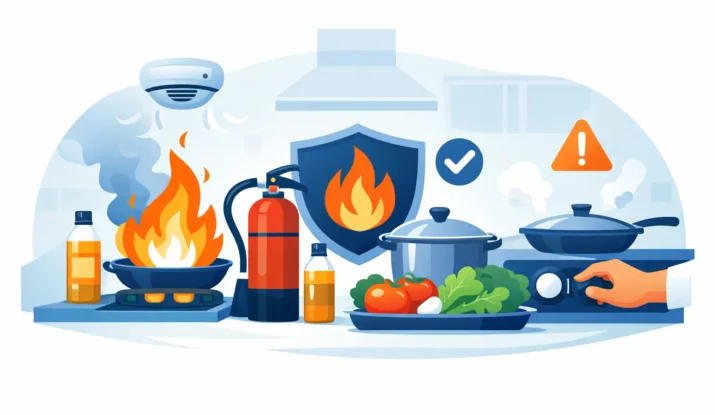
The fryer line is still hot, the dinner rush just ended, and someone notices a film of grease creeping farther up the hood than it should. That is usually how risk builds in a commercial kitchen – not all at once, but shift by shift. If you want to reduce grease fire risk, the real work starts before there is smoke, flame, or a failed inspection.
In busy Las Vegas kitchens, grease is not just a cleanliness issue. It is a fuel source. When grease collects in hoods, ducts, fans, filters, on equipment surfaces, or around the cook line, it raises the chance that a small flare-up turns into a much larger fire event. The right response is not guesswork. It is a repeatable cleaning and maintenance plan built around fire safety, code compliance, and day-to-day kitchen operations.
Why grease becomes a fire problem so fast
Grease vapor is a byproduct of normal cooking, especially in kitchens running fryers, charbroilers, griddles, woks, and high-volume saute stations. That vapor cools as it moves through the exhaust system and sticks to filters, hood interiors, ductwork, and rooftop fans. The heavier the volume of cooking, the faster that buildup happens.
Once grease accumulates, heat and flame have more to work with. A flare-up on the line may begin at the appliance, but if the exhaust system is loaded with grease, the fire can spread upward into areas staff cannot easily reach. That is where a manageable incident can become a serious emergency.
There is also a practical side many operators know too well. Heavy grease buildup can affect airflow, strain equipment, create odors, and make inspections more difficult. Fire risk and operational inefficiency usually show up together.
1. Keep the full exhaust system on a real cleaning schedule
The most effective way to reduce grease fire risk is to clean the entire kitchen exhaust system on the right frequency for your cooking volume. That means more than wiping visible hood surfaces. It includes the hood, filters, duct runs, and exhaust fan.
This is where some kitchens fall behind. The front-facing areas may look clean enough for staff and customers, while hidden grease continues collecting farther inside the system. A surface-level approach does not address the areas where fire can travel.
Cleaning frequency depends on the type of kitchen. A high-volume operation with solid-fuel cooking or constant fryer use may need much more frequent service than a lighter-duty kitchen. The key is matching the schedule to actual production, not to what feels convenient.
2. Do not treat hood filters like a minor detail
Filters are one of the first lines of defense in grease control. When they are damaged, missing, installed incorrectly, or overloaded with grease, more grease gets into the duct system. That increases both fire risk and cleanup difficulty.
Filters should be checked regularly, cleaned thoroughly, and put back in place correctly. This sounds basic, but it matters. A kitchen can spend money on major cleaning and still create avoidable risk if filters are neglected between services.
If your staff removes filters for cleaning, make sure they know how to reinstall them properly. Gaps, loose placement, or the wrong filter type can reduce capture efficiency and send grease where it should not go.
3. Clean beyond the hood line
A lot of fire prevention conversations stop at the hood. They should not. Grease also builds up on fryers, sides of cooking equipment, backsplashes, walls, floors, casters, and hard-to-reach gaps behind the line. Those areas may not be inside the exhaust system, but they still contribute to fire load and daily hazards.
This matters especially in kitchens where equipment is difficult to move or where production leaves little time for deep cleaning. Over time, grease can harden in places staff stop noticing. Then one hot spot, one spark, or one unattended flare-up can find more fuel than expected.
A stronger approach is to treat grease management as a whole-kitchen responsibility. Hood cleaning is critical, but it works best when the surrounding equipment and floor areas are also kept under control.
4. Train staff on flare-ups and shutdown response
Even a clean kitchen can have a flare-up. The difference is how far it spreads and how quickly staff respond. Training should cover what to do immediately, who is responsible, and what not to do.
That includes basic but essential points. Staff should never throw water on a grease fire. They should know how to use the correct fire suppression tools, when to shut down fuel or power if appropriate, and when to evacuate instead of trying to fight a growing fire.
Training also helps reduce the smaller habits that create risk in the first place. Overfilled fryers, unattended hot oil, clutter around appliances, and inconsistent end-of-shift cleaning all raise exposure. A kitchen safety plan only works if the crew understands it and follows it under pressure.
5. Make inspections part of operations, not a last-minute scramble
Operators often think about grease only when an inspection is coming. That is understandable, but it is not the safest way to run a kitchen. Regular internal checks help catch buildup before it becomes a code issue or a fire hazard.
A manager walk-through should include the obvious surfaces and the less obvious ones. Are filters loading up too fast? Is there visible grease on duct access panels, fan components, or roof areas around the exhaust outlet? Are there grease drips near equipment legs or under cooking stations? Small warning signs usually appear before a major problem does.
It also helps to document service dates and condition trends. If buildup is returning faster than expected, your cleaning frequency may need to change. That is not a failure. It is a signal that kitchen output has outgrown the old schedule.
How to reduce grease fire risk without disrupting service
For most restaurants and commercial kitchens, the challenge is not knowing cleaning matters. The challenge is fitting serious cleaning into a tight operating schedule. That is why service planning matters almost as much as the cleaning itself.
The best results usually come from work scheduled around business hours, with a clear scope and no confusion about what is being cleaned. A dependable exhaust cleaning provider should understand access points, protect surrounding areas, and leave the system ready for continued operation. If the process creates unnecessary downtime, staff friction, or incomplete work, the plan will break down over time.
This is where specialized service makes a difference. A provider focused on kitchen exhaust and grease-management work will usually spot problems a general cleaner may miss, especially in ducts, fans, and code-sensitive areas.
6. Keep rooftop fans and duct access areas in the conversation
Some of the most serious grease hazards are out of sight. Rooftop fans and long duct runs are easy to ignore because kitchen staff do not work around them every day. But if grease reaches those areas unchecked, the fire path expands.
That is one reason complete system cleaning matters. It is not enough for the hood canopy to look polished if grease remains in the duct or on the fan. From a safety standpoint, hidden buildup is often the more important issue.
A qualified cleaning company should be able to access and clean the system properly, not just the parts visible from the cook line. If access panels are needed or existing access is inadequate, that should be identified before it becomes a bigger compliance problem.
7. Address grease spills and floor buildup quickly
Not every grease hazard involves open flame. Spills, floor residue, and buildup around drains and equipment can lead to slips, rushed movements, and poor emergency response. In a real incident, staff need stable footing and clear access to suppression tools and exits.
Grease on the floor also tends to spread. Shoes track it, carts move through it, and before long the problem reaches storage, prep, and service paths. Quick cleanup protects both safety and sanitation.
For high-volume operations, reactive cleaning alone is rarely enough. Problem areas should be identified and serviced before they affect staff performance or create a pattern of recurring hazards.
8. Work with a company that understands fire-code cleaning
There is a difference between basic janitorial cleaning and fire-risk cleaning. Commercial kitchens need vendors who understand exhaust systems, grease behavior, and the compliance side of the job. That includes knowing what inspectors look for, how to clean to standard, and how to help operators stay ahead of preventable risk.
For many facilities, especially those running long hours or multiple concepts, consistency matters more than one-time deep cleaning. Scheduled service, accurate documentation, and clear communication help reduce surprises. Vegas Pressure Clean has built its work around that reality, with owner-led oversight and a specific focus on exhaust and grease-related fire risk.
If your kitchen is producing more smoke, grease, and heat than it did a year ago, your cleaning plan should change with it. The safest kitchens are not the ones that wait for visible problems. They are the ones that treat grease control as part of staying open, staying compliant, and protecting the people working the line every day.
Comments (3)
Commercial Kitchen Fan Cleaning Explained – Vegas Pressure Clean
[…] bigger concern is fire. Grease buildup in an exhaust system is fuel. Once it collects at the fan, on hinges, around the curb, or inside […]
Administrator
Exactly
How to Clean Grease Ducts in Commercial Kitchens – Vegas Pressure Clean
[…] buildup is a serious fire hazard. If a flame reaches the hood or duct system, grease deposits can provide a path for fire to travel […]