

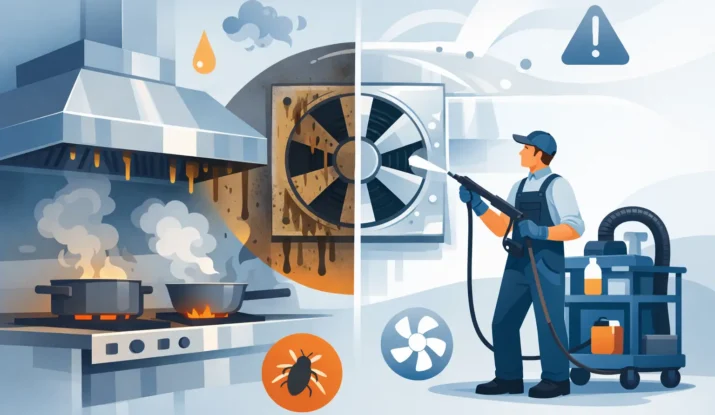
When the line is moving, tickets are stacking up, and the fryers have been running since breakfast, hood maintenance is easy to push down the list. That is usually when the top signs hood cleaning needed start showing up in plain sight. For a busy commercial kitchen, those signs are not cosmetic. They point to fire risk, airflow problems, code concerns, and equipment strain that can disrupt service fast.
For restaurant owners, kitchen managers, and facility teams in Las Vegas, the real question is not whether grease builds up. It does. The real question is how early you catch the warning signs before they turn into an inspection issue, an emergency cleanup, or a dangerous flare-up in the exhaust system.
Top Signs Hood Cleaning Needed in a Commercial Kitchen
A neglected hood system rarely fails all at once. It usually gives warning signs first. Some are obvious, and some show up in the way the kitchen feels, smells, and performs during service.
Grease is visible on the hood, filters, or duct edges
If your staff can see grease on the hood canopy, filter tracks, access panels, or around the seams, buildup is already past the early stage. A light film can quickly become a sticky layer that traps more grease and debris every day. Once that happens, cleaning gets harder, and fire risk rises.
This is especially common in high-volume kitchens with charbroilers, fryers, wok stations, or heavy sauté production. The more grease-laden vapor your line produces, the faster the exhaust system loads up.
The kitchen smells greasy even when equipment is off
A persistent grease odor after closing is a strong clue that residue has built up deeper in the system. Fresh cooking smells are normal during service. A stale, heavy grease smell that hangs around long after shutdown is different.
That odor often means grease has collected in the hood, ducts, or fan housing and is not being fully captured or exhausted. It can also mean old residue is being reheated day after day, which affects indoor air quality and makes the whole back of house feel less clean.
Smoke or heat is not clearing the way it should
When your hood system is doing its job, it should pull smoke, steam, and heat away from the cooking line with consistency. If smoke starts lingering over grills or drifting into prep areas, something is off.
Sometimes the issue is a mechanical problem, but heavy grease buildup is a common cause because it restricts airflow through filters, ducts, and fans. Even partial blockage can reduce system performance. Staff may notice the line feels hotter than usual or that smoke rolls out during peak periods instead of getting pulled upward.
Filters are dripping grease
This is one of the clearest signs that service is overdue. Hood filters are meant to capture grease before it moves farther into the exhaust system. When they become overloaded, grease can drip onto cooking surfaces, surrounding equipment, or the floor.
That creates two problems at once. First, the exhaust system is no longer capturing contaminants efficiently. Second, the drips create sanitation and slip hazards in active work areas. If staff are wiping grease from underneath the hood during service, the system likely needs professional cleaning, not just routine wipe-downs.
Why These Signs Matter Beyond Cleanliness
Commercial hood cleaning is not just about appearance. A hood system is part of your kitchen’s fire protection infrastructure. When grease accumulates, it becomes fuel. If a flare-up reaches the hood or ductwork, that fuel can allow fire to spread much faster than most operators realize.
That is why inspections focus on more than what is visible from the floor. A hood may look acceptable from the front while grease is collecting deeper in the duct line or around the rooftop fan. Surface cleaning by staff has value, but it is not a substitute for full exhaust system cleaning performed to the proper standard.
There is also the equipment side to consider. Restricted airflow can force the system to work harder, reduce ventilation performance, and create unnecessary wear on exhaust components. Over time, that can lead to more maintenance issues, more downtime, and more frustration for managers trying to keep service running smoothly.
Other Top Signs Hood Cleaning Needed Soon
Not every warning sign shows up as visible grease. In many kitchens, the first clues are operational.
Staff are complaining about excess heat on the line
If cooks keep mentioning that the kitchen feels hotter than normal, take it seriously. While heat can be influenced by several factors, a dirty exhaust system often contributes by failing to remove hot air effectively.
In Las Vegas, where outside temperatures already put pressure on building systems, poor kitchen ventilation can make the work environment harder on staff and tougher on equipment. That discomfort can be an early signal that airflow has dropped.
There is grease around the fan or on the roof
Rooftop fan discharge is easy to overlook because most operators do not see it during a normal shift. But grease around the fan hinge kit, fan housing, or roof membrane is a strong indicator that buildup is moving through the system improperly or that the fan area has not been cleaned thoroughly.
This matters for both fire safety and property maintenance. Grease on the roof can damage surfaces, attract dirt, and create additional cleanup liabilities outside the kitchen itself.
Your cleaning sticker or service interval is past due
Scheduled service intervals exist for a reason. If your last documented hood cleaning was months ago and your cooking volume has stayed high, the system may already be overdue even if no one has raised a concern yet.
The right frequency depends on your operation. A 24-hour restaurant, a steakhouse, and a low-volume prep kitchen will not all load grease at the same rate. That is why fixed assumptions can be risky. If your menu mix or production volume has changed, your hood cleaning schedule may need to change too.
You are preparing for an inspection and have doubts
If you are heading into a fire inspection, health review, ownership visit, or brand audit and you are unsure about the condition of the hood system, that uncertainty is a sign by itself. Most operators know when the system has slipped past normal standards.
Waiting to see whether it passes is a gamble. A proactive cleaning is usually easier to manage than scrambling after a failed inspection or deficiency notice.
What Staff Cleaning Can and Cannot Solve
Daily and weekly cleaning by kitchen staff is necessary. Wiping accessible hood surfaces, changing filters as needed, and keeping the line area free of grease all support a safer operation. But staff cleaning has limits.
It does not reach the full duct run. It does not address grease buildup on the fan assembly. It does not replace a code-focused cleaning of the entire exhaust path from hood to roof. That distinction matters because the highest-risk grease is often not the grease you can see during a shift.
For operators trying to control costs, this is one area where cutting corners usually creates bigger expenses later. Light maintenance helps preserve the system between service visits, but it should support professional hood cleaning, not replace it.
When to Call for Professional Hood Cleaning
If you are seeing more than one of these warning signs, it is time to schedule service. If you are seeing active grease drips, restricted airflow, or visible buildup in multiple areas, it should move up the priority list.
A qualified hood cleaning provider should clean the full system, document the work clearly, and help you understand whether your current service interval matches your actual kitchen output. That is especially important for multi-unit operators and busy independent restaurants where cooking volume can shift seasonally or expand without the maintenance schedule keeping pace.
For kitchens that need dependable, compliance-minded service, the best approach is simple: do not wait for a fire hazard or inspection failure to tell you what the hood system has already been showing you. Companies like Vegas Pressure Clean work with commercial operators who need straightforward scheduling, honest quotes, and cleaning that supports safety and code compliance without slowing down business.
A clean hood system does more than check a box. It helps your kitchen run cooler, safer, and with fewer surprises – and that is the kind of maintenance that protects service, staff, and the business behind both.
Comments (2)
How Often Clean Hood Systems? – Vegas Pressure Clean
[…] has lingering smoke, reduced airflow, strong grease odors, grease on rooftop areas near the fan, dark buildup on hood components, or drips around filters and seams, your current interval may be too long. The same is true if […]
Commercial Kitchen Fire Safety Guide – Vegas Pressure Clean
[…] feels smokier than usual, or grease is collecting faster on nearby surfaces, the exhaust system may need service. Poor airflow is not just a comfort issue. It can signal restricted filters, duct buildup, or fan […]