

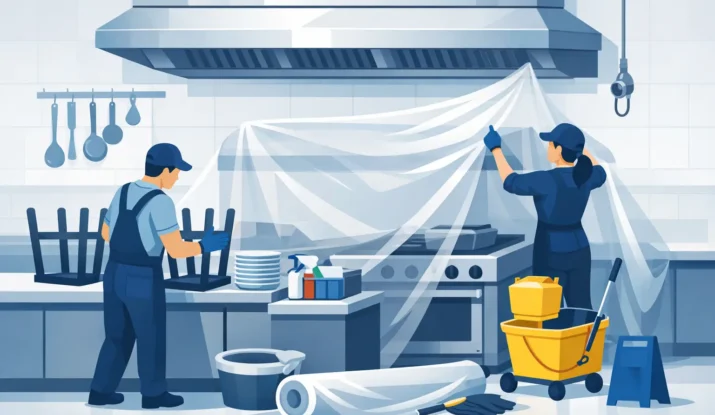
A hood cleaning crew can work fast and do the job right, but only if the kitchen is ready when they arrive. If you need to prepare kitchen for hood cleaning, the goal is simple: protect food-contact areas, avoid delays, and give technicians clear access to the full exhaust system. Good prep also helps reduce disruption to your staff, your next shift, and your inspection readiness.
For busy restaurants and commercial kitchens in Las Vegas, this is not just a housekeeping detail. Grease in the hood, ductwork, and fan system is a fire risk. If your team treats hood cleaning like an afterthought, the service can take longer, create unnecessary mess, or leave management scrambling before opening. A few practical steps ahead of time make a real difference.
Why preparation matters before hood cleaning
Commercial hood cleaning is not the same as wiping down visible stainless steel. A proper service addresses grease buildup in the hood interior, accessible duct runs, filters, and fan components. That work often involves pressure washing, scraping heavy deposits, and protecting surrounding areas from runoff and residue.
If the kitchen is not prepared, crews may spend valuable time moving obstacles, waiting for equipment to cool, or working around stored items that should not be in the area. That slows down the job and increases the chance of splash, missed access points, or disruption to the line. Preparation is not complicated, but it needs to be done with purpose.
How to prepare kitchen for hood cleaning without slowing service
The best time to prepare is several hours before the scheduled appointment, usually after the final cook cycle and after the line has cooled down. If your operation runs late, coordinate timing clearly so the cleaning team is not walking into an active kitchen.
Start with the cooking line under the hood. Remove small portable items such as pans, utensils, hotel pans, seasoning bins, countertop appliances, and paper goods. Anything sitting under or near the hood can collect grease splash or get in the way. If an item can be relocated safely, move it.
Next, make sure all cooking equipment beneath the hood is turned off and cool. This includes fryers, charbroilers, flat tops, ranges, and ovens connected to the hood area. Hot equipment creates safety issues for your team and the cleaning crew. It can also affect how grease softens, drains, and is removed during service.
Some kitchens want to leave equipment in place, and in many cases that is normal. Heavy cooking equipment is not always moved during standard hood cleaning, especially if utility connections make relocation impractical. But the area should still be opened up as much as possible. If a unit can be pulled forward safely, that may improve access. If it cannot, let the cleaning company know ahead of time so they can plan around it.
Clear access matters more than most operators think
One of the most common delays on service night is blocked access. Technicians may need a path to roof access points, access panels, electrical shutoffs, and the fan system. If ladders, storage racks, boxes, or locked areas slow that process down, the whole job gets pushed back.
Walk the route before the crew arrives. Make sure back doors, gates, and roof access points are unlocked or that the right manager is available. If your property has special access rules, alarm procedures, or building restrictions, communicate them in advance. This is especially important in multi-tenant retail spaces, casinos, hotels, and franchise locations where after-hours access can be complicated.
Inside the kitchen, clear the floor around the hood area. Mop buckets, ingredient bins, carts, and trash cans should be moved out of the way. The fewer obstacles in the work zone, the safer and cleaner the service will be.
Protect food, packaging, and prep surfaces
If you are planning how to prepare kitchen for hood cleaning, food protection is one of the first priorities. Open food, exposed prep containers, and disposable packaging should never be left near the cleaning area. Even with proper containment, hood cleaning is still a deep grease-removal process.
Store food away from the line before the crew arrives. Cover or remove prep tables, cutting boards, and nearby smallwares. If your kitchen has open shelving close to the hood, take a close look at what is stored there. Paper products, takeout containers, spices, and wrapped goods are often forgotten, and they should not remain exposed during service.
This is also a good time to think about the next shift. If the kitchen opens early, make sure your team knows where relocated supplies have been placed. Preparation should support the cleaning process without creating confusion for morning operations.
What your staff should handle before the crew arrives
Kitchen managers usually do not need a long checklist, but they do need accountability. Assign one person to confirm the line is shut down, another to remove loose items, and another to verify access and alarms. When no one owns the prep, details get missed.
Staff should empty grease trays where appropriate, dispose of waste properly, and make sure floor conditions are stable before the crew starts. If there has been a recent grease spill, mention it. If a fan is making noise, if airflow is weak, or if there are known access issues in the duct system, mention those too. The more accurate the information, the smoother the service.
It also helps to identify any sensitive equipment near the work area. POS terminals, tablets, countertop displays, and plug-in appliances do not belong in the splash zone. Move them before the crew has to.
What not to do before hood cleaning
Operators sometimes overprepare in ways that do not help. Do not attempt to handle heavy grease buildup yourself with unapproved chemicals or excessive water. That can spread grease, create slip hazards, and leave behind residue that complicates professional cleaning.
Do not leave staff to guess which equipment can be turned off or disconnected. If there are special shutdown procedures for gas, electrical, or fire suppression-related components, those should be managed by qualified personnel according to your site requirements.
And do not assume the visible hood face is the main issue. The real concern is the grease that accumulates deeper in the exhaust path. A clean-looking canopy does not mean the system is compliant or safe.
Preparation and compliance go hand in hand
For commercial kitchens, hood cleaning is tied directly to fire safety and inspection readiness. Grease-laden exhaust systems create risk, especially in high-volume operations that run fryers, broilers, wok stations, or charbroilers for long hours. Preparing the kitchen properly helps the service team reach the areas that matter most.
It also makes post-service review easier. When the crew can work efficiently and document the cleaned system clearly, management has a better record of maintenance. That matters when you are responsible for a single location, a multi-unit brand, or a facility that answers to corporate standards, landlords, insurers, or local fire authorities.
A dependable hood cleaning provider should also be clear about what is included, what access is required, and whether any conditions may affect service. That straightforward communication is part of protecting your operation, not just cleaning metal surfaces.
After the cleaning, plan for restart
Preparation should include a plan for what happens next. Once the service is complete, your team may need to return filters, reset the line, and confirm the area is ready for food production. Make sure the reopening process is assigned to the right people.
Before cooking resumes, inspect the line visually. Confirm surfaces are in order, relocated items are put back appropriately, and staff understands the kitchen is back in service. If anything seems unclear, address it before the first ticket of the next shift.
For many operators, the easiest approach is to work with a specialized provider that understands after-hours commercial service and compliance expectations. Companies like Vegas Pressure Clean focus on keeping hood systems, ducts, and fans cleaned with minimal disruption, which matters when your business cannot afford unnecessary downtime.
A well-prepared kitchen makes hood cleaning safer, faster, and easier on everyone involved. When your team clears the path, protects the workspace, and treats the service like a fire-safety task instead of a basic cleanup, you get better results and fewer surprises the next day.
1 Comment
A Restaurant Hood Cleaning Example That Meets Code – Vegas Pressure Clean
[…] manager may need to confirm that cooking equipment is off, the area is clear of food and loose supplies, and access to the roof is available. In some […]