

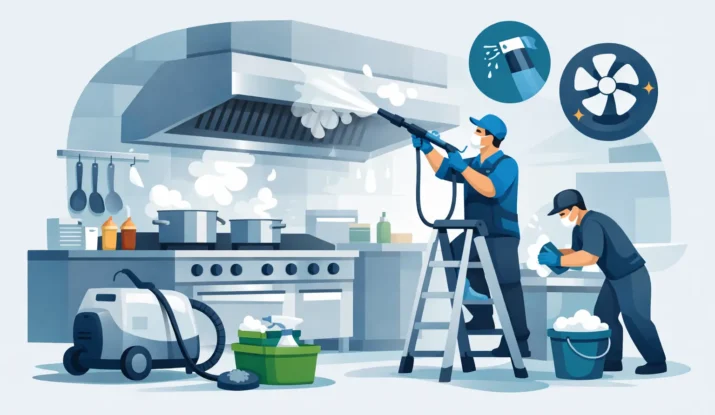
A hood system can look acceptable from the cook line and still be carrying enough grease above the ceiling to create a serious fire hazard. That is why the best hood cleaning methods are not just about making stainless steel shine. For restaurant owners, kitchen managers, and facility teams, the real goal is reducing fire risk, staying compliant, and keeping the kitchen operating without preventable problems.
In a commercial kitchen, grease does not stay where you can see it. It collects in the hood plenum, travels through the ductwork, and builds up around the exhaust fan. A quick wipe-down of visible surfaces has value for daily sanitation, but it is not the same as a proper exhaust system cleaning. The method that works best depends on the level of buildup, the style of the system, and whether the job is routine maintenance or a recovery from neglect.
What the best hood cleaning methods actually involve
The strongest approach is full-system cleaning, not surface-only cleaning. In practical terms, that means cleaning the hood, filters, accessible duct runs, and exhaust fan as one connected grease-management system. If one section is left loaded with grease, the risk remains.
The best hood cleaning methods start with containment and protection of the cooking area. Floors, appliances, and nearby surfaces should be protected before any degreaser or hot-water washing begins. In an active restaurant, this matters as much as the cleaning itself. Poor prep can create slip hazards, damage equipment, or leave a mess that slows down reopening.
After setup, technicians typically remove and clean the filters, apply commercial-grade degreasers to grease-laden surfaces, and use hot-water pressure washing or steam-assisted cleaning where appropriate. The exact combination depends on buildup. Heavy carbonized grease may need stronger chemical dwell time and more agitation. Lighter routine accumulation may clean efficiently with less aggressive methods.
The final result should be bare-metal clean where required, not just visually improved. That distinction matters during inspection and matters even more in the event of a fire. Grease residue left inside a duct is not harmless just because the lower hood looks better.
Why hand wiping alone is not enough
Many operators already have staff wiping down hood exteriors, and that is a good daily habit. It helps with sanitation, appearance, and front-line grease control. But hand wiping alone is not one of the best hood cleaning methods for the full exhaust system because it only addresses exposed, reachable surfaces.
The problem areas are often above the line of sight. Grease can build in transitions, duct joints, fan housings, and rooftop exhaust components that kitchen staff should not be expected to dismantle or clean. Trying to rely on in-house cleaning for those areas usually leads to uneven results, missed buildup, and unnecessary safety exposure.
There is also the question of chemistry. Consumer cleaners and general-purpose degreasers may cut light residue on stainless steel, but commercial exhaust systems often need products formulated for thick grease deposits. Using the wrong product can waste labor, leave residue behind, or damage surfaces if it is too harsh.
Hot-water pressure washing vs. steam cleaning
For most commercial hood systems, hot-water pressure washing is one of the most effective methods available. It delivers the force needed to break loose grease while using heat to soften buildup. On heavily used systems, especially those serving fried foods, charbroiled items, or high-volume production, hot-water washing is often the most practical choice for reaching bare-metal standards.
Steam cleaning has advantages too, but it tends to be more situational. It can work well in tighter areas, lighter buildup conditions, or environments where moisture control needs to be especially careful. Steam uses less water and can be precise, but it may not move thick accumulations as efficiently as hot-water pressure washing on neglected systems.
This is where experience matters. The better method is not always the more aggressive one. Too much pressure in the wrong area can create splash, spread contamination, or complicate cleanup. Too little cleaning power leaves grease behind. The right contractor matches the method to the system condition rather than using the same process on every kitchen.
Chemical degreasing is part of the job, not the whole job
Degreasers are essential, but they are only one part of effective hood cleaning. Good chemical application helps loosen grease, reduce labor time, and improve the results of washing and scraping. On stubborn buildup, chemical dwell time can make the difference between a complete cleaning and a partial one.
Still, chemicals alone are not enough. Spraying degreaser and wiping what comes off will not fully clean a commercial exhaust system. In most cases, the best hood cleaning methods combine chemical treatment with mechanical action, whether that is pressure washing, hand scraping, brushing, or detailed wiping in finishing stages.
There is also a trade-off to manage. Stronger chemicals may work faster on thick grease, but they have to be handled correctly to protect surfaces, nearby equipment, and the people working in the space. That is one reason commercial hood cleaning should be treated as a specialized service rather than routine janitorial work.
Don’t overlook the fan and rooftop components
A hood cleaning job is incomplete if the exhaust fan is ignored. Grease accumulation on the fan blades, hinge kit area, and surrounding rooftop surface affects both safety and performance. When the fan is burdened with grease, airflow can drop, odors may linger, and the whole system can work less efficiently.
This is one of the most common gaps in low-quality service. The visible canopy gets attention, but the fan and duct run do not get the same level of detail. From a compliance and fire-risk standpoint, that is a costly shortcut. Grease does not care which section of the system gets cleaned for appearances and which one gets skipped.
For busy properties, especially in Las Vegas where high kitchen output is common, a complete method should include access to the fan, cleaning around it, and making sure the system is left in serviceable condition. The cleaning process should reduce risk, not create new problems through poor reassembly or missed components.
Routine maintenance is better than catch-up cleaning
The best hood cleaning methods work best when they are part of a regular schedule. A neglected system takes more labor, more chemicals, and often more disruption to restore. By contrast, a properly maintained system can usually be cleaned more efficiently and with more predictable results.
Frequency depends on cooking volume and fuel load. A 24-hour operation or a kitchen doing heavy frying and charbroiling will need more frequent service than a lower-volume facility with lighter grease production. This is not a one-size-fits-all decision. The right schedule should reflect how the kitchen actually operates, not what seems convenient on paper.
Routine service also helps avoid the familiar chain reaction of back-of-house problems. Heavy grease leads to harder inspections, higher fire exposure, more odor issues, reduced airflow, and more stress on managers trying to keep service moving. Preventive cleaning is usually less disruptive than waiting until the system is visibly bad or an inspector raises concerns.
How to judge whether a method or provider is actually effective
For commercial operators, the question is not whether a hood looks cleaner after service. Almost any cleaning can improve appearance. The real test is whether the method addresses hidden grease, protects adjacent equipment, and supports fire-code compliance.
A reliable provider should be able to explain what parts of the system are being cleaned, how the workspace will be protected, and what level of grease removal is expected. Clear communication matters. So does accountability. If a company treats hood cleaning like a cosmetic wash, that is a red flag.
It also helps to work with specialists who understand kitchen exhaust systems rather than general cleaners adding hood work to a long menu of services. Companies focused on exhaust and grease-control work tend to spot access issues, fan problems, and buildup patterns that less specialized vendors miss. That is part of why operators across Southern Nevada look for experienced, compliance-minded service teams such as Vegas Pressure Clean when fire safety and uptime are on the line.
Choosing the best hood cleaning methods for your kitchen
The right answer usually comes down to full-system cleaning, commercial degreasing, and hot-water washing adjusted to the actual condition of the hood, ducts, and fan. Add consistent scheduling, proper containment, and experienced technicians, and you have the method that delivers real value – not just a cleaner-looking canopy.
If your kitchen runs hard, your hood system should not be judged by what is easiest to wipe down before opening. It should be judged by how well it protects your staff, your operation, and your ability to stay compliant when it counts.