

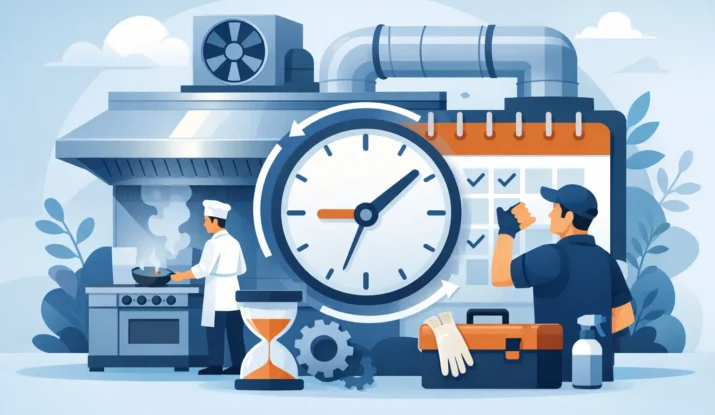
A failed inspection usually does not start with paperwork. It starts above the cook line, where grease has been collecting week after week inside the hood, ductwork, and exhaust fan. If you need to schedule restaurant exhaust maintenance, the right timing is not just about keeping the kitchen cleaner. It is about reducing fire risk, protecting airflow, and keeping service moving without surprise disruptions.
For restaurants in Las Vegas, timing matters even more. High-volume kitchens, long operating hours, and heavy grease production can turn a manageable cleaning issue into a compliance problem fast. The best maintenance schedule is the one that matches your cooking load, your equipment use, and the demands of your inspection environment.
Why schedule restaurant exhaust maintenance on a set cycle
Kitchen exhaust systems are easy to ignore because most of the problem is hidden. Staff may wipe the visible hood canopy, but the real concern is the grease that builds deeper in the system. Once grease coats the plenum, duct runs, and fan, the fire load increases and system performance starts to drop.
A scheduled maintenance plan solves that before it becomes urgent. Instead of waiting for visible drips, poor airflow, or an inspection notice, operators stay ahead of buildup. That lowers the chance of emergency cleaning, equipment strain, and interrupted service.
There is also a practical operations benefit. When exhaust systems are cleaned on time, the kitchen tends to run more consistently. Heat and smoke move out as intended, staff work in a safer environment, and managers spend less time reacting to issues that could have been prevented.
How often should you schedule restaurant exhaust maintenance?
The honest answer is that it depends on what and how you cook. Two restaurants on the same block can need very different service intervals.
A high-volume steakhouse, fryer-heavy concept, or 24-hour kitchen will produce grease much faster than a cafe with light cooking. Charbroilers, woks, and solid-fuel cooking equipment usually demand more frequent attention because they create heavier residue and a higher fire risk. On the other hand, lower-volume operations with limited grease output may be able to operate safely on a longer interval.
Many operators use fire code guidance and inspection expectations as the baseline, then adjust based on real kitchen conditions. That is the right approach. Code gives you a starting point, but actual grease accumulation should drive the final schedule.
If your fan blades are carrying visible buildup, if the hood edges are dripping, or if smoke is lingering longer than it should, your current interval may already be too long. Waiting for these signs is not ideal, but they are clear indicators that the schedule needs to be tightened.
Common service intervals by kitchen type
Monthly cleaning is often appropriate for very high-volume kitchens, operations using solid fuel, and facilities with constant grease production. Quarterly service is common for many full-service restaurants and busy commercial kitchens. Semiannual or annual intervals may fit lower-volume operations, churches, seasonal kitchens, or businesses with lighter cooking methods.
Those are not one-size-fits-all rules. They are planning benchmarks. A qualified exhaust cleaning provider should look at the type of cooking, the kitchen hours, the volume of output, and the condition of the system before recommending a schedule.
Signs your exhaust system needs maintenance sooner
A calendar matters, but so does what the system is telling you. Restaurants often need service earlier than planned when production ramps up, menus change, or equipment use increases.
One of the first signs is visible grease around the hood or on nearby surfaces. Another is reduced airflow, which can show up as excess heat in the kitchen, smoke hanging in the line, or odors that do not clear properly. Grease on the roof near the exhaust fan is another warning sign, especially if runoff is creating slip hazards or staining surrounding areas.
Inspection issues are an obvious trigger, but they should not be the first one. If your team notices grease dripping, fan noise changes, or recurring smoke problems during peak hours, it is worth reassessing the interval before those conditions lead to downtime or a fire hazard.
What happens when maintenance is delayed
Delayed exhaust maintenance creates more than a cleaning problem. It raises the fire risk inside the system and makes it harder for the kitchen to ventilate properly. That can affect employee comfort, line visibility, and the overall work environment during busy service periods.
There is also the compliance side. Fire inspectors and other authorities do not give much room for preventable grease buildup in a commercial kitchen exhaust system. If records are incomplete or the system condition does not match the expected cleaning standard, operators can face corrective action, added scrutiny, or forced service on short notice.
Costs also tend to rise when maintenance is deferred. Heavy buildup takes more labor to remove, neglected rooftop fans can create additional cleanup needs, and emergency scheduling is rarely as convenient as planned after-hours service. What starts as a postponed maintenance visit can turn into a much larger interruption.
Building the right maintenance schedule for your kitchen
The best schedule is realistic, documented, and easy to keep. For most operators, that means tying exhaust maintenance to the actual pace of the kitchen rather than picking a date range and hoping it works.
Start with your cooking profile. Consider whether your operation relies heavily on fryers, open-flame cooking, charbroilers, griddles, or wok stations. Then look at volume. A concept doing steady traffic late into the night will usually need more frequent service than a daytime operation with moderate output.
Next, consider your tolerance for risk and disruption. If your kitchen has already had airflow issues, grease overflow, or inspection pressure, a shorter interval is usually the safer move. Preventive service is easier to manage than urgent corrective cleaning.
Documentation matters too. Keep service records organized and current so managers, facility teams, and inspectors can verify the maintenance history quickly. For multi-unit operators and hospitality groups, consistency across locations can simplify oversight and reduce surprises.
Work with a provider that understands compliance
Not every cleaning company is built for kitchen exhaust work. This service should be handled by a specialist who understands hood systems, duct access, fan cleaning, grease containment, and the compliance standards that apply to commercial kitchens.
That matters because incomplete cleaning is a real problem. If only the visible sections are addressed and hidden grease remains in the ductwork or fan, the risk is still there. Operators need a provider that treats exhaust maintenance as a fire-safety service, not just a general cleaning task.
In Las Vegas, where many kitchens operate at high volume and late hours, scheduling with a compliance-focused contractor can make the process much easier. Companies like Vegas Pressure Clean build service around recurring maintenance, code-driven cleaning, and minimal disruption to kitchen operations.
Best time of day to schedule service
For most restaurants, after-hours service is the least disruptive option. Overnight cleaning or off-peak scheduling helps protect prep time, avoids interfering with production, and gives the kitchen a chance to reopen with the system ready to perform.
That said, the best time depends on your operation. Some facilities prefer early morning windows before staff arrives. Others need weekend service because weekdays are too busy. The key is working with a contractor that can align maintenance with business realities instead of forcing service into a bad time slot.
If you run multiple locations, coordinating service during predictable low-volume periods can reduce headaches for managers and make follow-up easier.
A schedule should change when your kitchen changes
One of the biggest mistakes operators make is setting an exhaust cleaning interval once and never revisiting it. Menus evolve, hours expand, equipment gets added, and sales increase. When that happens, grease production changes too.
A maintenance schedule should be reviewed anytime you increase output, add fryer capacity, bring in new cooking equipment, or notice airflow and residue issues. The right interval last year may not be the right interval now.
That is why regular review is part of good facility management. It keeps the exhaust system aligned with current demand instead of outdated assumptions.
A clean exhaust system does its job quietly, which is exactly what you want in a busy commercial kitchen. If your current schedule is based on guesswork, not actual kitchen conditions, now is the right time to correct it before the next rush, the next inspection, or the next preventable problem.