

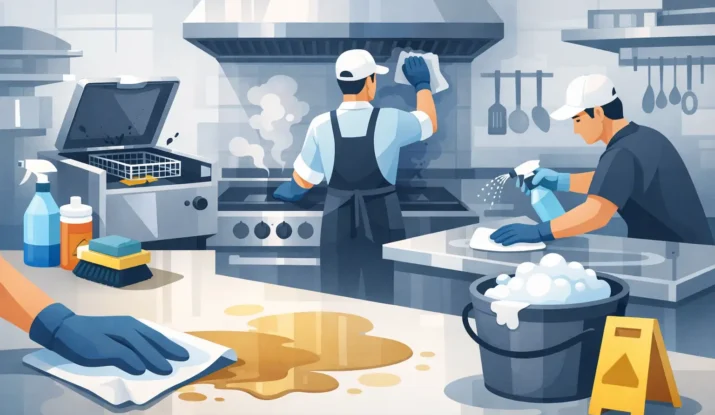
A fryer splash behind the line can become a slip hazard before the next ticket prints. Grease tracked from the cook line to a walk-in, loading area, or floor drain can also create sanitation problems, damage flooring, and add to the fire risk already present in a working kitchen. The best grease cleanup practices are not about making a kitchen look better at closing. They are about controlling a serious operational hazard before it interrupts service, injures an employee, or draws attention during an inspection.
For Las Vegas restaurants, hotel kitchens, and high-volume foodservice operations, grease management needs to account for speed, heat, traffic, and fire-code responsibilities. A practical plan separates immediate spill response from daily cleaning and scheduled professional service. Each has a different purpose, and skipping one creates gaps that routine mopping will not fix.
Start With Fast, Controlled Spill Response
Fresh grease is easier to contain than grease that has been stepped through the kitchen or pushed into grout lines. When a spill occurs, protect the area first. Keep employees and carts away from the affected floor, place wet-floor signage, and stop the source if it can be done safely. A leaking fryer valve, overflowing grease container, or damaged hose should not be treated as a one-time cleanup issue.
Do not start by flooding hot grease with water. Water can spread the contamination, create an even larger slip area, and cause dangerous splatter when heat is involved. Allow hot surfaces and oil to cool when possible, then use absorbent material intended for oil and grease. Remove the saturated absorbent promptly and dispose of it according to your operation’s waste procedures.
Once the bulk material is removed, apply a commercial degreaser suited to the floor surface and the amount of buildup. Give it enough contact time to break down the residue. Scrubbing too quickly may spread grease rather than lift it. Follow with controlled rinsing or extraction so the contaminated solution is captured instead of sent across the kitchen floor or into areas where it can create another problem.
Best Grease Cleanup Practices Include Prevention
The most effective cleanup is the one that prevents a spill from becoming widespread. That requires simple controls used consistently during every shift. Grease containers need lids, stable placement, and enough capacity for the volume of cooking being performed. Open containers placed in traffic paths are an avoidable risk, particularly during busy service or oil changes.
Floor mats, where appropriate, should be maintained rather than used to hide a greasy floor. Saturated mats can slide, retain odor, and spread residue when moved. Non-slip footwear helps protect employees, but it does not replace proper cleaning or eliminate the need to correct a recurring leak.
Kitchen managers should also pay attention to the less obvious locations where grease travels. Wheels on fryers, trash carts, sheet pan racks, and delivery dollies can carry residue from one area to another. Door handles, cooler pulls, sink controls, and storage shelving near the cook line can develop a tacky film that attracts dirt and makes sanitation more difficult. These surfaces may not be the largest fire concern, but they affect workplace cleanliness and can signal that the broader grease-control plan needs attention.
A short inspection before and after service helps catch issues early. Check beneath fryers and griddles, around grease interceptors, along wall-floor edges, under movable equipment, and near exterior disposal areas. A small leak often leaves a trail before it becomes a visible puddle.
Match the Cleaning Method to the Surface
Grease cleanup is not one-size-fits-all. The wrong chemical, water pressure, or scrubbing tool can damage surfaces and still leave a slippery film behind. Kitchen floors, quarry tile, sealed concrete, stainless steel, painted walls, and equipment exteriors all respond differently.
For hard commercial floors, the goal is to remove grease from the surface texture and grout, not simply spread it into a thin layer. Use a compatible degreaser, mechanical agitation, and recovery of the dirty solution. If floors remain slick after mopping, the process is likely leaving residue or failing to reach embedded buildup.
Stainless steel equipment needs regular attention because grease can collect around knobs, hinges, legs, and ventilation openings. Avoid harsh tools that scratch finishes and create more places for residue to cling. Clean equipment exteriors carefully, keeping water and chemicals away from electrical components, controls, and manufacturer-restricted areas.
Concrete at loading areas, dumpster pads, and exterior grease-handling locations presents another challenge. Grease can soak into porous concrete and attract dust, leaving a dark, slippery stain. Professional concrete cleaning may be needed when buildup is heavy or when runoff must be controlled. High-pressure washing without proper containment can move grease into drains and create environmental and property-management concerns.
Protect Drains, Utilities, and Waste Areas
A grease spill does not disappear because it reaches a drain. Pouring grease, degreaser concentrate, or contaminated wash water into a floor drain can contribute to blockages, odors, and plumbing issues. It can also create problems with wastewater requirements. Grease should be collected and handled through the proper disposal process, not washed away as part of routine cleanup.
Keep drain covers clear enough to function, but do not assume a drain is a disposal point for kitchen residue. Train employees to report slow drains, recurring backups, or greasy odors. These issues may point to a problem beyond the immediate floor area.
Exterior grease storage deserves the same discipline as the cook line. Closed containers, clean surrounding concrete, and regular checks for leaks reduce pest activity, slip hazards, and complaints from neighboring tenants or property managers. If a container has overflowed or grease has spread across a service lane, the area may require responsive professional cleanup rather than a quick rinse.
Keep Exhaust Grease Separate From Floor Cleaning
Floor and equipment cleaning are essential, but they do not address the grease accumulating inside the kitchen exhaust system. Vapors from cooking travel through the hood, filters, ducts, and fan. Over time, that residue becomes a fire fuel source in areas employees cannot fully reach during normal cleaning.
Filters should be cleaned on a schedule appropriate for the kitchen’s cooking volume and type of equipment. However, clean-looking filters do not prove that the ductwork and fan are clean. Exhaust cleaning frequency depends on the operation, menu, volume, and applicable fire requirements. A high-volume kitchen using fryers, charbroilers, woks, or solid-fuel equipment generally needs more frequent attention than a lower-volume operation with limited grease-producing cooking.
Professional hood and duct cleaning should be performed by a qualified provider that understands access, containment, grease removal, documentation, and the requirements of the authority having jurisdiction. The work needs to address the full system, not just the visible hood canopy. Leaving hidden duct or rooftop fan buildup in place defeats the safety purpose of the service.
Build a Schedule Employees Can Follow
Consistency matters more than complicated checklists that no one has time to complete. Assign immediate spill response to the shift team, daily degreasing of high-contact and high-splash areas to closing duties, and deeper cleaning to a defined weekly or monthly rotation. Record recurring problems, such as a fryer that leaks after filtering or a particular area that stays slick despite cleaning.
Managers should verify results, not just task completion. A floor can look clean under low light and still be slippery. Equipment can appear polished while grease remains behind and beneath it. Inspection should focus on whether the hazard has been removed.
For scheduled exhaust work, maintain service records and make them available for internal review or inspection. A dependable provider can help establish an appropriate service interval based on your kitchen’s actual conditions rather than a generic calendar reminder.
Know When to Call for Professional Cleanup
Internal teams can handle routine cleaning and small, controlled spills when they have the right training and supplies. Larger spills, exterior concrete contamination, heavy equipment buildup, or grease that has entered hard-to-reach areas require a different response. So does any situation involving a recurring equipment failure, drainage concern, or exhaust-system grease accumulation.
Vegas Pressure Clean provides specialized commercial grease-management services for operators who need cleaning performed with safety, compliance, and minimal operational disruption in mind. Professional service is especially valuable when the scope of the problem exceeds what a shift team can safely contain and recover.
A clean kitchen is not measured by whether the floor shines at the end of the night. It is measured by whether grease is controlled at the source, removed from the surfaces where people work, and kept out of the systems where it can create a larger hazard.
1 Comment
Restaurant Cleaning Versus Janitorial Service – Vegas Pressure Clean
[…] handle. This can include degreasing kitchen equipment, cleaning floors affected by cooking oils, addressing grease spills, pressure washing commercial concrete, and servicing kitchen exhaust hoods, ducts, and […]