

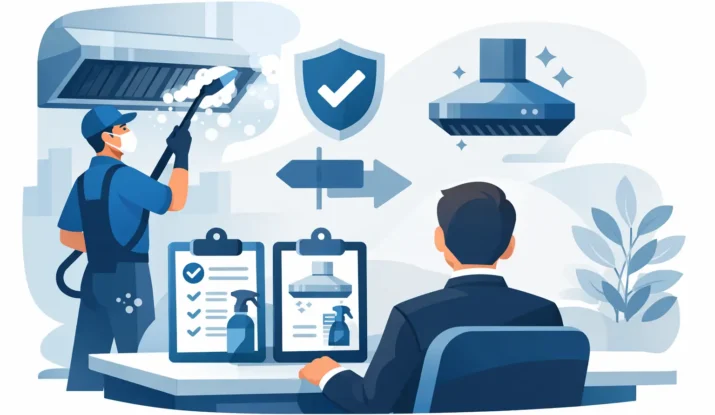
A failed inspection rarely starts on inspection day. It usually starts weeks earlier, when grease is building up in the hood, the duct line, or the fan, and nobody can see how bad it has gotten. That is why hiring a licensed hood cleaning company is not a box to check. It is a safety decision that affects fire risk, code compliance, kitchen uptime, and the way your operation runs under pressure.
For restaurant owners, kitchen managers, franchise groups, and facility teams in Las Vegas, the real question is not whether the system needs cleaning. It does. The better question is whether the company doing the work understands fire code requirements, cleans the full exhaust system properly, and stands behind the job with accountability. Those details matter more than a low quote.
Why a licensed hood cleaning company matters
In a commercial kitchen, grease does not stay where you can easily wipe it down. It travels through the hood, into the ductwork, and up to the exhaust fan. As buildup thickens, the system becomes harder to clean, airflow can suffer, and the fire hazard increases. If a provider only handles the visible portions or rushes the work, the kitchen may look better while the real problem remains overhead.
A licensed hood cleaning company brings more than labor. It brings proof that the business operates within the rules that govern this kind of work. In Nevada, that matters. Licensing shows that the company is not presenting itself as a specialist without meeting the standards required to perform fire-safety-related cleaning. For operators, that reduces guesswork.
That does not mean every licensed company delivers the same quality. Licensing is the baseline, not the finish line. The value comes from combining that credential with experience, proper process, and a clear understanding of what inspectors and fire authorities expect to see.
What commercial kitchen operators should expect
If you are comparing vendors, the basics should be non-negotiable. A qualified provider should inspect the hood, ducts, and fan access points, explain the condition of the system, and recommend a cleaning schedule based on cooking volume and grease production. A high-output kitchen with charbroilers and fryers will need different service intervals than a lower-volume operation with lighter cooking.
The work itself should cover the entire exhaust path, not just the hood canopy. That includes the accessible duct runs, filters, and exhaust fan components where grease accumulates. Containment also matters. A professional crew should protect surrounding equipment and kitchen surfaces, manage wastewater responsibly, and leave the work area clean and service-ready.
Timing is another practical issue. Most commercial kitchens cannot afford service interruptions during operating hours. A dependable contractor understands that and schedules around production demands whenever possible. Good service is not only about cleaning thoroughly. It is also about minimizing disruption to the business.
Licensed hood cleaning company vs low-cost vendor
Price always gets attention, especially for multi-unit operators and independent restaurants managing tight margins. But hood cleaning is one of those services where a low number can create a bigger bill later.
A low-cost vendor may underbid by shortening the scope, skipping difficult access areas, or sending crews with limited training. On paper, the invoice looks attractive. In practice, you may still have grease in the ductwork, incomplete documentation, or a system that does not meet the standard expected during an inspection. If the fan, duct, and hood are not cleaned to bare metal where required, the risk remains.
There is also the issue of accountability. When a problem comes up, you need a company that answers the phone, explains what was done, and returns if something needs attention. That is harder to count in a quote comparison, but it is often the difference between a vendor and a long-term service partner.
Signs you may have the wrong provider
Some warning signs show up before there is an official problem. If your hood looks clean but grease is still visible around fan hinges, duct access panels, or rooftop components, the service may be incomplete. If the company cannot clearly explain its process, your operation is being asked to trust work it cannot verify.
Another red flag is inconsistent scheduling. Commercial kitchen exhaust cleaning is not a one-time task. It is routine maintenance tied to fire prevention and compliance. If a provider is difficult to reach, does not keep up with recurring service, or leaves you scrambling before inspections, that uncertainty becomes your operational problem.
Documentation matters too. Operators should know when the system was serviced, what areas were cleaned, and when the next cleaning is likely due. In a busy kitchen or multi-site operation, that recordkeeping helps prevent missed service intervals.
What code awareness looks like in practice
Code knowledge is not just about quoting standards. It shows up in how a company evaluates the system and the recommendations it makes. A knowledgeable contractor understands that service frequency depends on use, appliance type, grease output, and the demands placed on the exhaust system. It does not treat every kitchen the same.
It also understands that visible cleanliness is only one part of the job. Inspectors and fire officials care about grease accumulation in the hidden areas where fires can spread fast. That means access, technique, and follow-through all matter. A licensed hood cleaning company should be able to identify problem areas early, before they become a compliance issue or safety event.
For Las Vegas operators, this is especially relevant. Many kitchens run long hours, serve high volumes, and work under intense production schedules. Grease loads can build quickly in that environment. Waiting too long between cleanings may save money for a short period, but it often increases cleaning difficulty, fire exposure, and the chance of last-minute problems.
Questions worth asking before you book
Before hiring a hood cleaning provider, ask direct questions. Is the company properly licensed for this work? Does it clean the full system, including ducts and fans? How does it handle access challenges? What service interval does it recommend for your kitchen, and why?
You should also ask who is responsible for quality control. In specialized cleaning, oversight matters. A company with direct owner involvement or experienced supervision tends to deliver more consistent work than one that treats every job as a volume stop. That is especially true when the service affects fire safety and compliance.
It is also reasonable to ask how the crew protects nearby equipment and avoids unnecessary mess. The best providers are thorough without creating new problems in the kitchen.
Why specialization makes a difference
Not every commercial cleaning company should be cleaning kitchen exhaust systems. Hood cleaning is specialized work with safety consequences. It requires the right equipment, the right access methods, and the judgment to know when buildup, system design, or operating conditions call for a different approach.
A general cleaner may be able to pressure wash surfaces, but that is not the same as understanding grease movement through an exhaust system. Specialization leads to better decisions about cleaning frequency, better identification of trouble spots, and better communication with operators who need practical answers, not vague assurances.
That is one reason many commercial clients look for a company whose business is centered on hood, duct, and fan cleaning rather than broad janitorial work. Focus usually leads to stronger process and more reliable results.
Choosing for reliability, not just appearance
The right hood cleaning company should help your kitchen stay ready, not just look clean for a day. That means showing up when scheduled, cleaning to the proper standard, documenting the work, and making sensible recommendations based on how your kitchen actually operates.
For serious foodservice operators, the goal is simple. Keep the system clean, keep the kitchen safer, and avoid preventable issues that interrupt service or invite enforcement problems. A licensed provider supports that goal by bringing compliance awareness and technical accountability to a job that directly affects risk.
Vegas Pressure Clean has built its reputation around that kind of work in Las Vegas – focused service, owner-led quality control, and cleaning that supports fire safety and code compliance. If you are evaluating providers, choose the one that treats your exhaust system like the critical safety system it is. A kitchen runs better when the maintenance behind it is handled the right way.