

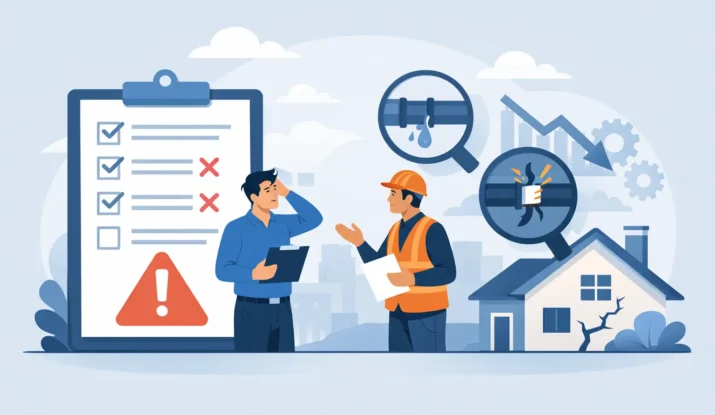
A fire or health inspector points out grease buildup in your hood, duct, or fan, and suddenly the day changes. If you are wondering what happens after failed inspection, the short answer is this: you usually enter a tight timeline of correction, documentation, and reinspection, and how quickly you respond can affect everything from service disruption to fire risk.
For restaurant owners and kitchen managers, a failed inspection is not just a paperwork problem. It can trigger urgent cleaning, equipment servicing, follow-up visits, and in some cases restricted operation until the issue is corrected. The exact outcome depends on what failed, how severe the violation is, and whether the inspector sees an immediate safety hazard.
What happens after failed inspection depends on the violation
Not every failed inspection carries the same consequence. A minor documentation issue is very different from heavy grease accumulation in the exhaust system or unsafe conditions around cooking equipment. Inspectors typically classify the problem based on risk.
If the issue is administrative, you may be given a correction notice and a deadline. If the issue affects sanitation or fire safety, the response is usually faster and stricter. In a commercial kitchen, grease-related violations tend to get serious attention because they increase the chance of fire spread through the hood and duct system.
That is why operators should avoid thinking of a failed inspection as one generic event. It is really a category of outcomes. Some failures lead to a simple fix and recheck. Others lead to immediate corrective action, formal reports, or temporary limits on operation.
The first thing you receive is usually a notice of violation
In most cases, the inspector documents the failed items in writing. That notice may list code deficiencies, cleanup requirements, unsafe conditions, and a deadline for correction. It should tell you what was observed and what must happen next.
Read it carefully. Do not rely on memory from a quick conversation during a busy shift. The wording matters, especially if the issue involves the exhaust hood, ductwork, rooftop fan, grease containment, cooking line cleanliness, or access panels.
If anything is unclear, ask questions right away. You need to know whether the problem requires cleaning, repair, replacement, documentation, or all three. A lot of delays happen because operators solve part of the issue but not the full scope of what the inspector cited.
You may have a short window to correct the problem
After a failed inspection, time usually becomes the biggest pressure point. Some violations come with a few days to correct. Others may require action immediately or before the next shift. If there is an imminent hazard, the inspector may require immediate shutdown of affected equipment or areas.
This is where experienced service vendors matter. A general cleaner may wipe visible grease, but that is not the same as correcting a code-related exhaust cleaning issue. In many kitchens, the real problem is above the ceiling line, inside the duct, around the fan hinge, or in areas that front-line staff cannot safely access.
Fast response helps, but complete response matters more. If you rush into a partial cleanup and the same condition is found at reinspection, you can lose more time than if you had handled it correctly the first time.
Cleaning and repairs are often both part of the fix
Many failed inspections involve more than one issue. Grease buildup may need professional hood and duct cleaning, but the inspection could also reveal a damaged access panel, missing fan hinge kit, poor grease containment, broken filters, or neglected equipment surfaces around the cook line.
That is why a proper corrective action plan should separate cleaning issues from mechanical or structural issues. Cleaning removes combustible buildup. Repairs restore safe operation and code compliance. One does not automatically solve the other.
For example, a hood system can be freshly cleaned and still fail if access is inadequate or components are not functioning correctly. On the other hand, replacing a damaged part without removing grease deposits still leaves a fire hazard in place. The best approach is to treat the failure as a system issue, not just a dirty surface issue.
What happens after failed inspection if the hazard is severe
If the inspector determines the condition creates a major fire or health risk, the response can escalate quickly. That may mean restricted use of cooking equipment, a mandatory reinspection before full operation, or temporary closure of the affected area.
This is where delays get expensive. Lost production during lunch, dinner, or weekend service can cost far more than the cleaning itself. For multi-unit operators and hospitality groups, one failed location can also trigger closer scrutiny across the portfolio.
Severe findings often involve thick grease accumulation, poor exhaust performance, visible contamination, unsafe rooftop fan conditions, or repeated noncompliance. Repeat failures are especially problematic because they suggest the issue is not accidental. They suggest the maintenance schedule is not keeping up with the cooking volume.
Documentation matters more than many operators expect
Once the cleaning or repairs are completed, you may need proof for the inspector, landlord, insurance carrier, or corporate facilities team. That proof can include invoices, service reports, photos, before-and-after documentation, or certification details depending on the type of work performed.
This is one reason commercial kitchens should work with specialists who understand compliance-driven service. If a vendor cannot clearly document what was cleaned, what areas were accessed, and what deficiencies remain outside the cleaning scope, you may have trouble showing that the violation was properly addressed.
Good documentation does two things. First, it supports reinspection. Second, it protects you if questions come up later about whether the required work was completed on time.
Reinspection is not always a formality
Some operators assume the follow-up visit is just a quick signoff. Sometimes it is. Sometimes it is not. A reinspection can be thorough, especially if the original failure involved significant grease buildup or repeat violations.
Inspectors want to verify that the cited condition has been corrected, not just improved. If they see remaining buildup, inaccessible areas, or related problems that were not addressed, you may remain out of compliance. In some cases, new deficiencies are identified during the return visit.
That is why it helps to review the corrected areas yourself before reinspection. Look beyond the obvious. Check the full exhaust path, not just the visible hood canopy. Make sure access points, filters, fan areas, and surrounding grease-prone surfaces match the level of correction the notice requires.
The real cost is usually operational, not just financial
A failed inspection has direct costs, but the bigger impact is often disruption. Managers get pulled into emergency coordination. Staff may have to work around restricted equipment. Corporate teams may demand immediate reporting. If service hours are affected, revenue loss starts fast.
There is also reputational risk. A failed fire or health inspection can create concern with ownership groups, franchise leadership, or property management. Even when the issue is corrected quickly, it creates avoidable pressure on a business that is already working on thin margins and tight labor schedules.
The practical lesson is simple. Compliance work tends to be cheaper and easier when it is scheduled before an inspector forces the timeline.
How to reduce the chance of failing again
The best prevention plan is based on actual kitchen output, not guesswork. A low-volume operation may be fine on a different cleaning frequency than a high-output restaurant with charbroilers, fryers, and long operating hours. If the schedule does not match grease production, buildup returns faster than expected.
It also helps to think beyond the hood alone. Exhaust cleaning, equipment cleaning, grease spill response, and concrete degreasing around waste or service areas all support a safer operation. Inspectors may focus on one violation, but the underlying problem is often broader maintenance drift.
For Las Vegas operators, consistency matters. Heat, long hours, high customer volume, and tight back-of-house spaces can accelerate wear and buildup. Working with a provider that understands kitchen exhaust systems, fire-code expectations, and after-hours commercial service can make the difference between routine maintenance and repeated emergencies. That is where a specialist such as Vegas Pressure Clean fits best.
If you have already failed, move quickly, but move correctly. Get the full scope identified, correct the actual hazard, keep your paperwork in order, and make sure your next service schedule reflects how your kitchen really operates. A failed inspection can be a warning, but it can also be the point where a kitchen gets back under control before a much bigger problem shows up.