

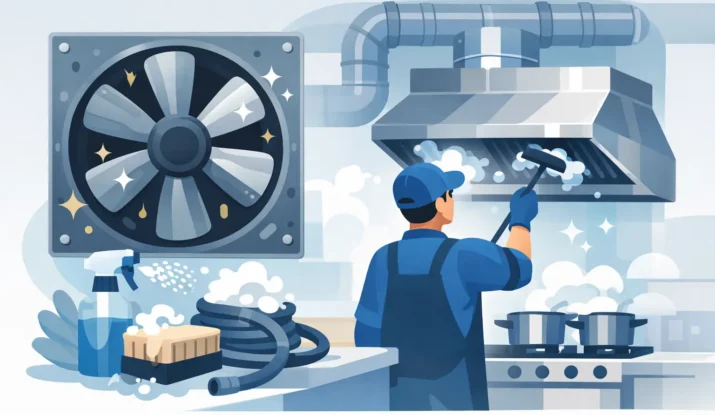
When a rooftop exhaust fan starts dragging under heavy grease load, the problem is not just mess. It affects airflow, pulls less heat and smoke from the line, and increases fire risk across the entire exhaust system. Commercial kitchen fan cleaning is one of those services operators often notice only when there is already a performance issue, an inspection concern, or visible grease where it should never be.
For restaurants, casinos, hotels, commissaries, and institutional kitchens, the fan is not a separate issue from the hood and ductwork. It is part of the same grease exhaust system, and it has to be cleaned that way. If the hood looks better but the fan is still coated in flammable buildup, the job is incomplete. That is why serious exhaust cleaning focuses on the full path grease vapors take – from the hood to the duct to the fan.
Why commercial kitchen fan cleaning matters
The fan does more than move air. It helps maintain the negative pressure that pulls grease-laden vapors out of the cooking area. When grease accumulates on blades, housings, and the fan base, performance can drop. In a busy kitchen, that can mean lingering smoke, excess heat, and odors that move where they should not.
The bigger concern is fire. Grease buildup in an exhaust system is fuel. Once it collects at the fan, on hinges, around the curb, or inside the housing, it creates another place where ignition can spread. Operators already understand the importance of hood cleaning because it is visible. Fan cleaning deserves the same attention because it is part of the same hazard profile.
There is also the issue of compliance. Fire inspectors do not separate grease hazards based on what is easiest to see from the floor. If the exhaust system is contaminated, that can raise questions about maintenance standards and whether the kitchen is being cleaned to the level required for safe operation.
What gets cleaned during commercial kitchen fan cleaning
A proper service goes beyond wiping the visible exterior. The fan blades, housing interior, access points, hinge assembly, and surrounding areas where grease escapes or accumulates all need attention. In many cases, technicians also inspect how grease is draining and whether buildup has spread to the roof area around the fan.
That roof area matters more than many operators expect. Grease on the rooftop can become a slip hazard for service personnel, a housekeeping problem for facilities teams, and a sign that the fan setup or maintenance schedule needs review. If grease is pooling or streaking around the curb, the issue is no longer limited to exhaust performance.
For upblast fans, the condition of the hinge kit is also important. If the fan cannot be safely opened, full access for cleaning is limited. If it is opened carelessly, damage can occur. Experienced technicians understand how to clean the fan thoroughly while protecting the equipment and leaving it ready for continued operation.
How grease buildup affects performance and equipment life
Grease is heavy, sticky, and persistent. Once it starts collecting on moving parts, airflow efficiency can decline. That does not always show up as a sudden failure. More often, it appears as gradual strain on the system – more heat in the kitchen, more smoke at peak hours, and a fan that is working harder than it should.
Motor issues, belt wear, and vibration problems are not always caused by grease alone, but contamination can contribute. It adds weight where there should be balance and creates conditions that make maintenance harder. Cleaning is not a replacement for mechanical repair, but it supports better equipment performance and makes it easier to spot actual service problems before they turn into downtime.
This is where operators have to think practically. Waiting until the fan looks obviously dirty from the roof can be expensive. The better approach is routine cleaning based on cooking volume, grease output, and inspection standards.
How often should a fan be cleaned?
It depends on the kitchen. A high-volume restaurant running fryers, charbroilers, and heavy sauté every day will need more frequent exhaust system cleaning than a lighter-use facility with limited grease production. The fan should be cleaned on the same schedule as the hood and duct system, because all three are collecting the same grease stream.
If a kitchen serves around the clock, runs hot equipment for long hours, or produces a large amount of airborne grease, the interval may be shorter. If operations are lighter, the schedule may be more moderate. The key is that cleaning frequency should reflect actual cooking conditions, not guesswork.
That is one reason experienced commercial providers do not treat every kitchen the same. A hotel kitchen, quick-service concept, school cafeteria, and casino food outlet can all have very different exhaust loads even if the equipment footprint looks similar on paper.
Signs your exhaust fan needs attention
Some warning signs show up inside the kitchen, and some appear on the roof. If smoke is hanging longer than usual, the line feels hotter, or odors are lingering, reduced exhaust performance may be part of the problem. If there is visible grease on the fan housing, grease around the roof curb, or buildup dripping where it should not, the need for service is already clear.
Noise can also be a clue. A fan under strain or carrying uneven buildup may not sound normal. Not every unusual sound means the fan is dirty, but cleaning often helps separate contamination issues from mechanical ones.
Another sign is inspection pressure. If your team is preparing for a fire inspection, insurance review, or internal facility audit, this is not the time to assume the roof equipment is fine because the kitchen side looks acceptable. Exhaust systems should be verifiably clean, not just visually improved in the easiest-to-reach areas.
What a professional cleaning process should look like
A professional service should protect the kitchen, access the system safely, remove grease buildup thoroughly, and leave the fan and surrounding work area in clean condition. The process should be controlled and methodical, not rushed. In active commercial environments, that matters because service quality is tied directly to safety and compliance.
Good contractors also understand timing. Restaurants and hospitality operations cannot afford unnecessary disruption. Cleaning should be scheduled around production needs whenever possible, especially in high-volume Las Vegas kitchens where late-night and early-morning work is often the most practical option.
Documentation matters too. A serious provider should be able to explain what was cleaned, what condition the system was in, and whether there are visible issues that need follow-up. Cleaning and inspection are not the same service, but a knowledgeable contractor should flag concerns that affect safe operation.
Why specialized providers make a difference
Commercial kitchen fan cleaning is not general janitorial work, and it is not the same as basic pressure washing. Exhaust systems have fire-code implications, grease containment concerns, rooftop access issues, and equipment-specific handling requirements. Choosing a provider that specializes in kitchen exhaust cleaning reduces the chance of partial work, equipment damage, or missed hazard areas.
That is especially important for operators managing multiple sites or large facilities. Consistency matters. So does accountability. A vendor that understands foodservice environments, code-driven cleaning schedules, and grease-risk areas is easier to rely on when inspections, maintenance records, and service windows all have to stay on track.
For Las Vegas operators, local experience also helps. High-output kitchens, hospitality schedules, and demanding service hours create real maintenance pressure. Vegas Pressure Clean works in that environment with a narrow focus on exhaust and grease-management services, which is exactly what many commercial clients need from a vendor.
The business case is simple
Clean fans support cleaner airflow, safer operations, and fewer surprises. They help reduce grease hazards, improve exhaust performance, and show that the kitchen is being maintained with the seriousness commercial operations require. No single cleaning service solves every maintenance issue, but neglecting the fan is one of the fastest ways to let a manageable problem turn into a fire risk or inspection issue.
If your exhaust system cleaning plan has focused mostly on what is visible from the cook line, it may be time to look up. The fan is doing critical work every hour your kitchen is open, and it needs the same level of professional attention as the rest of the system.
Comments (2)
How to Reduce Grease Buildup in Commercial Kitchens – Vegas Pressure Clean
[…] and local fire-code requirements. If grease is visible above the hood line, on ceiling tiles, around the fan, or inside accessible duct areas, waiting for the next routine service may not be the safest […]
NFPA 96 Cleaning Requirements for Commercial Kitchens – Vegas Pressure Clean
[…] the rooftop exhaust fan, blades, housing, and surrounding containment areas as needed. The fan is a frequent trouble spot because grease can collect heavily on blades and reduce […]